In this guide
- Look at the areas that tell the story
- Read the label before choosing a shortcut
- Respond to a mark without improvising a chemistry project
- Distinguish a wrinkle from a cleaning need
- Make the laundry load a deliberate choice
- Give drying its own plan
- Store ready shirts so you can trust the category
- Adjust the wardrobe bottleneck
- Keep the decision grounded in condition
Keep white shirts presentable by checking their actual condition after wear, treating appropriate stains promptly, and washing according to the label when they need it. Avoiding unnecessary washes does not mean leaving a dirty shirt in rotation or trying to cover odor with another product.
The useful routine separates a shirt that is ready to wear again from one that needs attention. You can make that decision with a quick inspection instead of relying on a fixed wear count that ignores weather, activity, fabric, and how the shirt sits against your skin.
Look at the areas that tell the story
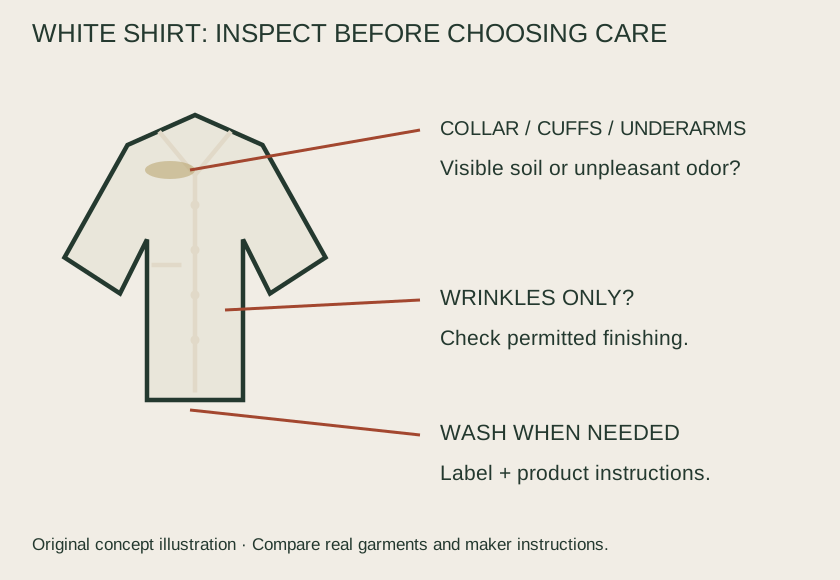
Inspect the collar, cuffs, underarms, front, and lower hem in ordinary light. A shirt can look clean from across a room while a collar or cuff shows a mark you will notice as soon as you put it on.
Check how the shirt smells and feels after it has had a chance to settle from wear. If it remains unpleasant or damp, do not classify it as ready merely because you cannot see an obvious stain.
Think about the day it had: a brief indoor event, a warm commute, and a long outdoor afternoon are different situations. Let that context inform the inspection without turning it into a universal schedule for every white garment.
If you are uncertain, separate the shirt from the ready-to-wear section until you decide. That small habit prevents a problem garment from repeatedly surprising you during a rushed morning.
Read the label before choosing a shortcut
Identify the shirt’s actual washing, drying, bleaching, and finishing instructions. White is a color, not permission to use any temperature or stain product you happen to have available.
A white cotton shirt, a blend, and a garment with contrasting trim can require different care. Use the instructions for the finished shirt rather than borrowing a routine from a similar-looking item.
Keep a photograph of the label if its location makes it awkward to reread. You can save a plain-language reminder alongside it, but retain the original information so an important restriction does not get lost in your summary.
If the label is missing or unclear, ask the maker using the item number and exact description. A general answer about cotton does not resolve the care needs of every collar, finish, or component in a completed shirt.

Respond to a mark without improvising a chemistry project
When you notice a spill or stain, identify what caused it if you can. That information helps you choose the manufacturer’s appropriate treatment or explain the problem to a cleaner.
Tide’s underarm-stain guidance starts with checking the garment care label before treatment. Use the same cautious sequence when considering a product: garment instructions first, product compatibility next, then the actual application directions.
Do not mix cleaning products because separate online tips make each ingredient sound useful. Select one compatible method and follow its directions rather than creating an untested combination on a shirt you want to keep.
If you cannot establish what is suitable, set the shirt aside and seek advice. A difficult mark is not a reason to keep increasing concentration, temperature, or rubbing until the fabric changes.
Distinguish a wrinkle from a cleaning need
A shirt that is otherwise clean may simply need an allowed finishing step. Check whether ironing or steaming is permitted and whether the appliance instructions suit the garment before applying heat.
A wrinkle treatment does not remove every reason a shirt may need washing. If the collar is soiled or the shirt smells unpleasant, a smoother appearance should not be mistaken for a clean result.
Likewise, do not wash a clean shirt solely because it has been compressed on a shelf if an approved finishing method would address the issue. The right next step depends on the actual condition and instructions.
Prepare the surface and appliance before you begin so you can work deliberately. If you are short on time, choose another ready shirt rather than rushing a treatment you have not checked.
Make the laundry load a deliberate choice
Sort according to the instructions of every garment in the load and your laundry products. A similar color does not guarantee that all the items can use the same cycle or drying method.
Check pockets and any preparation instructions before loading. Read the product dosing guidance rather than assuming that extra detergent will make white shirts look better.
If a stain requires a pre-treatment that the garment permits, perform that step according to the directions. Do not rely on the washing cycle to compensate for an ignored instruction or an incompatible product.
When the wash ends, inspect the shirt before moving to the next step. If a mark remains, consult the treatment guidance rather than automatically repeating a cycle or adding heat without understanding the consequences.
Give drying its own plan
Set up the approved drying method before you start washing. A shirt that needs a particular arrangement should not leave you improvising with a cramped chair or an unsuitable dryer setting afterward.
Read drying limits separately from wash temperature. The controls on the washer do not determine what happens in the dryer, and a familiar cycle name does not replace the shirt’s instructions.
Keep the drying area clean and suitable for the garment. Avoid placing a freshly washed white shirt where dust, colored surfaces, or care products can introduce a new mark.
If the shirt needs ironing or another permitted finishing step, plan that time too. A small ready-to-wear selection is easier to maintain when you include the full routine rather than counting only the washing cycle.
Store ready shirts so you can trust the category
Use a clear place for shirts that are genuinely ready to wear. Keep items awaiting stain treatment, washing, repair, or finishing elsewhere until the relevant task is complete.
Inspect the hanger or shelf before storing the shirt. You want the support and surrounding items to be appropriate and clean rather than assuming that any empty space is suitable.
Give the shirt enough room that retrieving it does not drag it across rough hardware or spill-prone toiletries. A simple, accessible arrangement can be more useful than a dense display that looks tidy but makes every shirt difficult to remove.
If you fold the shirt, use a method you can repeat without crushing details you care about. If you hang it, choose support appropriate to the garment and check that neighboring clothes do not compress it unnecessarily.
Adjust the wardrobe bottleneck
If your only useful white shirt is repeatedly unavailable, identify why. You may need a more realistic laundry schedule, a simpler-care shirt, or another suitable option rather than a stronger stain product.
Try planning an alternative outfit for the day after a demanding wear. That gives you time to handle the shirt properly without treating an unfinished care task as an emergency.
If you decide to add another shirt, compare fit, fabric, and care requirements before choosing a near-duplicate. The most useful second shirt is one you will willingly wear and can maintain with the setup you actually have.
Avoid buying multiple copies before you know the first one works through normal use and care. A familiar color does not guarantee that the collar, cut, or finishing routine suits your week.
Keep the decision grounded in condition
After each wear, inspect first and choose the next step deliberately. You may find a clean shirt ready for another appropriate use, a shirt that needs finishing, or one that clearly belongs in the laundry.
There is no prize for postponing a necessary wash, and no benefit in washing automatically when nothing in the garment’s condition or instructions calls for it. A sensible routine responds to the actual shirt.
That approach keeps white shirts useful without making them a constant project. You spend effort on the care they need, preserve a trustworthy ready-to-wear selection, and stop asking a fixed calendar rule to judge every day you wear them.
Sources & editorial notes
Primary pages checked October 22, 2026. Practical scenarios and style judgments are editorial explanations; exact garment and product instructions take priority.