In this guide
- Define what is leaving the active wardrobe
- Inspect and prepare before packing
- Divide hanging and folded storage by the garment
- Choose containers after measuring the space
- Keep access part of the plan
- Label for the next version of you
- Avoid making compression the default
- Check the storage area periodically
- Reopen before the season becomes urgent
Store seasonal clothes by deciding what deserves space, preparing it properly, and giving each item support and a location you can check. A small closet works better when stored clothing is organized around its next use rather than pushed into every remaining gap.
Start with one season’s selection at a time. You do not need to empty your entire home or buy a matching system of containers before learning what you actually need to put away.
Define what is leaving the active wardrobe
Choose the clothes you genuinely will not need for the coming stretch of weather. Keep a practical layer accessible if your climate or travel plans make it useful even outside its main season.
Try on uncertain pieces before storing them. A coat that no longer fits, pants you avoid, or a sweater awaiting repair should not disappear into a box without a decision about its role.
Create a short list of what is going into storage and what needs attention first. You can use an ordinary note with garment names instead of building a detailed inventory you will never maintain.
Leave sentimental or especially fragile pieces in a separate category if they need more informed care. Everyday closet advice should not be mistaken for a conservation plan for historic or valuable textiles.
Inspect and prepare before packing
Check the collar, cuffs, pockets, lining, and areas that showed wear during the season. Empty pockets completely and identify stains or repairs while you still remember how they occurred.
Follow each garment’s cleaning instructions before longer storage when care is needed. Do not assume that a garment looks clean enough from the front or that a scented accessory will compensate for leaving soil behind.
The Canadian Conservation Institute advises clean, dry storage and regular inspection for textile pests. Those basic principles are useful here, while its detailed museum treatments should not automatically be transferred to everyday clothing.
Make sure the garment has completed the appropriate drying process before packing. A closed container is not the place to finish drying a piece that still feels damp.
Divide hanging and folded storage by the garment
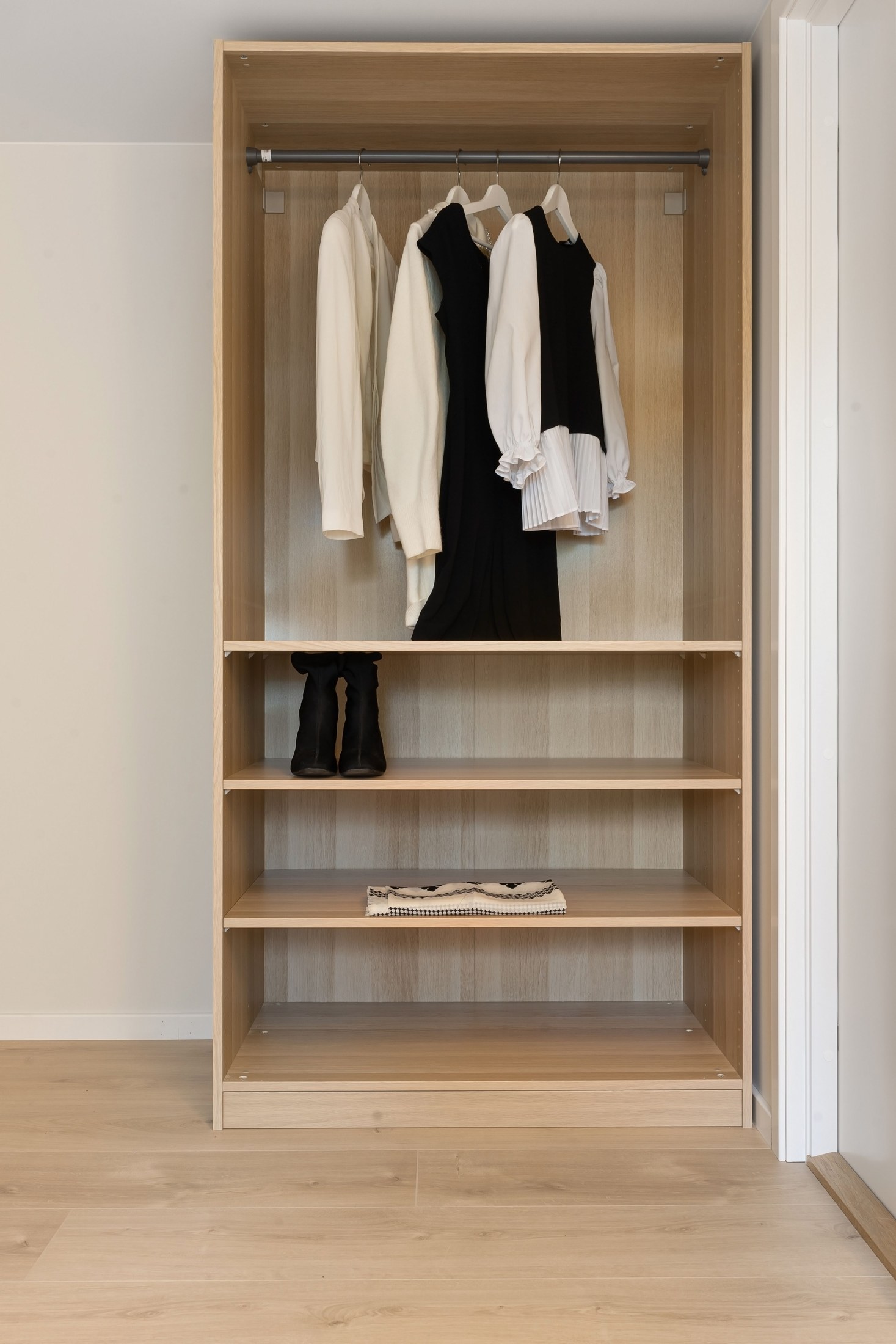
Use the maker’s guidance to decide which items should hang and which should be folded or supported flat. A structured woven coat and a heavy knit do not necessarily need the same arrangement.
Choose hangers that support the garment without creating an awkward shoulder shape. Avoid forcing several substantial pieces onto one hanger simply because the rail looks less crowded afterward.
For folded items, use a container or shelf that supports them without requiring a heavy stack to balance on a small edge. Arrange the pieces so retrieving one does not pull the rest into a tangled pile.
If you are unsure about an embellished, fragile, or unusual item, ask the maker or a suitable specialist. Its condition and construction matter more than a universal hanging-versus-folding rule.
Choose containers after measuring the space
Measure the shelf, floor area, or under-bed location before buying a box. Include the clearance needed to slide the container out and open it, not only the dimensions of the space where it will sit.
Try an existing suitable container first if you have one. You may learn that two shallow containers are easier to use than a single deep box that requires unpacking every time you need something.
Choose a size you can lift and handle comfortably when full. A large container is not efficient if it becomes too heavy to retrieve safely from the place you assigned to it.
Read the container’s material and use guidance rather than treating every clear plastic box or garment bag as equivalent. For especially important pieces, obtain storage advice appropriate to the textile and its condition.
Keep access part of the plan
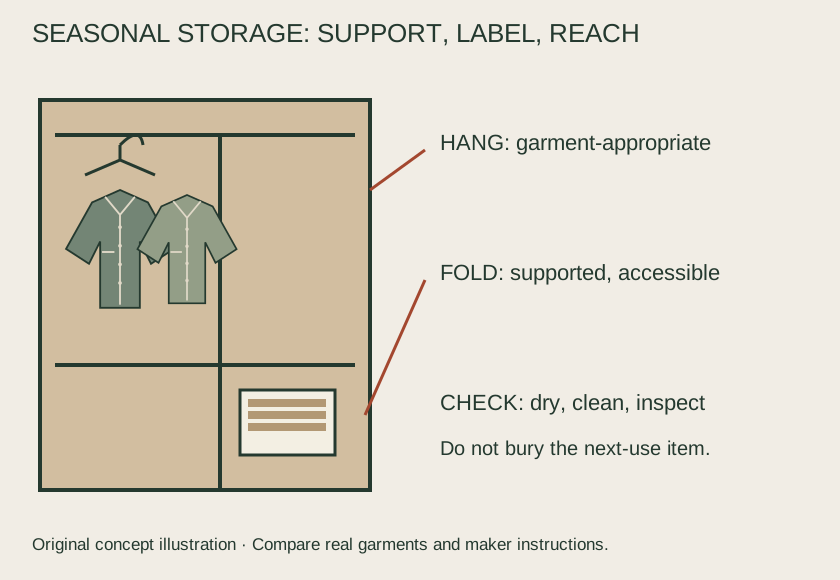
Place items you might need unexpectedly closer to the front or top. A light jacket for a trip should not require moving every heavy winter item out of the closet.
Group by useful purpose as well as season. You might keep formal clothing, cold-weather layers, and holiday-specific pieces in separate accessible groups if that matches the way you use them.
Avoid blocking the closet’s normal function with stored clothes. If retrieving everyday shoes means dragging a seasonal box out twice a day, the arrangement is asking too much of your routine.
Leave enough room to inspect the storage area itself. You want to notice dust, moisture, damage, or signs of pests rather than creating a dense wall of containers that hides the surroundings.
Label for the next version of you
Use plain descriptions that will make sense months later. Winter knits and gray wool coat are more helpful than miscellaneous or a number whose explanation lives in a note you may lose.
If a box contains several layers, add a simple list near the lid. You can then find an item without unfolding everything and disturbing the arrangement repeatedly.
Record any unresolved task separately from the ready-stored clothes. A repair note should remain visible in your active task list rather than becoming a surprise when you open the box next season.
Include the storage location in your inventory if items are spread across different rooms. This is especially useful when a travel layer belongs to one season but lives somewhere else because of space.
Avoid making compression the default
Before using a compression or vacuum system, check whether the garment maker considers it suitable for the item. Saving volume is only useful if the storage method also fits the clothing’s construction and condition.
A structured jacket, delicate trim, and substantial knit may present different concerns. Do not treat a bag’s broad marketing promise as a substitute for garment-specific guidance.
Try folding and reorganizing the selection before assuming maximum compression is necessary. You may find that a few unworn pieces are using more space than the clothes you actually want to store.
If you choose a compression method, keep the contents and date recorded so you can inspect them appropriately. The reduced volume should not turn the stored items into something you never check.
Check the storage area periodically
Look for changes in the container, surrounding surface, or garment condition. Check that the location remains dry and that a box has not become damaged or blocked behind other objects.
The Canadian Conservation Institute recommends looking for evidence of insect activity rather than relying only on seeing adult insects. If you notice holes, unusual debris, or other suspicious changes, investigate the actual issue and seek appropriate advice.
Keep affected items separate when needed and avoid introducing an improvised chemical treatment into a closed closet. A strong smell is not evidence that a problem has been solved.
Do not let a storage accessory become a reason to ignore basic housekeeping and inspection. You are maintaining a usable environment for clothing, not buying a guarantee that nothing can happen while it is out of sight.
Reopen before the season becomes urgent
Bring the selection out early enough to inspect fit, condition, and any care needs. You will have more useful options if a repair or cleaning task is discovered before the first day you need the garment.
Compare what you stored with what you actually expect to wear this season. A changed commute, workplace, or size may alter the useful selection without making the old clothing inherently bad.
Return only ready items to the active wardrobe. Keep anything awaiting a decision or treatment in a visible separate place so it does not blur the meaning of ready to wear.
A small closet becomes easier to use when seasonal storage is a clear, accessible system. Clean preparation, suitable support, useful labels, and occasional inspection do more practical work than simply hiding the largest possible quantity of clothes.
Sources & editorial notes
Primary pages checked October 22, 2026. Practical scenarios and style judgments are editorial explanations; exact garment and product instructions take priority.