In this guide
- Read the event before the clothes
- Choose a reliable middle starting point
- Make one deliberate adjustment
- Account for the floor beneath you
- Check fit in the positions you will use
- Keep grooming and care proportionate
- Use a removable layer as an option
- Handle the remaining uncertainty directly
- Do one final check, then leave it alone
When an invitation says smart casual without explaining the setting, start by finding out what the event actually involves. A useful outfit respects the occasion, feels comfortable for the activities, and can be adjusted without turning your bag into a second closet.
You do not need to solve the phrase for every possible situation. You need a sensible decision for this dinner, gathering, or work event, using the clues available and a short question to the host when the important details remain unclear.
Read the event before the clothes
Look at the venue, time, expected activities, and your relationship to the people attending. A restaurant dinner, outdoor reception, and informal office gathering can all use the same vague wording while asking different things of your outfit.
Check whether the invitation contains a more specific instruction elsewhere. A note about footwear, weather, religious setting, or workplace requirements deserves more weight than a general styling article.
If you are a guest, ask the host a concrete question when necessary. Asking whether they expect a jacket or whether the event is mostly outdoors is easier to answer than asking them to define smart casual from scratch.
Avoid treating photographs from a different event as a dress-code ruling. They can offer context, but you still need to know whether this gathering has different expectations or practical conditions.
Choose a reliable middle starting point
A shirt or neat knit, well-fitting pants, and cared-for shoes give you a useful base for many ordinary settings. Charles Tyrwhitt’s business-casual guide uses similar categories, while also acknowledging that workplace expectations differ.
That is a starting example rather than permission to ignore your host’s instructions. If the event calls for a suit, specific footwear, or another clear standard, dress for that instruction instead.
Begin with pieces you have worn comfortably before. An uncertain invitation is an inconvenient time to discover that a new collar irritates you or a pair of shoes becomes painful after a short walk.
Try the outfit as a complete unit, including belt, socks, and any outer layer. You can then adjust the overall impression rather than judging whether each item is individually labeled smart or casual.
Make one deliberate adjustment
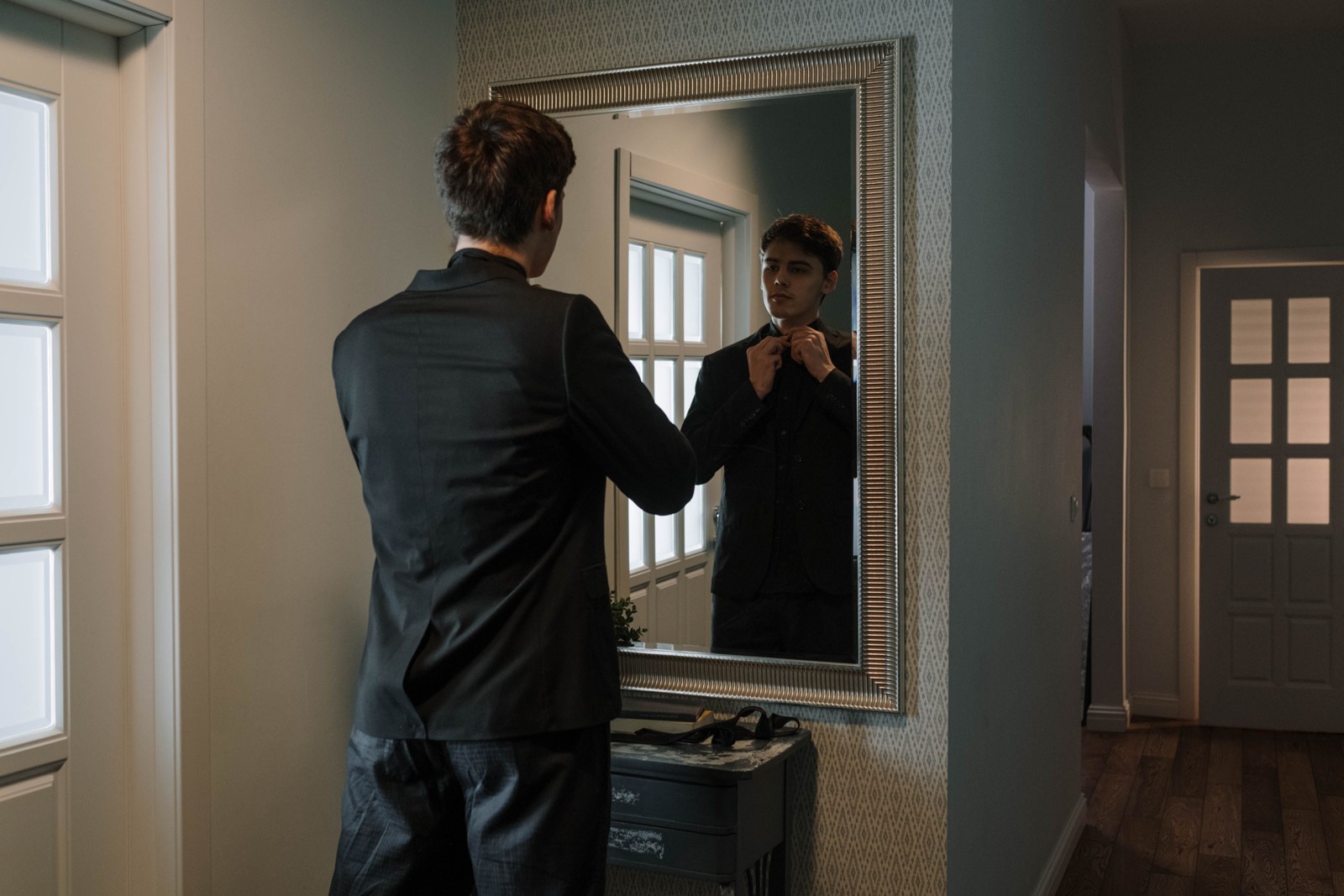
If the base feels too relaxed for the venue, try adding a suitable jacket or changing the shoes. Compare the whole result before replacing every piece at once.
If it feels more formal than the event seems to require, you might use a softer shirt, remove an unnecessary layer, or choose a less formal shoe style that remains appropriate. The point is to make an informed adjustment, not to maximize or minimize formality blindly.
Keep your own comfort and normal style in the decision. A combination that feels like a costume can make you fuss with it all evening even if every item looks reasonable in isolation.
If you have two plausible versions, photograph them in the same light. It is often easier to compare a jacket-and-loafer version with an overshirt-and-sneaker version when you are not changing in front of the mirror repeatedly.
Account for the floor beneath you
Find out whether you will walk on pavement, grass, gravel, stairs, or a polished indoor floor. Shoes that suit the visual mood still need to work for the surfaces you will actually use.
Check the forecast and whether there is a place to leave wet outerwear. A practical coat or umbrella can support the outfit without becoming an excuse to disregard the event’s dress expectations.
If you expect a long walk before arrival, decide whether your chosen shoes can handle it comfortably. Plan transport or a suitable alternative rather than hoping discomfort will remain invisible.
For outdoor events, ask about the setup when the invitation is unclear. You may need a layer for the evening or footwear that handles the ground, which are specific decisions a host can usually help you make.
Check fit in the positions you will use
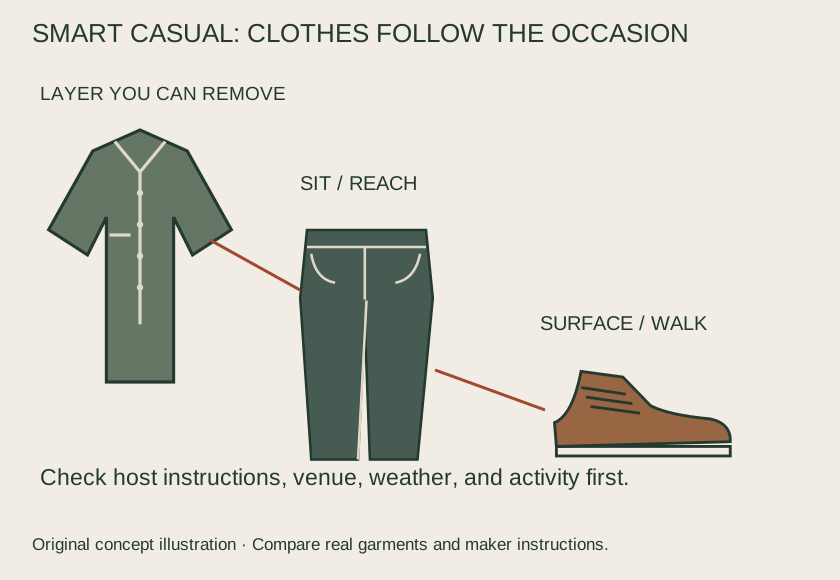
Sit down in the complete outfit and bend your arms as you would at a table. Look for a shirt opening between buttons, a waistband that becomes uncomfortable, or sleeves that prevent an ordinary reach.
Stand and walk a few steps after sitting. Notice whether the outfit settles again with a small adjustment or needs you to rebuild the tuck and layers every time you move.
If a jacket is involved, check both the buttoned appearance and the version you will wear while seated. You want to feel comfortable throughout the event rather than planning to remain in one flattering standing position.
Do not assume a restrictive piece will become comfortable during the drive there. Choose the workable alternative you already have if the problem is obvious before you leave.
Keep grooming and care proportionate
Inspect visible lint, shirt wrinkles, shoe condition, and any marks that need attention. A simple outfit can look more considered when the pieces are clean and ready to wear.
Follow the garment’s instructions rather than improvising an aggressive last-minute treatment. A stubborn spot on a jacket is a reason to choose another jacket, not to experiment minutes before departure.
Likewise, use shoe products appropriate to the leather and finish. A hurried polish session is unhelpful if you are applying a smooth-leather product to a material that requires different care.
You do not need every item to look unused. Aim for a presentable, coherent outfit whose normal wear does not distract you from the people and purpose of the gathering.
Use a removable layer as an option
A suitable jacket or overshirt can give you an adjustment when the temperature or social setting changes. Check that the outfit underneath still works, since you may take the layer off soon after arriving.
Do not carry a layer solely because it might rescue an outfit you already think is inappropriate. Choose a reliable base first, then use the layer to add flexibility.
Think about where you will put it when it is off. If you will be standing outdoors without a coat check, a bulky extra layer may be more cumbersome than a lighter option that suits the forecast.
A small adjustment is enough. You do not need backup shirts, three shoe options, and a collection of accessories for an ordinary evening simply because the invitation used an imprecise phrase.
Handle the remaining uncertainty directly
If the venue has a published dress policy, read the current policy rather than relying on an old review. If it is the host’s personal expectation that matters, ask the host instead of trying to infer it from strangers online.
You can describe your intended outfit in a short message and ask whether it fits the occasion. That gives the other person something concrete to confirm or adjust.
Keep the question practical and neutral. You are helping yourself attend appropriately, not asking the host to justify their taste or solve every detail of your wardrobe.
Once you have a clear answer, stop collecting contradictory opinions. More browsing can make a settled decision feel uncertain again without adding useful information about the actual event.
Do one final check, then leave it alone
Look at the complete outfit in ordinary light, check the weather items, and make sure you can move comfortably. Confirm that you have anything the invitation specifically requested.
If a small detail still bothers you, make one useful change and reassess. Avoid restarting the entire outfit because a photograph from another venue looks more polished or more relaxed than yours.
The aim is to arrive feeling appropriately prepared and able to focus on the event. A clear reading of the occasion and a comfortable outfit will serve you better than winning an imaginary argument about the exact definition of smart casual.
Sources & editorial notes
Primary pages checked October 22, 2026. Practical scenarios and style judgments are editorial explanations; exact garment and product instructions take priority.