In this guide
- Separate color from shoe style
- Start with navy when you want a clear contrast
- Let gray show you the role of tone
- Use olive as a whole-outfit decision
- Check the hem and shoe shape together
- Connect accessories without demanding exact matches
- Let condition support the pairing
- Try one outfit in two contexts
- Photograph a few dependable combinations
Brown shoes can work with navy, gray, and olive pants when you judge the shade, shoe style, and overall outfit together. Start with the pants you want to wear and the occasion, then compare the brown shoes you already own before buying another shade.
This is a practical styling guide rather than a claim that one color combination is objectively correct. Your workplace, event, and personal preference still decide whether a particular pairing feels appropriate and useful.
Separate color from shoe style
A dark brown Oxford, tan work boot, and brown suede loafer share a broad color family but create very different outfits. Do not expect changing the brown shade alone to resolve a mismatch in formality or shape.
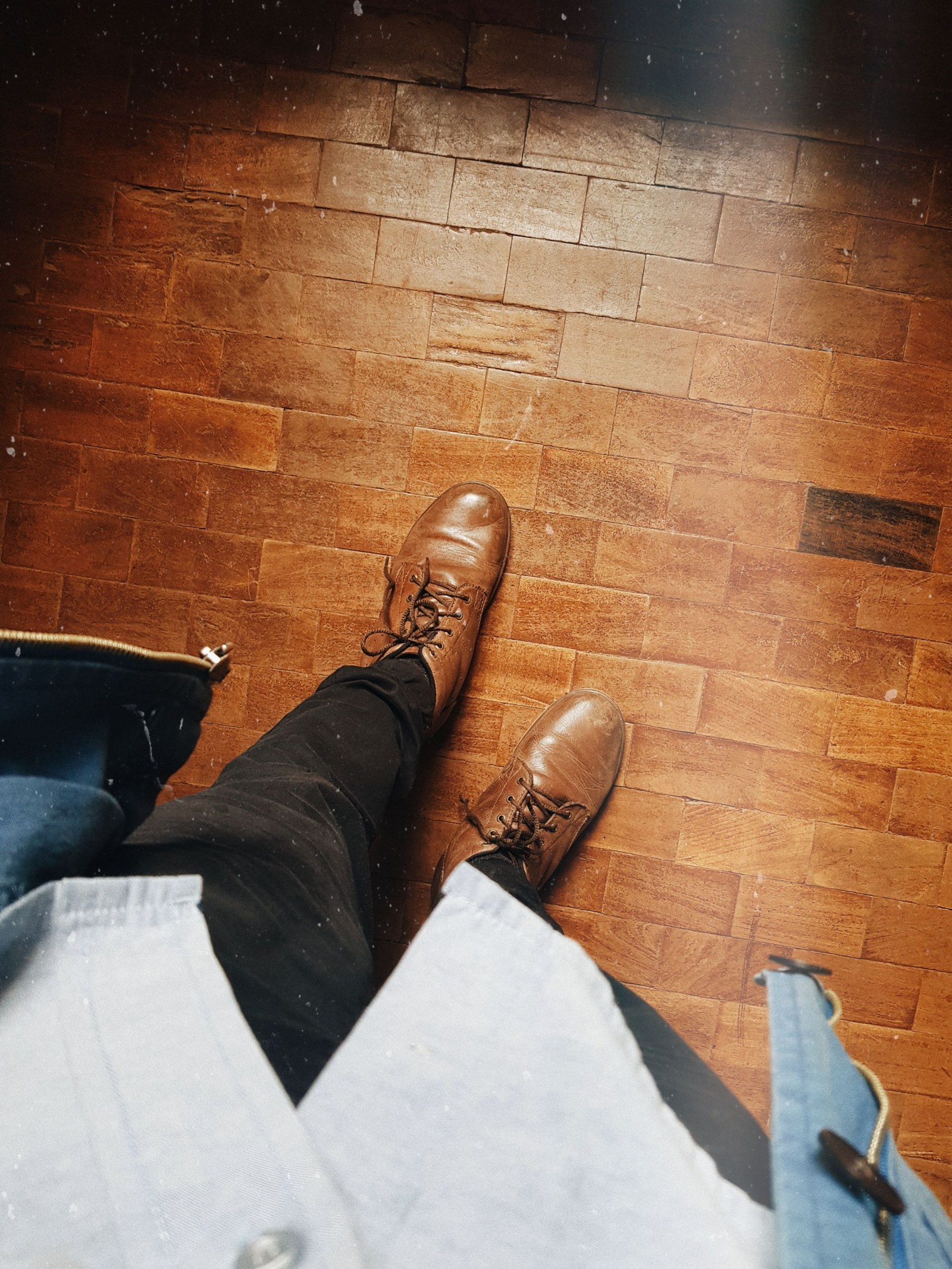
Put the shoes beside the pants in ordinary light and notice their finish, visual weight, and details. A chunky sole can make a quiet color pairing feel casual, while a finer shape may work better with a more tailored trouser.
Charles Tyrwhitt’s styling material presents shoes as part of complete outfit combinations rather than an isolated color decision. Use that approach as a reminder to assess the shirt, layer, and occasion too.
If you are dressing for a specific event, settle its expectations first. A combination you enjoy for a weekend lunch may not be the one you want for an important presentation or a ceremony with a stated dress code.
Start with navy when you want a clear contrast
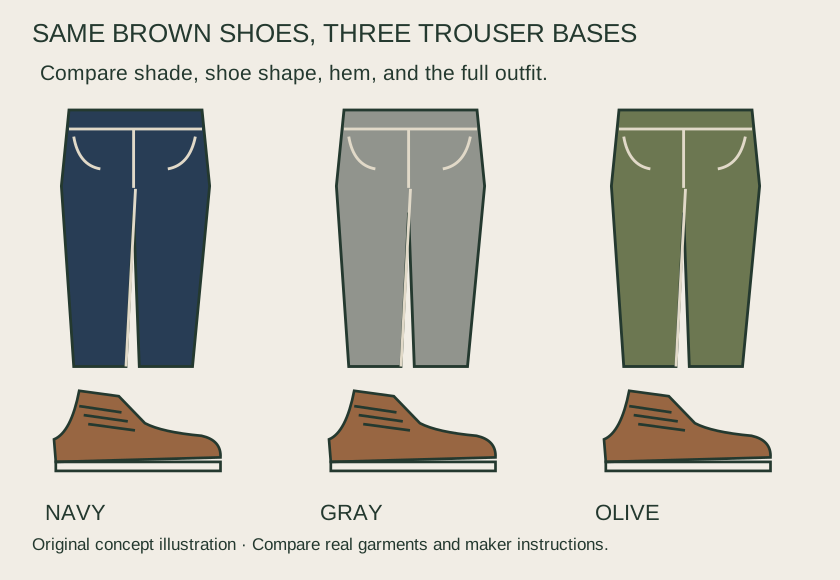
Navy pants give you a straightforward way to see the difference between dark and lighter brown shoes. Put on the same pants and top, then compare the shoes without changing other details at the same time.
A darker brown may feel quieter against a dark navy leg, while a lighter tan can draw more attention to the footwear. Decide whether you want the shoes to blend into the outfit or become a noticeable feature.
Check that contrast at a normal viewing distance, not only while looking down at your feet. The relationship can feel different when you see your full height in a mirror or photograph.
If the contrast seems stronger than you intended, try a darker shoe you own or a lighter trouser fabric before assuming the entire navy-and-brown idea is wrong. One change can reveal what was bothering you.
Let gray show you the role of tone
Gray pants vary from pale silver to deep charcoal and can lean warmer or cooler in appearance. Compare the actual pair with your shoes rather than relying on the word gray on a product page.
With a lighter gray, a dark brown shoe can form a distinct ending to the trouser line. With charcoal, that same shoe may look less separate, especially when the rest of the outfit is also dark.
Try the combination with the shirt or knit you intend to wear. A warm cream knit, crisp white shirt, and blue overshirt each create a different context even when the pants and shoes remain unchanged.
You do not need to classify every undertone precisely to make a useful decision. Look for a combination that feels coherent to you in the light where you will actually wear it.
Use olive as a whole-outfit decision
Olive pants can range from muted gray-green to a stronger earthy green. Brown footwear may sit comfortably within that earthy palette, but the exact shade and shoe type still affect the result.
For a simple first attempt, keep the top relatively quiet so you can assess the pants-and-shoes relationship. A plain neutral shirt or knit lets you see whether the browns feel harmonious or overly prominent.
Then add a layer if the outfit needs one. A dark jacket may frame the combination differently from a light overshirt, so try the complete outfit before judging a small swatch of fabric beside a shoe.
Avoid stacking several loud changes while you are learning what you like. Strong olive pants, a vivid printed shirt, contrasting shoes, and a highly noticeable belt may create more competing details than you intended.
Check the hem and shoe shape together
Stand naturally in the complete outfit and look at where the trouser opening meets the shoe. A hem that catches on the upper or piles heavily at the ankle can distract from an otherwise pleasing color combination.
Try the same pants with another brown shoe shape if you have one. You may discover that the issue is the sole or opening relationship rather than the shade of brown.
A temporary cuff can help you explore length visually, provided it is comfortable and appropriate for the garment. Treat it as an experiment, not proof that every pair should be permanently shortened.
If you want a lasting alteration, use the intended shoes when discussing the hem with a tailor. The practical goal is a trouser line you like in motion as well as in a still photograph.
Connect accessories without demanding exact matches
If you wear a belt, compare its color and formality with the shoes. You can choose a broadly compatible brown rather than spending hours trying to match two different materials under every lighting condition.
A dressier outfit may call for a quieter, more coordinated relationship, while a casual outfit can tolerate more variation if you enjoy it. Judge the whole result instead of turning an approximate match into an unnecessary shopping problem.
Your watch strap or bag does not have to duplicate the shoes precisely either. Notice whether an accessory supports the outfit or introduces a detail you find distracting, then decide whether it matters enough to change.
If you do not wear a belt with those pants, do not add one solely to obey an imagined color rule. Fit, closure design, and your preferred appearance are more useful reasons for that decision.
Let condition support the pairing
Look at visible dust, marks, and the state of the laces before leaving. A shoe color can be well chosen while the actual pair still needs appropriate care.
Use the shoe maker’s instructions for the exact material and finish. Smooth leather, suede, nubuck, and coated finishes should not automatically receive the same cream, polish, or brush treatment.
If the shoes are wet or need more attention than you can provide properly, choose another suitable pair. A rushed treatment can introduce a new problem without improving the outfit for the occasion.
You do not need to erase every sign of wear. Aim for footwear that looks intentionally maintained and feels comfortable enough that you can focus on your day.
Try one outfit in two contexts
Suppose you have navy chinos, a white shirt, dark brown lace-ups, and lighter brown loafers. Put on the lace-ups with your usual work layer first, then compare the loafers with the shirt worn the way you prefer for an informal lunch.
Keep the chinos unchanged so you can see what the shoes and layer contribute. You may keep both versions for different days, or decide that one feels more natural for the way you spend your time.
If neither version works, identify the specific issue before shopping. The chinos might need a different hem, the shirt may be longer than you prefer untucked, or the shoes may simply be uncomfortable enough that color is no longer the main question.
Photograph a few dependable combinations
When you find a pairing you like, save a simple photo with the pants, shoes, and top visible. Add a note about the occasion if that helps you distinguish a work outfit from a weekend one.
Keep the lighting reasonably consistent when comparing alternatives. Warm indoor lamps and cool daylight can make the same brown look different, so avoid judging two photos taken under unrelated conditions as a controlled test.
Use the photos to reduce morning decisions, not to create a permanent rulebook. You may like a different level of contrast later or find that a new trouser shape changes how familiar shoes look.
The useful result is a small set of combinations you can reach for confidently. Navy, gray, and olive provide several starting points, while your actual garments and the occasion determine which brown shoes make the most sense today.
Sources & editorial notes
Primary pages checked October 22, 2026. Practical scenarios and style judgments are editorial explanations; exact garment and product instructions take priority.