In this guide
- Identify the outfit you willingly repeat
- Separate variety from replacement
- Give each variation one clear difference
- Plan repetition around the week
- Let condition decide the next wear
- Use accessories where they matter to you
- Reconsider the meaning of a different outfit
- Keep a small outfit record
- Buy only when the gap is clear
Repeating an outfit can make your week simpler without making every day feel identical. The useful approach is to keep a reliable base and vary the details that actually change how you experience it, such as a layer, footwear, or the way you wear the shirt.
You are not trying to disguise the fact that you own and enjoy the same clothes. You are finding enough variety for your own interest while keeping comfort, appropriate dress, and garment condition in the decision.
Identify the outfit you willingly repeat
Choose a combination you already reach for on an ordinary day. It should fit comfortably, suit your routine, and work without a long sequence of adjustments or special preparation.
Write down the main pieces and the reason the combination works. You might like the rise of the pants with the shirt length, the comfortable shoes, or the way an overshirt makes the outfit feel finished.
That explanation tells you which part should remain stable. If the shirt-and-pants relationship is the main reason you like the outfit, changing both pieces at once loses the useful base you were trying to preserve.
Exclude combinations you repeat only because the alternatives are uncomfortable or waiting for repair. That is a wardrobe bottleneck to address, rather than evidence that the same outfit is meeting your needs well.
Separate variety from replacement
Before buying anything, list the changes available within your existing closet. A different outer layer, another suitable shoe, or a shirt worn tucked rather than untucked may create enough difference for your week.
You do not need a new garment for every new-looking combination. Sometimes moving a familiar item into a different role is more useful than adding a near-duplicate that creates another care obligation.
Try each change physically rather than relying on a mental picture. A sweater can look compatible in color while making the shirt underneath bunch around the neck or sleeves.
If a variation is uncomfortable or feels unlike you, leave it out. The purpose is to make getting dressed easier, not to generate the largest possible count of combinations from a small pile of clothes.
Give each variation one clear difference
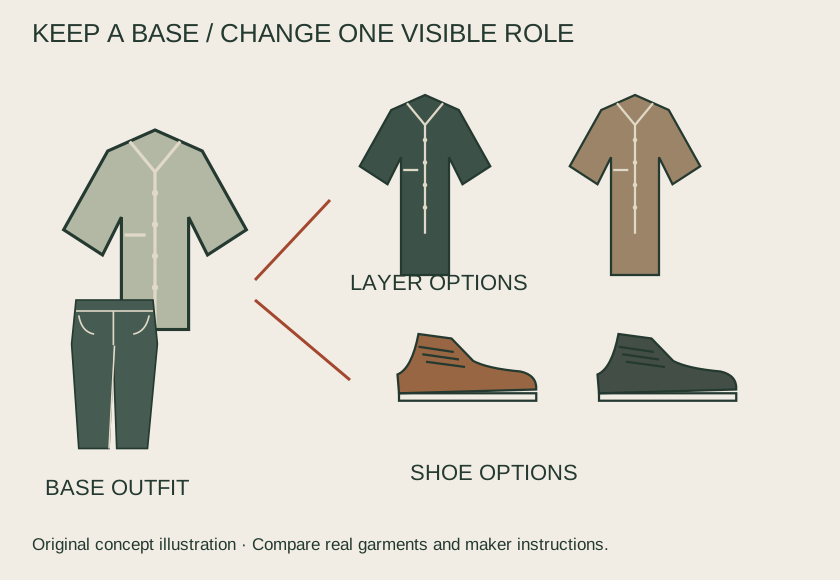
Keep the base outfit unchanged and try a different layer first. Compare an open overshirt, a simple knit, and a suitable jacket if you already own those options.
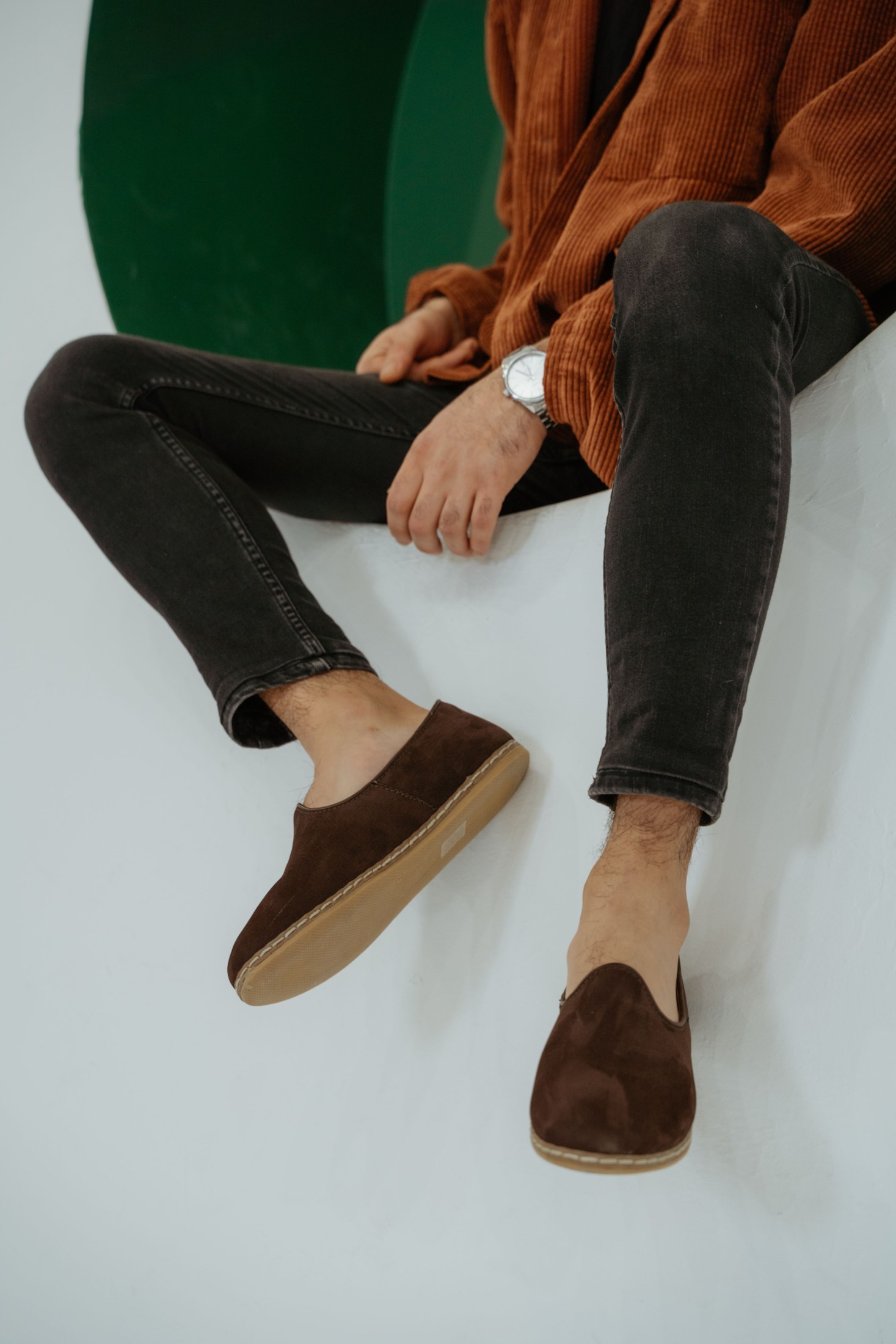
Next return to the base and change only the shoes. Notice whether the outfit feels more relaxed, more dressed, or simply more practical for a different amount of walking.
You can then compare a different shirt arrangement, such as rolling sleeves or changing the tuck where the garment allows it comfortably. Keep the version that remains useful after you sit and move.
One clear change helps you understand what made the variation work. Four simultaneous changes may look interesting, but they teach you less about the reliable combination you wanted to repeat.
Plan repetition around the week
Look at your schedule and assign the stable outfit to days when it genuinely fits. A desk day, an informal meeting, and a weekend lunch may offer different opportunities to use the same core pieces.
Do not force it onto the most formal or practical day simply to prove the outfit is versatile. A specific dress code, weather condition, or activity can be a good reason to choose something else.
For example, you could use the same comfortable pants and shirt shape with an overshirt on Monday, a knit on Wednesday, and no layer at a casual lunch. The variation comes from how the pieces serve the day rather than from pretending every outfit is unrelated.
Leave some room for a spontaneous choice. A plan that is too rigid can make a useful favorite feel like a uniform you have been ordered to wear.
Let condition decide the next wear
Repeating an outfit does not mean ignoring the state of its garments. After use, check whether each piece is clean, dry, comfortable, and ready to wear again according to its own care needs.
A shirt worn close to your skin on a hot commute may need a different next step from an outer layer used briefly indoors. Assess the item itself rather than applying a fixed number of wears to every fabric and situation.
Keep garments awaiting care apart from the ready-to-wear selection. A separate hanger or visible laundry area can prevent you from discovering a stain or odor only after getting dressed the next morning.
If your favorite combination is frequently unavailable because of laundry timing, solve that practical issue. You might adjust your weekly schedule or identify another clean base outfit instead of buying several copies immediately.
Use accessories where they matter to you
A belt, watch, scarf, or different pair of socks can make a familiar outfit feel fresh if you enjoy those details. Choose changes you notice and like, not accessories you feel obliged to add for variety’s sake.
Check that the accessory works with the actual activity. A bag that holds your work items comfortably adds more practical value than one chosen only because it appears different in a photograph.
Avoid letting small details hide a fit issue you keep tolerating. If the pants restrict you when sitting, changing the watch strap is not the useful adjustment the outfit needs.
You can also choose to keep accessories stable. Some people prefer variation in layers and color, while others enjoy a consistent clothing base with one personal detail changing around it.
Reconsider the meaning of a different outfit
A change does not need to be dramatic to be worthwhile. The same pieces can feel different when you use a lighter layer, reveal a neckline, or choose shoes that alter the ending of the trouser line.
At the same time, you do not have to make every repeated wear look different. A favorite outfit is allowed to remain a favorite without an explanation attached to it.
If you feel bored, identify what is actually bothering you. It may be the color palette, the silhouette, the context, or simply the lack of another comfortable option rather than the fact of repetition itself.
That diagnosis helps you choose a proportionate change. A new combination from existing clothes may solve the problem, while a carefully selected missing item might make sense when it opens several useful options.
Keep a small outfit record
Save a few photos of combinations that worked during real wear. Include enough of the shoes and layers to remember the complete arrangement rather than only the top half reflected in a mirror.
Add a brief note if something mattered, such as a cool office, a long walk, or a shirt that worked better untucked. These details make the photo a practical reminder rather than a decorative collection.
Review the record after a few weeks and notice which variations you actually used. You may find that three dependable versions are more valuable than twelve theoretical ones you never chose.
Retire a variation that repeatedly disappoints you without treating that as a failure of the whole base outfit. The record is there to reduce uncertainty, not to preserve every experiment forever.
Buy only when the gap is clear
If you decide that another item would help, name the specific role it would fill. A layer that works with three existing bases is a clearer purchase than something vaguely described as making the wardrobe less boring.
Try the item with the outfits it is meant to support before committing to it. Check care requirements, comfort, and the seller’s actual return conditions rather than assuming a similar color guarantees compatibility.
You may also discover that no purchase is necessary. Repeating clothes you like, keeping them presentable, and using a handful of deliberate variations can provide enough interest for an ordinary week.
The aim is a wardrobe that supports your life with less friction. Repetition becomes useful when it gives you reliable choices while leaving enough room for the changes you actually enjoy.
Sources & editorial notes
Primary pages checked October 22, 2026. Practical scenarios and style judgments are editorial explanations; exact garment and product instructions take priority.