In this guide
- Identify the immediate clothing need
- Sort by current fit without judging the label
- Measure the way you wear the garment
- Prefer adaptable roles over a complete matching set
- Evaluate adjustable features honestly
- Ask about alterations before assuming they are the answer
- Consider borrowing, rental, or secondhand with the same fit checks
- Keep spending decisions separate from size predictions
- Review the active selection periodically
When your size is changing, buy for the clothes you need to wear now and keep future purchases tied to a clear use. You can maintain a comfortable, presentable wardrobe without rebuilding every category before you know what will remain useful.
Start by separating current fit from predictions about where your size might go. A garment that works today has a practical role, while a purchase for an uncertain future size needs a different level of caution.
Identify the immediate clothing need
List the situations you actually need to dress for during the next few weeks. Work, ordinary errands, a scheduled event, and weather protection may matter more immediately than every category represented in your closet.
Choose the smallest useful set of outfits that covers those situations comfortably. This is a planning exercise rather than a rule that you should tolerate unsuitable clothes to keep the count low.
Include enough clean options for your laundry access and routine. Buying only one workable shirt can create a different problem if it is repeatedly unavailable when you need it.
Name any genuine deadline, such as a ceremony or new job, separately from a general wish to refresh your wardrobe. A specific requirement helps you decide which purchases need attention now and which can wait.
Sort by current fit without judging the label
Try on the garments that might still serve your immediate needs. Check them while standing, sitting, and reaching rather than deciding only by the size printed inside.
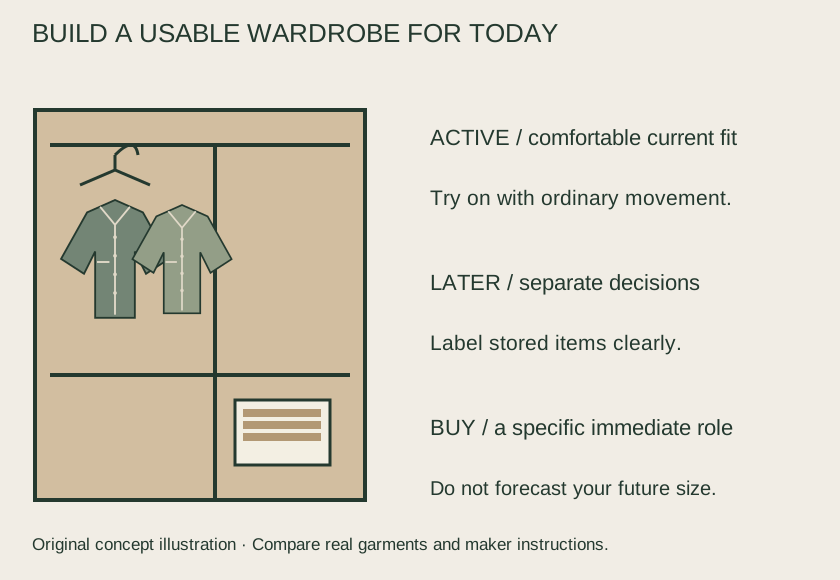
Put comfortable, appropriate pieces into the active selection. Keep items that need a decision, repair, or alteration separate so they do not make the ready-to-wear area look more complete than it is.
You can store some clothing for later if that fits your space and intentions. Label it clearly and avoid allowing the uncertain selection to crowd out the items you can actually wear now.
The goal is a usable wardrobe, not a verdict on your body or a requirement to fit a particular number. A different label can be the correct practical choice without needing any further explanation.

Measure the way you wear the garment
Use the maker’s current measuring instructions when shopping, and distinguish body measurements from finished-garment measurements. A familiar size name is less useful when your current fit needs have changed.
For pants, note where you want the waistband to sit comfortably. Proper Cloth’s waist-measurement guide connects that position with rise, which helps explain why the same nominal waist can feel different in another cut.
For shirts, check the dimensions relevant to your comfort rather than focusing only on chest size. Sleeve room, body length, and the cut through the midsection can affect whether the garment works during normal movement.
Record a few useful current measurements with their date and method. You can update them when needed without treating every shopping trip as a test of whether the old numbers still apply.
Prefer adaptable roles over a complete matching set
Choose a top that works with several current pants or a layer that can sit comfortably over more than one base. A piece with several useful roles can reduce the number of purchases you need immediately.
That does not mean every item must be universally versatile. A garment for a specific required event can be a sensible purchase even if it will not become your most frequently worn piece.
Avoid buying a large set of near-duplicates before testing one item through ordinary wear and appropriate care. You want evidence that the cut and routine work for you now before multiplying the commitment.
If you find a useful shape, save its details and measurements. That can make a later replacement more informed, while leaving room for the possibility that the same item will no longer be the right choice.
Evaluate adjustable features honestly
An elastic section, drawcord, belt loops, or a more forgiving cut may provide useful flexibility. Check how the actual garment feels and looks rather than assuming an adjustable feature covers an unlimited size range.
Sit and move with the adjustment set where you would use it. A waistband that technically closes can still be uncomfortable, and a belt pulled tight may create more gathered fabric than you enjoy.
Look at the whole garment after adjusting it. If the seat, shoulders, or upper arms do not fit, a flexible waist or open front may not resolve the areas that matter to you.
Choose the feature because it supports your intended use, not because it promises you will never need another size. The practical benefit is some room to adapt, with limits you can assess before purchase.
Ask about alterations before assuming they are the answer
If a garment is close to useful, ask a tailor what can reasonably change in that construction. Explain the current fit problem and the role you want the item to serve.
A hem adjustment and a major change to a jacket’s structure are different proposals. Get a concrete explanation of the work and cost before treating alteration as a cheaper alternative to replacement.
Do not assume that a garment can be let out later simply because it was once taken in. Available material, previous work, and construction affect the actual options.
If your size may continue changing, discuss that uncertainty rather than asking the tailor to predict it. You may choose a modest current adjustment or decide that another temporary option makes more sense.
Consider borrowing, rental, or secondhand with the same fit checks
For a specific occasion, a borrowed or rented garment may meet the need without a long-term purchase. Check the actual fit, condition, timing, and terms rather than assuming the arrangement is automatically simpler.
Secondhand clothing can also provide a useful option if its measurements and condition are clear. Ask about alterations, current dimensions, and any return conditions that affect your ability to assess it.
A low price is not enough if the garment is uncomfortable or needs uncertain work. Compare the complete effort and cost with a new option that already meets the immediate requirement.
Keep the choice tied to your circumstances. You do not need to use every alternative channel, and you can decide that a straightforward new purchase is the most practical solution for a particular item.
Keep spending decisions separate from size predictions
Set a realistic clothing budget for the immediate needs you identified. Consumer.gov’s basic budgeting guidance treats clothing as part of an overall spending plan, which is a useful context for deciding how much to commit now.
Do not buy a future size merely because a discount makes it feel like an opportunity you must preserve. The item still needs a plausible role, and the eventual fit remains uncertain.
Likewise, do not withhold every current purchase because you expect another change. Comfortable, appropriate clothes have value during the period when you actually need to wear them.
A small, deliberate purchase can be more sensible than either rebuilding everything or refusing to address a clear gap. The useful amount depends on your activities, care access, and available budget.
Review the active selection periodically
After a few weeks of ordinary use, check which pieces you reach for and which have stopped serving you. Update the active selection rather than leaving unsuitable items mixed among reliable choices.
Record why something no longer works: a fit change, different weather, an altered routine, or a style preference. That explanation can guide the next purchase more accurately than a general feeling that the wardrobe needs replacing.
Keep stored clothing accessible enough to revisit without making it a daily distraction. You can decide later whether to use, alter, pass on, or continue storing a piece when you have clearer information.
The aim is a wardrobe that supports your current life with fewer speculative purchases. Buy the useful fit, maintain enough ready options, and let future needs become clearer before asking today’s shopping decision to solve them all.
Sources & editorial notes
Primary pages checked October 22, 2026. Practical scenarios and style judgments are editorial explanations; exact garment and product instructions take priority.