In this guide
- Decide what loose means in this outfit
- Find the waistband you want to use
- Try three hem positions before shopping
- Give the sleeves a clear ending
- Check the trouser length with your chosen shoes
- Use color to connect the pieces
- Let fabric change your expectations
- Add an outer layer with enough room
- Finish with a movement check
A loose top and straight-leg pants can look intentional when you give the outfit a clear shape and let the pieces relate to each other. Start with the length of the top, the position of the waistband, and the way the pants meet your shoes rather than assuming that loose clothing needs to be balanced by something tight.
This is a styling exercise, so there is room for your own preference. You are looking for a combination you enjoy wearing, not a formula that claims to improve every body or satisfy every idea of proportion.
Decide what loose means in this outfit
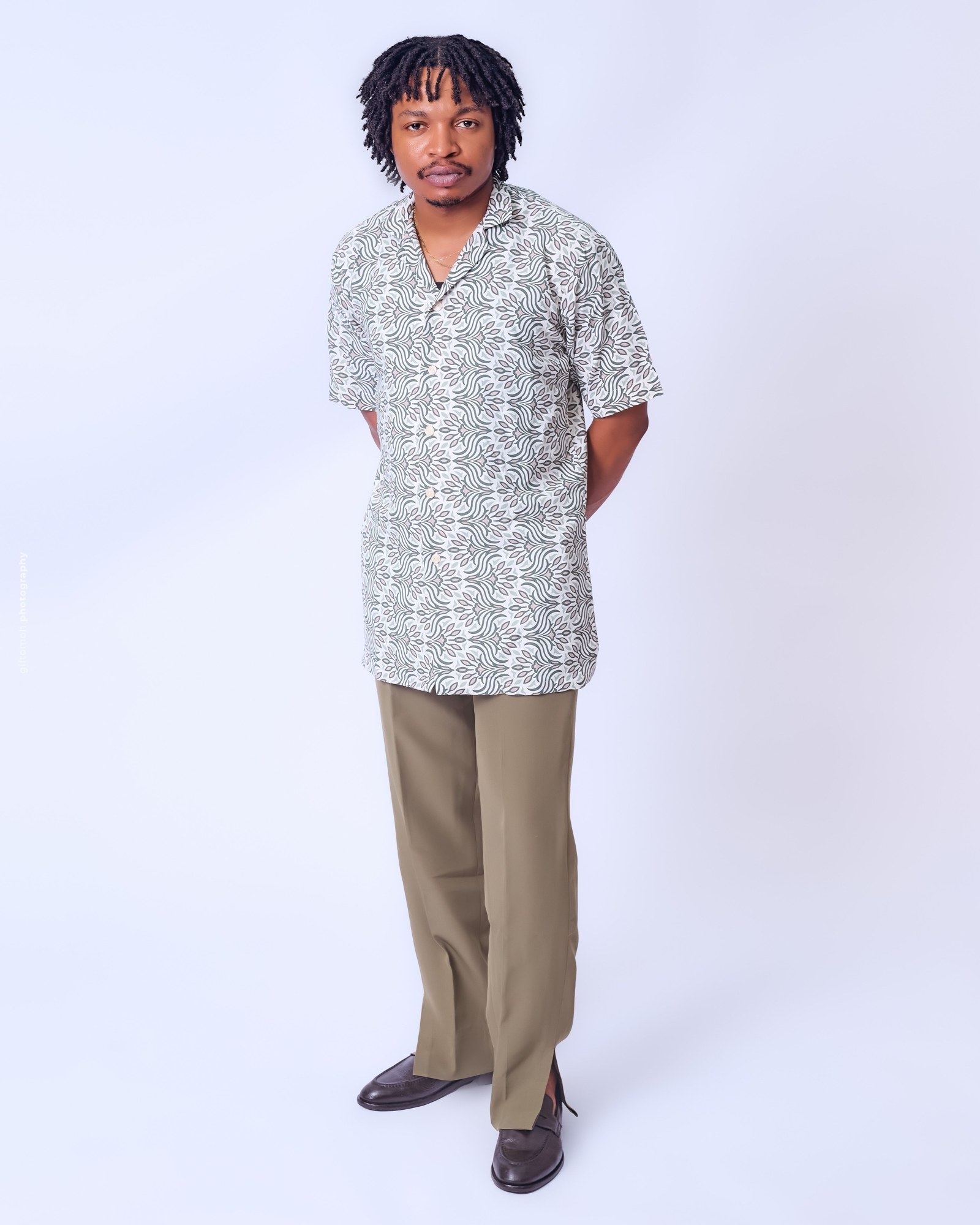
Put on the top and notice where the extra room sits. It might have a wider body, dropped shoulders, generous sleeves, a longer hem, or several of those features together.
Those are different shapes, even when a retailer describes all of them as relaxed. A broad, short overshirt will interact with your waistband differently from a long shirt with a narrow hem.
Check that the room looks deliberate when you stand naturally. If the top is simply several sizes larger than you need and its openings feel awkward, compare a purposefully relaxed cut before trying to fix it through styling.
The same distinction applies to your pants. Straight-leg describes a general line, but the rise, thigh room, opening, and length still determine the shape you actually see.
Find the waistband you want to use
Set the pants where they sit comfortably without repeatedly pulling them up or pushing them down. That position gives you a stable reference for evaluating the top’s length.
Look at how much of the pants remains visible between the shirt hem and shoes. A longer top reduces that visible area, while a shorter top or a tuck reveals more of the trouser line.
Neither arrangement is automatically better. Decide whether you want a long, relaxed upper section or a clearer division at the waist, then make one adjustment that moves toward that result.
If you keep changing the waistband position to rescue the shirt length, pause and check the pants’ fit. A stable, comfortable base is easier to style than pants you are wearing at a height their cut does not comfortably support.
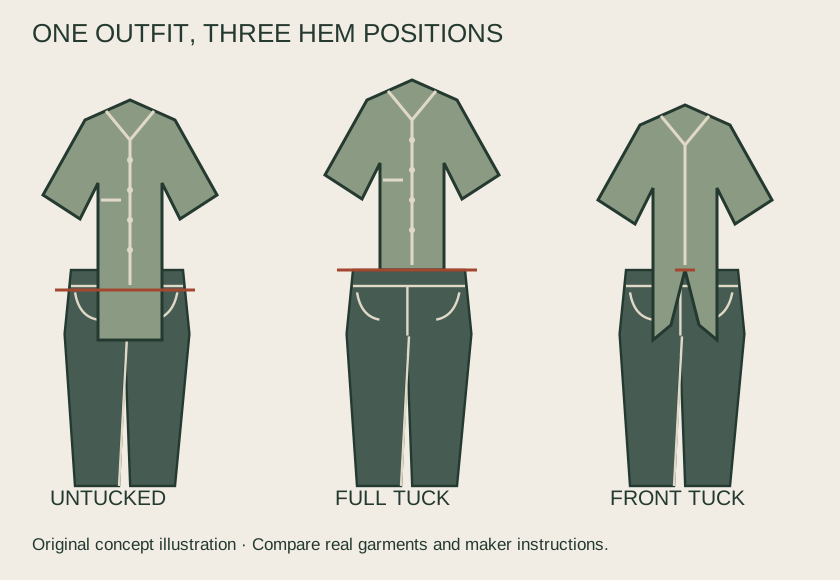
Try three hem positions before shopping
First wear the top fully untucked and let it settle. Look at the front and side without folding the hem under or pulling spare fabric behind you.
Next try a full tuck if the top and pants allow it comfortably. Notice whether the fabric distributes reasonably or creates more bulk around the waistband than you want.
Finally, try a small front tuck if that suits your style. Use it as a way to reveal a bit of the waistband, not as an obligation or a trick that must work with every garment.
Photograph the three versions from the same distance if you have trouble remembering them. You may discover that the outfit needs only a different hem arrangement rather than another pair of pants.
Give the sleeves a clear ending
A loose sleeve can be part of the appeal, especially on an overshirt or boxy tee. Check where its edge lands and whether it works with the rest of the outfit’s visible lines.
If rolling the sleeves is comfortable and appropriate for the garment, compare the result with the unrolled version. A little forearm showing can change the feel of the outfit without changing its overall roominess.
Do not rely on a roll that constantly falls down or feels tight around your arm. A styling choice should survive ordinary wear rather than demanding attention every time you reach for something.
For layered tops, check both sleeve openings together. An undershirt peeking out may be a detail you like, but it is worth deciding deliberately instead of discovering it only in a photograph later.
Check the trouser length with your chosen shoes
Stand in the shoes you expect to wear and look at the hem from the side. Straight pants may fall cleanly, form a fold, or bunch more heavily depending on their opening and length.
If the top is already generous, a large pile of fabric at the ankles can make the entire outfit feel less defined than you intended. Try another trouser length or a careful temporary cuff before assuming the answer is a tighter leg.
You may also prefer a fuller, flowing look from top to bottom. If so, make sure the hem is practical for walking and that you enjoy the effect in motion, not only when standing still.
Different shoes change this relationship. Compare a low-profile sneaker with a substantial loafer or boot while keeping the rest of the outfit the same, and notice which one gives the ending you prefer.
Use color to connect the pieces
Choose one straightforward color relationship for your first attempt. A dark top with lighter pants, similar tones throughout, or a quiet neutral base can each make the shapes easier to assess.
You do not need to make every item match precisely. Repeating a color family in the shoes, belt, or outer layer can create a connection without turning the outfit into a uniform.
If you feel distracted by a strong print while judging the silhouette, temporarily swap in a plain top of similar shape. Once you understand the proportions, return to the patterned version and evaluate the additional visual activity.
Avoid changing the top, pants, shoes, and accessories all at once when you are uncertain. You will learn more from one controlled change than from four new combinations whose differences are hard to separate.
Let fabric change your expectations
A crisp cotton overshirt can stand away from the body, while a soft knit may fall more closely even when both have generous measurements. Judge the actual drape rather than expecting every loose top to form the same outline.
Charles Tyrwhitt’s shirt-style descriptions distinguish relaxed casual constructions from more formal shirt details. That is a useful reminder to look beyond a size label when choosing the effect you want.
Try the outfit after the garments have settled into normal wearing positions. A shirt freshly arranged on a hanger can look different once its hem, sleeves, and collar respond to your movement.
If the fabric keeps catching on the waistband or sticking against another layer, investigate that specific interaction. A different base layer or garment pairing may be more useful than another round of proportion rules.
Add an outer layer with enough room
Put on the jacket you expect to use outside. Check whether it accommodates the loose sleeves and body without compressing them into bulky folds around your arms.
A roomier outer layer can continue the relaxed line, while an open overshirt can create a vertical frame around a tee. Try both ideas with pieces you own before deciding that the outfit requires a special purchase.
If a short jacket covers only part of a long shirt hem, look at the overlap from the back as well as the front. You may enjoy the layered result or prefer a cleaner ending, and either choice can be deliberate.
Remove the outer layer and see whether you still like the outfit underneath. A useful everyday combination should not depend on keeping a jacket on in every room if your day includes taking it off.
Finish with a movement check
Sit, walk, and reach in the complete outfit. Make sure the waistband stays comfortable, the top gives you usable movement, and the trouser hems do not catch under your shoes.
Then stand at an ordinary viewing distance and ask which detail, if any, keeps bothering you. Fix that detail first rather than declaring the whole relaxed silhouette unsuitable.
You may end up with a loose shirt, straight pants, and fairly simple shoes that require almost no adjustment. That ease is a worthwhile result in itself, especially when the outfit uses clothes you already own and want to wear more often.
Sources & editorial notes
Primary pages checked October 22, 2026. Practical scenarios and style judgments are editorial explanations; exact garment and product instructions take priority.