In this guide
Rise, inseam, and break describe three different parts of how pants sit on your body and meet your shoes. Once you separate them, a pair that feels wrong becomes easier to assess than it is when you keep changing waist sizes and hoping everything else follows.
Start with a pair you already wear comfortably, a flexible tape, and the shoes you expect to use with the new pants. You are building a useful comparison, not trying to discover a number that guarantees the same fit in every brand.
Rise changes where the waistband lives
The rise runs through the upper portion of the pants between the crotch area and waistband. Front and back rise are separate measurements, so one number cannot describe every aspect of the seat and waistband position.
Look at where your comfortable pair sits when you stand and when you sit. You may prefer a waistband lower on your hips or nearer your natural waist, but the pants need enough room and the right shape to stay there comfortably.
Proper Cloth’s waist guide specifically connects waist measurement with the height at which you wear your pants. That helps explain why a waistband measurement alone cannot tell you whether two different rises will feel the same.
If you pull a lower-rise pair higher than its cut comfortably allows, you may create tension that a larger waistband does not fix. If you push a higher-rise pair down, the crotch can hang lower and change the apparent leg length.
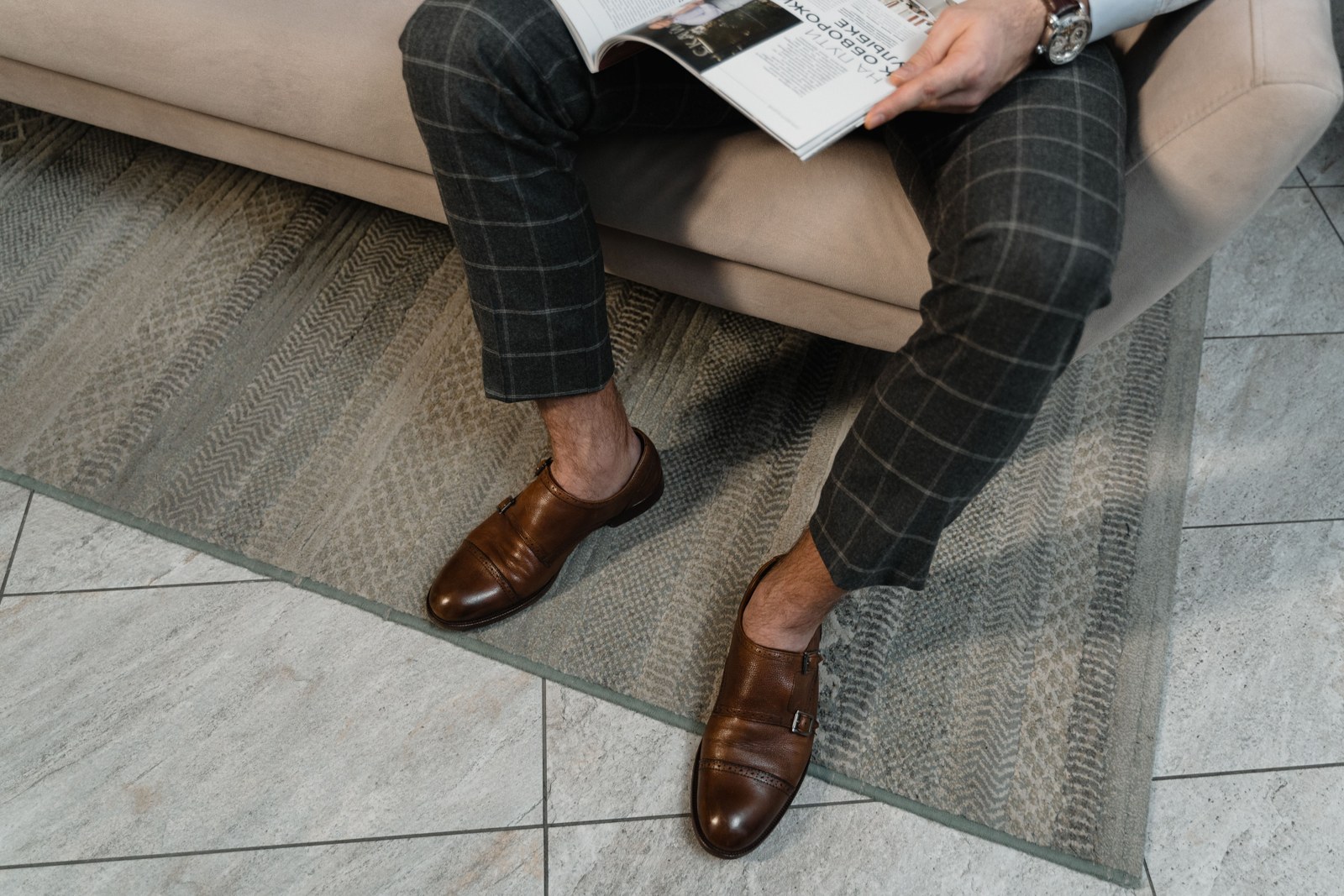
Look at the seat before blaming the hem
Put the pants on without a belt tightening them into a different shape. Check whether the waistband stays in your intended position, then sit on an ordinary chair and notice the seat, crotch, and upper thighs.
A long-looking leg may partly reflect pants sitting lower than you planned. Before asking for a hem adjustment, settle the waistband position and decide whether the upper block actually fits you.
Likewise, a pair can look short because you are pulling it higher to keep a loose waist from sliding. Fixing the visible symptom at the hem can leave the underlying problem untouched.
Try a different cut if the waist, seat, and thighs seem to require conflicting size changes. There is no requirement to make one style work when another offers a more comfortable starting shape.
Measure rise consistently
For a garment comparison, lay the pants on a flat surface and use the maker’s specified measurement path. Keep front rise and back rise in separate notes, and avoid comparing a straight-line estimate with a measurement taken along a seam.
Proper Cloth’s back-rise method follows the center back seam from the top of the waistband to the inseam intersection. If another brand uses a different endpoint, follow its method before drawing conclusions from the difference.
Do not stretch the fabric or waistband to make a measurement look tidier. Note whether your reference pair contains stretch and whether the published chart describes relaxed garment measurements, body measurements, or another convention.
Take a photograph of the tape placement if you plan to ask a retailer a sizing question. A clear view of both endpoints is more useful than a message saying that the rise seems a little off.
Inseam is a garment distance
The inseam is measured along the inside leg between the crotch seam intersection and the hem. It is not your height, and it does not tell you where a different pair’s crotch will sit when you wear it.
Lay one leg flat, smooth it without pulling, and follow the brand’s measuring instructions. Record the distance in one unit system so you do not accidentally compare centimeters with inches later.
If you use pants that have been altered, record their current measurement rather than relying on the size printed on the tag. The label may describe what you bought, while the tape describes what you now own.
It is also worth writing down the shoes you wear with that reference pair. Your preferred trouser length may look quite different over a low-profile loafer and a substantial boot.
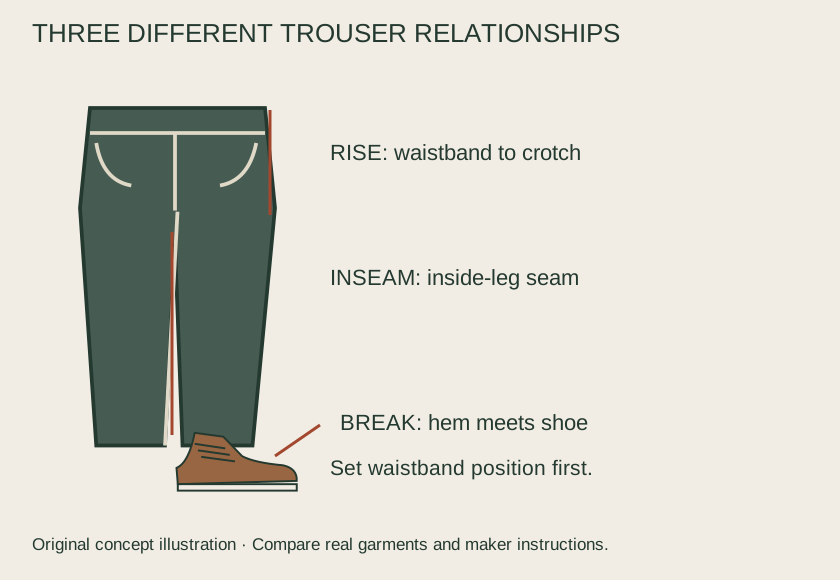
Break is the effect at the shoe
Break describes how the trouser hem meets the shoe and the fold that forms above it. It is a visual relationship between the pants, your stance, and the footwear rather than a separate seam measurement.
For a cleaner, shorter line, you may prefer little or no fold at the front. For a more traditional or relaxed line, you may like more contact and a visible fold, provided the extra cloth looks intentional to you.
Avoid choosing by vocabulary alone. Put the pants and intended shoes together, stand naturally, and look at the front, side, and back before deciding whether the length feels right.
A narrow opening can catch on the shoe while a wider opening falls farther over it. Two pants with the same inseam can therefore create different-looking breaks even on the same person.
Use the shoes that matter most
If the pants are mainly for work, start with your normal work shoes. If they are for a wedding, bring the exact pair or one with a very similar shape when you discuss the hem with a tailor.
Then try a secondary pair if versatility matters. You might accept a slight change in appearance, or you might decide that these pants belong with one type of footwear rather than every shoe you own.
Check the back hem when you walk, not only when you pose. If it drags, catches under the heel, or gets stepped on, you have a practical problem worth addressing beyond whether you like a fuller break.
Sit down once as well. A hem rises when your knee bends, so make sure you are comfortable with how the pants, socks, and shoes look in the position you actually use for much of the day.
Change one variable at a time
Imagine a pair that feels comfortable above the knee but piles heavily over your shoes. Start by assessing length and opening rather than automatically replacing it with a smaller waist size.
Now imagine a pair whose hem looks right but whose seat pulls when you sit. A shorter inseam will not create more room through the upper block, so put that adjustment aside while you compare sizes or cuts.
If you are unsure which variable is responsible, take front, side, and back photos in a neutral stance. Keep the waistband position and shoes consistent when comparing the next option.
These photos are a discussion aid, not a substitute for a tailor physically checking the garment. Fabric, seam allowance, construction, and your preferred silhouette all affect which changes make sense.
Prepare a useful alteration request
Tell the tailor how you want to wear the pants and show the footwear involved. Ask them to pin the proposed length so you can look, walk, and sit before you agree to the change.
If the waistband or seat also needs work, discuss those areas before finalizing the hem. Changing where the pants sit can change how the leg reaches the shoe, which is the relationship you are trying to settle.
Ask whether the alteration affects a cuff, original hem detail, or taper you want to retain. The clearest request describes your intended result and asks what is feasible rather than dictating a measurement without seeing it pinned.
For an online purchase, check the return conditions before having any work done. You want to decide that the base fit is worth keeping before you remove options through alterations or wear.
Keep a short reference note
Save the current waist, front rise, back rise, inseam, and leg opening of a pair that works for you. Add a line explaining the shoes and waistband position you used when judging it.
That note gives you a more useful shopping reference than a single familiar size. It also reminds you that the target is a comfortable outfit, not the satisfaction of making three numbers match exactly.
When the next pair feels wrong, return to the sequence: waistband position, upper-block comfort, leg length, and contact with the shoe. You can then change the part that needs attention instead of asking one size label to solve every problem.
Sources & editorial notes
Primary pages checked October 22, 2026. Practical scenarios and style judgments are editorial explanations; exact garment and product instructions take priority.