In this guide
- Read the return conditions first
- Confirm the item before judging the fit
- Inspect the main surfaces
- Test closures gently
- Try the garment with the right companions
- Separate a fit issue from a styling decision
- Read the care requirements as part of the purchase
- Decide what a small repair would actually involve
- Finish with a clear decision
Inspect a new garment while you still understand and can follow the seller’s return conditions. Check the item, fit, construction, and care requirements before removing tags or making changes that could limit your options.
You are not conducting a laboratory quality test or trying to find a reason to reject every small irregularity. You are deciding whether the actual garment matches what you ordered and is something you can comfortably use and maintain.
Read the return conditions first
Check the policy for the exact seller, product category, and purchase. Final-sale items, gifts, custom garments, and items bought through another retailer may have different conditions.
Proper Cloth’s published policy, for example, distinguishes garment categories and treatment before return. That is a useful illustration of why a rule you remember from one purchase should not be assumed to apply to another.
Note the applicable process and timing in a place you will actually see. If a requirement is unclear, ask the seller before washing, altering, or wearing the item outside.
Keep packaging and purchase information while you assess the garment. You can avoid an unnecessary problem by retaining what the seller asks for until you have made a clear keep-or-return decision.
Confirm the item before judging the fit
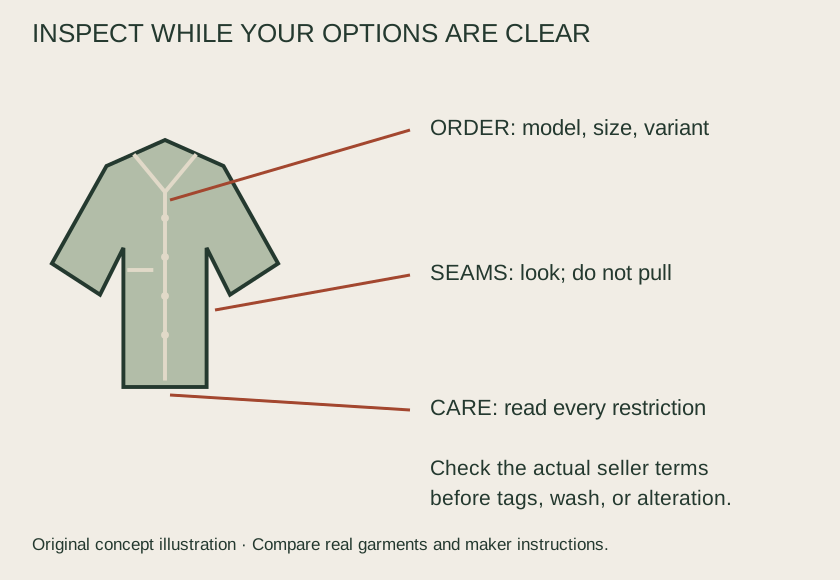
Compare the label, size, color, and item details with your order. A garment can feel wrong because the wrong variant arrived, which is a different problem from choosing the wrong size yourself.
Check any included components, such as a belt or removable liner, against the product description. Do not assume an accessory shown in a styled photograph is included unless the listing says so.
Look at the garment in ordinary light and compare its appearance with the stated description. Screen colors and lighting vary, so focus on whether the actual item meets your needs rather than expecting every photograph to reproduce color perfectly.
If you notice a clear mismatch, document it and contact the seller using its process. Avoid trying to repair or modify an item before clarifying a problem that may be part of fulfillment rather than fit.
Inspect the main surfaces
Lay the garment on a clean surface or hang it with appropriate support. Check the front, back, sleeves or legs, and the areas hidden by folds in the packaging.
Look for visible marks, damage, or a finish that seems inconsistent with the item you ordered. Use normal light and a reasonable viewing distance instead of relying only on a strongly lit close-up photograph.
Turn the garment carefully where appropriate and inspect the inside as well. A lining issue, missing care label, or unfamiliar mark may be easier to understand before you have worn and handled the item repeatedly.
Do not pull at a loose thread to see whether it matters. Record what you see and ask the seller if you are unsure whether it is a harmless end or part of a seam that needs attention.
Test closures gently
Fasten and unfasten the buttons, zipper, snaps, or other closures in the normal way. Check that they work without forcing them or trapping fabric you could avoid with proper handling.
If a zipper resists, stop and look at the surrounding fabric before pulling harder. You want to identify a problem, not create damage during the inspection.
Check that a button passes through its hole and that any attached spare is where the maker says it should be. The presence of a spare does not resolve a missing or insecure working button you need immediately.
For a jacket with temporary stitching or closed pockets, consult the maker’s instructions before cutting anything. Some finishing details are intended to be opened after purchase, but do not guess while you are still deciding whether to keep the garment.
Try the garment with the right companions
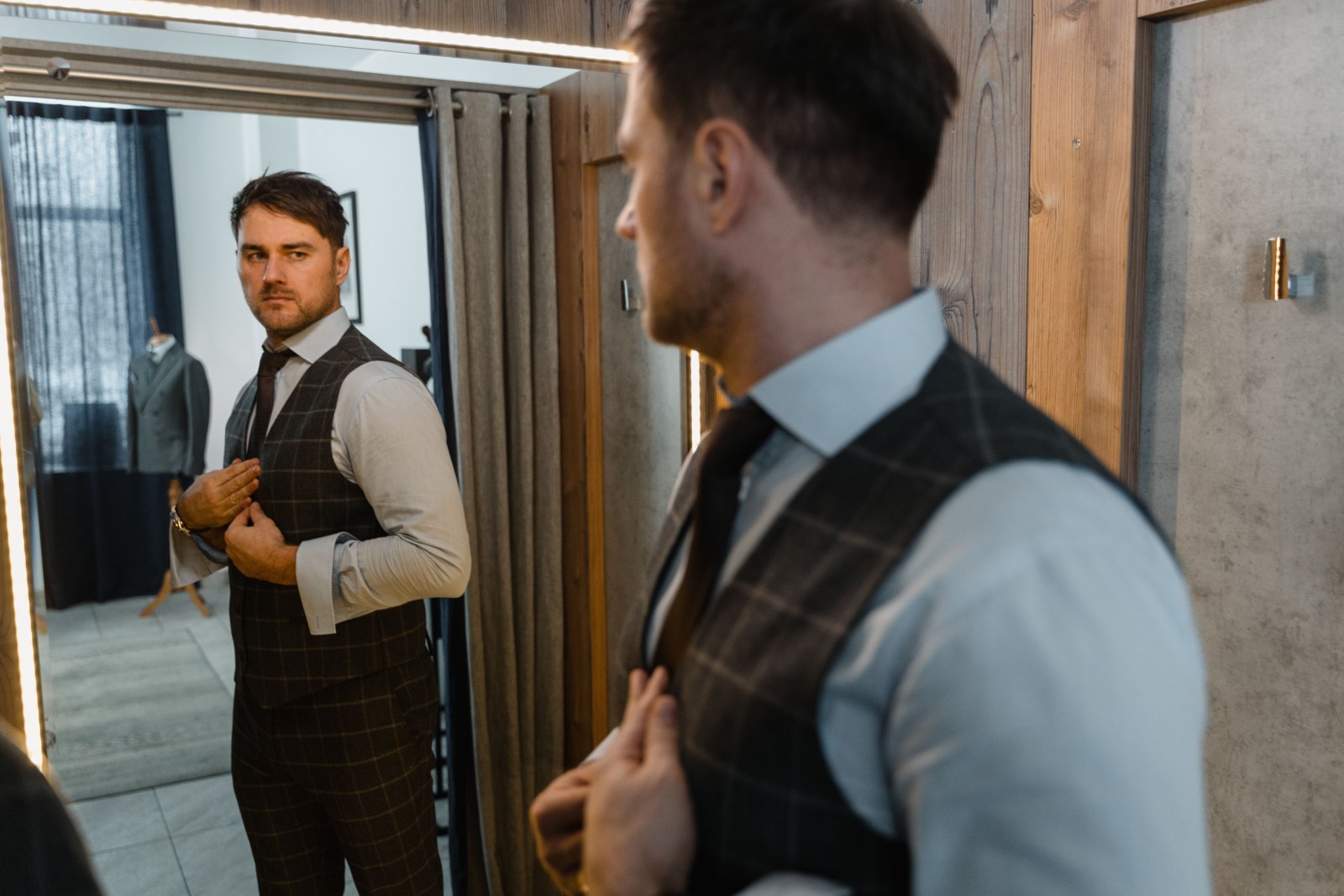
Use the base layer, pants, shoes, or outerwear relevant to the intended outfit. A shirt assessed over a thick unfamiliar tee may give you a different answer from the way you plan to wear it.
Stand naturally, then sit, walk, and reach in ordinary ways. Notice comfort and whether the garment returns to a usable position without repeated adjustment.
Check the front, side, and back when possible. You may discover that a hem catches, a shoulder feels restricted, or the waistband moves in a way the front mirror did not reveal.
Keep the inspection consistent with the seller’s conditions. An indoor try-on is a different activity from wearing a garment through a full day, and you should not assume both leave the same return options available.
Separate a fit issue from a styling decision
Ask whether the garment is uncomfortable or whether you simply dislike the current combination. A shirt can fit well while needing a different pant rise or layer to create the silhouette you prefer.
Try one reasonable pairing change before deciding, provided the garment remains within the assessment conditions. This helps you avoid returning a useful item for an issue caused by an unrelated piece.
If the garment itself restricts movement or needs several conflicting size changes, compare another size or cut. Do not assume a collection of alterations will automatically make the base worthwhile.
You can also decide that the style is not for you even when it fits technically. A useful purchase is one you want to wear, not merely one you can defend with measurements.
Read the care requirements as part of the purchase
Find the full care label and identify the cleaning, drying, and finishing instructions. Make sure you have a realistic way to follow them with your usual laundry access and schedule.
A shirt that needs a particular drying arrangement may be perfectly suitable for someone else and inconvenient for your setup. That is a practical compatibility question, not a judgment about the quality of the garment.
Check whether a finish or trim adds a restriction you had not noticed on the product page. Do not infer the care routine solely from the fiber name or the appearance of another shirt you own.
If care information is missing or contradictory, ask the maker before experimenting. You want an answer while the purchase decision is still open, rather than after an avoidable treatment changes the item.
Decide what a small repair would actually involve
If you like the garment but notice a minor issue, ask the seller about the appropriate resolution. It may offer an exchange, a repair process, or another option tied to the purchase.
Do not silently accept a defect because you assume fixing it will be easy. Confirm the work, cost, and effect on your options before you begin or take the garment to someone else.
For an alteration you personally want, such as a hem adjustment, establish that the rest of the fit works first. Ask a tailor what is feasible for the actual construction instead of relying on a general allowance quoted online.
A low purchase price does not make every repair or alteration worthwhile. Compare the complete decision with another suitable garment rather than treating the ticket price as the only number that matters.
Finish with a clear decision
Write down any question that remains unresolved and contact the seller promptly. A short message with the item number, clear photographs, and the specific issue is more useful than a vague statement that the garment seems wrong.
If you keep it, retain the care information and any useful fit measurements. You can then remove tags or complete intended finishing steps according to the maker’s guidance, with a clear reason for the choice.
If you return it, follow the actual process and keep the relevant confirmation. The value of the inspection is that you made an informed decision about the garment you received, while the practical options were still available.
Sources & editorial notes
Primary pages checked October 22, 2026. Practical scenarios and style judgments are editorial explanations; exact garment and product instructions take priority.