In this guide
- Look at the shirt from a normal distance
- Give the first version a quiet base
- Pull one color from the print
- Check the shape separately from the pattern
- Use a layer to control how much print is visible
- Let footwear set the practical mood
- Choose accessories with a clear role
- Match the setting without abandoning the shirt
- Save two versions you would actually wear
Build an outfit around one patterned shirt by deciding how much attention you want the pattern to receive, then choosing pants, shoes, and layers that support that decision. You do not need to make the shirt quieter than it is, but you can give it a clear place in the outfit.
Start with a shirt you already like rather than buying a print because a rule says you should own one. A pattern becomes easier to wear when its colors, shape, and overall mood feel like something you would willingly choose on an ordinary day.
Look at the shirt from a normal distance
Hang the shirt where you can step back and see the overall effect. A small check may read almost like a texture, while a large floral print can remain distinct across a room.
Notice the background color as well as the printed colors. The background often occupies much of the visible shirt and can provide a straightforward connection with pants or a layer.
Then look at the pattern’s contrast. A print with similar light and dark values creates a different impression from a sharply contrasting design even when both use the same broad color families.
You do not need to label the print precisely before wearing it. The useful observations are how noticeable it feels, which colors you want to repeat, and whether you like its appearance at full-outfit scale.

Give the first version a quiet base
For your first outfit, choose plain pants you already wear comfortably. This makes it easier to assess the shirt without another strong pattern competing for your attention.
Try a neutral you own rather than assuming every print needs black pants. Navy, gray, olive, cream, or brown may each work depending on the actual shirt and the effect you want.
Keep the shoe choice straightforward too. You can evaluate a more noticeable shoe later, once you understand whether the shirt-and-pants combination feels coherent on its own.
This is a learning setup, not a permanent restriction. You may eventually enjoy mixing patterns, but there is no need to introduce that extra decision while you are still working out how to wear this particular shirt.
Pull one color from the print
Choose a color that already appears in the shirt and compare it with an existing pair of pants or a layer. You are looking for a broad relationship rather than an exact match under every possible light source.
A darker version of a printed color can create a connection without making the outfit look like a matching set. A lighter version may feel more relaxed or more noticeable, depending on the rest of the combination.
Try the background color as a reference if the individual printed colors feel difficult to use. That can be simpler than choosing the brightest small detail and building the whole outfit around it.
If nothing in your closet relates comfortably to the print, try a plain neutral before deciding you need a special purchase. The most useful pairing may already be waiting beside the pieces you wear regularly.
Check the shape separately from the pattern
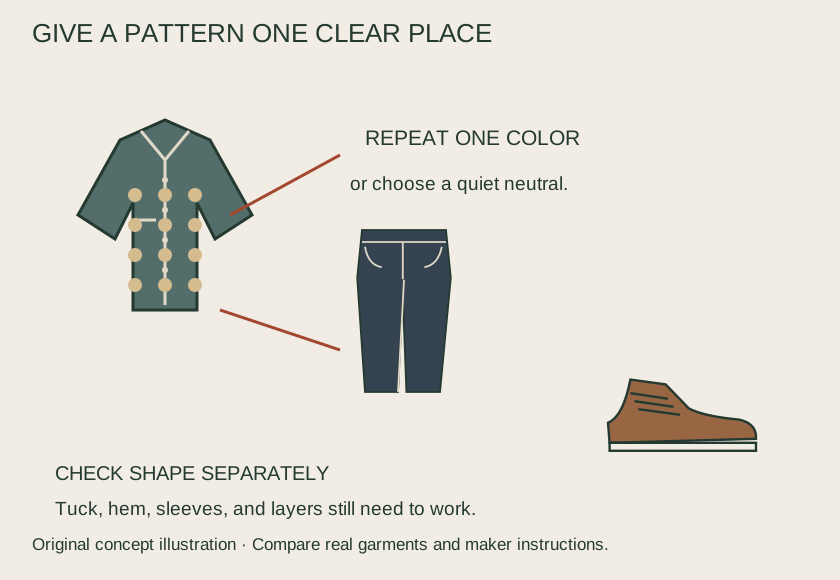
Put the shirt on with the intended pants and assess the fit as you would with a plain shirt. You still need comfortable movement, a hem length you like, and sleeves that work during ordinary wear.
A busy print can distract you from a shape issue in a fitting room photograph. Sit, reach, and look from the side so you do not buy a pattern you love in a cut you keep fighting.
Charles Tyrwhitt’s shirt-style descriptions distinguish formal shirt details from more relaxed casual constructions. Use the shirt’s actual collar, fabric, hem, and cut as clues rather than treating every printed shirt as the same kind of garment.
Decide whether you prefer it tucked, untucked, or worn open over a suitable base layer. Each arrangement changes how much pattern you see and where the outfit’s main dividing lines appear.
Use a layer to control how much print is visible
An open jacket or overshirt can frame a narrow central area of pattern. That may help if you enjoy the shirt but want a quieter overall result for a particular setting.
Take the layer off and check the outfit underneath before leaving. You may remove it in a warm room, so the full shirt should still be a version you are comfortable wearing.
If you use a sweater over the shirt, look at the collar, cuffs, and hem together. Small glimpses of pattern can work, but decide whether each visible edge looks intentional to you.
Avoid relying on a layer to conceal discomfort or a badly fitting shirt. The layer is a styling option, not a reason to keep a garment that does not allow you to move naturally.
Let footwear set the practical mood
Try shoes that suit the occasion and the amount of walking involved. A patterned shirt does not remove the need for footwear that is comfortable and appropriate for the day.
Compare a simple sneaker, loafer, or boot if those options exist in your closet. The color may remain quiet while the shape and sole change how relaxed or dressed the outfit feels.
Look at the trouser hem where it meets each shoe. An awkward pile of fabric at the ankle can distract from the shirt even when all the colors seem compatible.
Keep the version that works in motion, not just the one that creates the most striking still image. You want to enjoy wearing the outfit after you have stopped checking it in a mirror.
Choose accessories with a clear role
If the shirt already provides the visual interest you wanted, simple accessories may be enough. A useful belt, watch, or bag can support the outfit without adding another focal point.
If you like a more expressive combination, add one noticeable detail and reassess. You can stop when the overall effect feels right rather than filling every available space with another color or pattern.
There is no need to buy an accessory solely to repeat a tiny color in the shirt. A broad connection can be pleasing, but a perfect match is not a requirement for a coherent outfit.
Likewise, do not remove a practical item you need just because it is not shown in an inspiration photograph. Your everyday bag or weather layer belongs in the real version of the outfit.
Match the setting without abandoning the shirt
Consider whether the print’s mood suits the actual event or workplace. An informal lunch may allow a different level of visual activity from a meeting where you want the clothing to remain quieter.
If the setting has a clear dress requirement, use that requirement first. A shirt you enjoy can remain a good weekend piece even if it is not the right choice for every occasion.
When you are unsure, ask a concrete question about the event rather than assuming that all collared shirts meet the same expectation. The venue, activity, and host’s instructions provide more useful context than the collar alone.
You can also choose a different arrangement of the same shirt, such as a quieter layer and plain pants, when that genuinely fits the setting. Do not force an adaptation if you already have another appropriate outfit you prefer.
Save two versions you would actually wear
Once you find a combination you like, make a second version using one controlled change. A different pant color or layer can give the shirt another useful role without requiring a completely new outfit.
Take a quick reference photo and note the shoes if they matter to the result. That makes the next wear easier and prevents you from rebuilding the same decision from scratch.
Your goal is to make the patterned shirt feel like part of your wardrobe rather than a special problem. A clear base, a deliberate amount of visible print, and comfortable proportions give you a practical place to start.
Sources & editorial notes
Primary pages checked October 22, 2026. Practical scenarios and style judgments are editorial explanations; exact garment and product instructions take priority.