In this guide
Your wool jacket does not need a dramatic refresh every time you take it off. A quick inspection, some space to air, and careful surface care can make tomorrow’s outfit easier without turning tonight into a laundry project.
Start with the jacket’s care label and condition, because a structured blazer, a knitted cardigan, and a heavy overcoat are different garments. This routine is for maintaining an otherwise wearable woven jacket between proper cleanings, not for treating a serious stain or overriding cleaning instructions.
Give the jacket a landing place
Choose somewhere you can hang the jacket without crushing its shoulders against other clothes. You want enough room to look at the front, back, and sleeves rather than putting it straight into a crowded closet.
Empty the pockets before you forget what you carried. A wallet, keys, and folded receipts are also easy to miss when you later check the jacket for a mark or decide whether it needs cleaning.
Use a hanger that supports the jacket’s shoulders without pushing beyond them. UNIQLO recommends thick hangers for wool coats; a practical check is whether the shoulder area rests on support rather than hanging over a sharp, narrow edge.
Avoid making a floor pile your default stop. Even if you plan to pick it up later, you have made it harder to see the garment clearly and easier to overlook a spill until the next wear.
Inspect before you start brushing
Look at the collar, lapels, cuffs, elbows, pocket openings, and lower front. Check the lining too, because a clean-looking exterior is not the whole story of how the jacket feels or smells when you wear it.
Use ordinary daylight if possible, and turn the jacket so shadows do not hide a mark. You are deciding what kind of attention it needs, not trying to make every tiny difference disappear immediately.
Loose lint and surface dust are one category; an oily spot, drink spill, or persistent odor is another. A brush is a surface tool, so do not expect extra strokes to solve a problem that calls for appropriate cleaning.
If you find a stain, note what caused it and when it happened before handing the garment to a cleaner. Do not conceal an unsuccessful home treatment, since knowing what you applied can be useful information for the person assessing it.
A seam coming loose, a snag, and a pill also call for different decisions. Resist pulling a protruding thread just because it looks removable; stop and arrange an appropriate repair when you cannot identify what you are seeing.
Air it with room to breathe
Hang the jacket in a dry, ventilated place while you decide whether it is ready to return to the closet. Marimekko recommends airing wool between uses, which makes a sensible first step when the garment needs a pause rather than washing.
Choose a position where the jacket is protected from spills, pets, and foot traffic. Airing does not require turning a balcony rail, a bathroom door, or a precarious hook into a permanent clothes-care station.
Keep it away from direct heat sources. If the jacket is actually wet, consult its care instructions for handling and drying instead of treating a radiator or hair dryer as a shortcut.
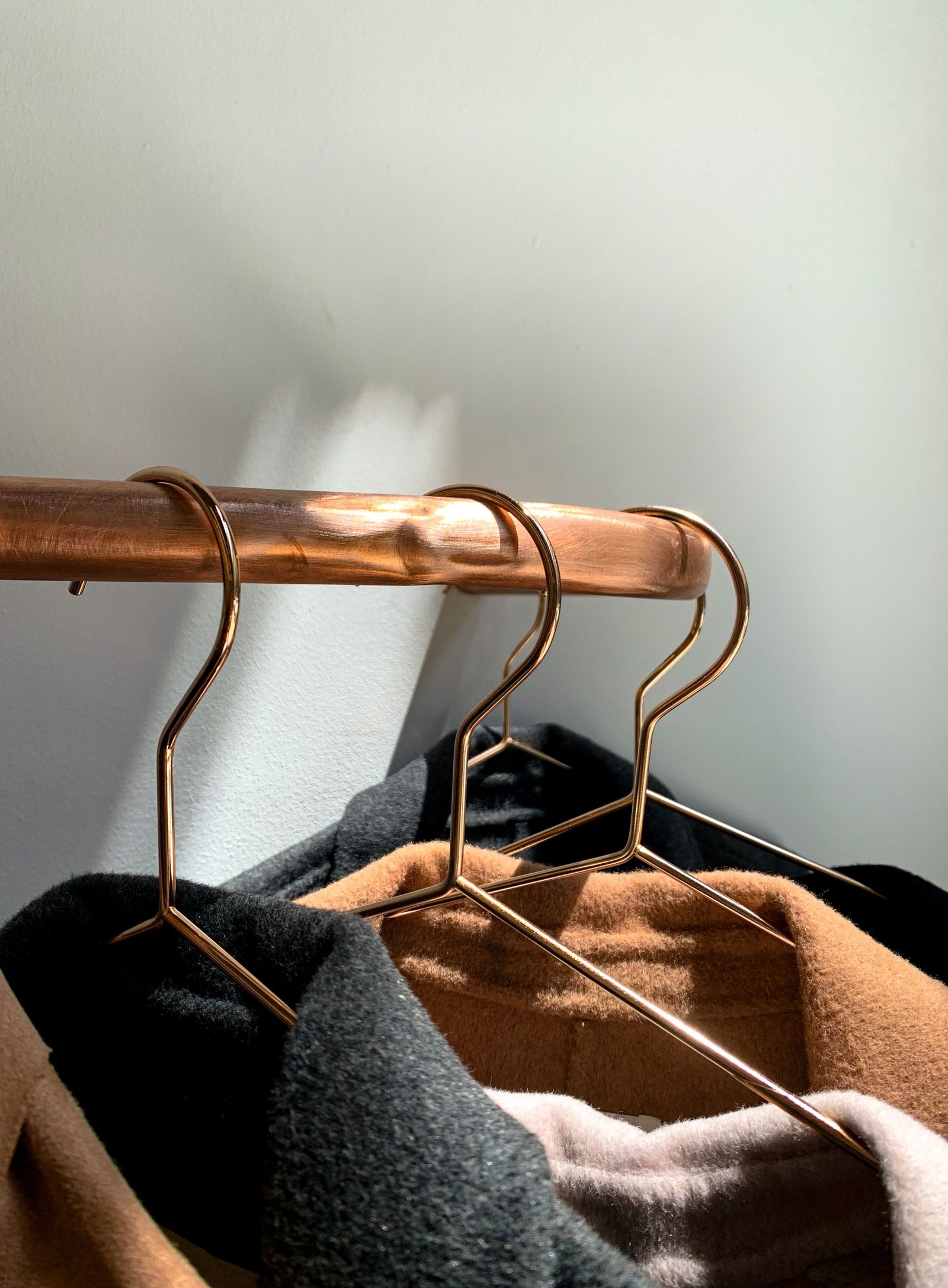
This wardrobe scene shows how closely garments can sit together on a rail. For a jacket you are airing, create a temporary gap rather than assuming that a tightly packed closet offers the same practical access and airflow.
Use condition rather than an invented timer to decide what happens next. A jacket that still feels damp or smells strongly should not be declared refreshed simply because it has been hanging for a particular number of hours.
Brush lightly, with a reason to stop
Check that your brush is intended for clothing and that it is clean. A shoe brush carrying polish or grit is a poor tool to introduce to your jacket, regardless of how similar the handle looks.
Test a small, inconspicuous area before working across the visible front. Watch for unwanted fuzzing, pulled fibers, or a change in appearance, and stop if the fabric does not respond well.
UNIQLO’s coat guidance recommends brushing when dust or lint is noticeable and warns that excessive brushing can harm the texture. Make the visible problem your reason to brush, rather than using a fixed number of vigorous strokes as a ritual.
Work in sections so you can support the fabric and see what changes. Start around the upper jacket, then move down the body and sleeves, keeping your movements controlled and your pressure light.
For a directional surface, notice which way the fabric lies and finish it consistently. If you cannot tell whether a nap or textured finish should be brushed at all, ask the manufacturer before experimenting on a prominent lapel.
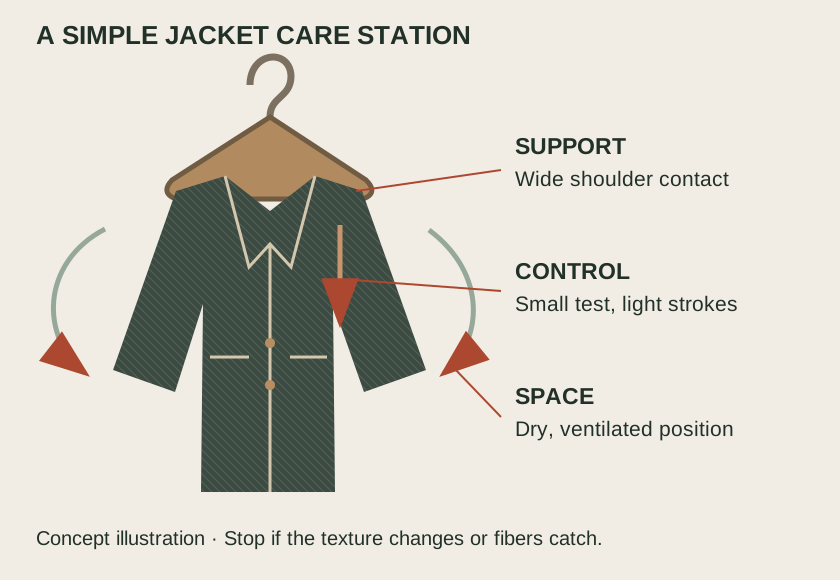
The illustration is a conceptual care setup, not a drawing of a particular jacket’s construction. Its useful point is the relationship between supported shoulders, a manageable brushing area, and space around the hanging garment.
After a pass, look again from a normal viewing distance. If the loose lint is gone, you do not need to continue until the brush collects something every time; leaving the surface alone is a valid next step.
Separate pills from loose lint
A loose pale fiber sitting on a dark sleeve can look distracting, but it is not necessarily a pill. Before choosing a tool, check whether the material rests on the surface or is attached to the fabric.
Pills are not a cue to pull harder with your fingers or brush repeatedly. If the garment needs depilling, consult its maker’s guidance and use a method appropriate to that fabric and construction.
Marimekko advises testing care tools on an inconspicuous area first. That small check matters more than a tool’s broad claim to suit wool, because you are maintaining one particular surface rather than an abstract fiber category.
If you are unsure about a fine or loosely woven jacket, a cleaner or repair specialist can help you decide what to do. You can keep wearing another jacket while you get a useful answer instead of making this one an experiment.
Put it away according to the garment
Return a dry, presentable woven jacket to a supportive hanger with enough room that its sleeves are not wedged into hard folds. Arrange the closet so you can remove it without dragging its face across rough hardware or a neighboring zipper.
Do not apply the same storage rule to every wool item. Marimekko distinguishes coats on sturdy hangers from wool knits stored folded, so check whether the piece you are holding is a woven jacket or something more sweater-like.
For longer storage, start with a clean garment and follow its maker’s protection guidance. A garment bag can be useful, but it does not turn an unclean or damp jacket into a storage-ready one.
Keep the storage location accessible enough to check occasionally. If you notice damage or signs of textile pests, investigate the actual problem and seek suitable advice rather than assuming a fragrant block in the closet has solved it.
Know when maintenance has reached its limit
If the jacket is visibly soiled, has a stubborn stain, or still smells unpleasant after airing, plan an appropriate cleaning. Neither brushing nor airing is a promise that you can avoid cleaning indefinitely.
Take the full care label to the cleaner, including any instructions about steam or finishing. Describe the affected area and your observations plainly instead of telling them the jacket merely needs a generic refresh.
You should also pause if the garment has bonded details, unusual trim, or a surface treatment you do not understand. The fiber name alone cannot answer every question about a finished jacket’s care.
Keep an alternative outfit ready while the jacket is away. That simple wardrobe habit gives you time to get a problem handled properly and removes the temptation to rush a treatment because you need the same blazer tomorrow.
Make the routine fit your evening
Set up the hanger and brush where you will remember to use them. If they are buried behind luggage or cleaning bottles, even a simple care habit becomes another task you postpone.
Your quick version can be empty pockets, inspect, hang with space, and decide whether anything else is needed. Brush only when appropriate, then check that the garment is ready before returning it to storage.
You are looking after clothing you already like, not chasing a permanently showroom-fresh surface. A deliberate, gentle routine gives you a clearer view of when the jacket is ready to wear and when it needs more qualified attention.
Sources & editorial notes
Primary guidance checked October 22, 2026. Practical scenarios and illustrations are editorial explanations; garment-specific instructions take priority.