In this guide
- Start with the itinerary and conditions
- Give each shoe pair a job
- Build the most demanding outfit first
- Choose tops around the planned wears
- Test the physical packing arrangement
- Keep arrival needs accessible
- Plan the return as well as the departure
- Remove the uncertain extras deliberately
- Save the list after real use
Pack a weekend wardrobe by assigning an outfit to the activities you expect, then choosing one extra pair of shoes for a specific job. Wear the pair that best serves travel and walking, and pack the second only when it adds a useful capability or fits an occasion the first pair does not.
This approach reduces duplicate choices without pretending every trip can use the same tiny list. A wedding weekend, casual city break, and visit involving outdoor activity can each require a different combination.
Start with the itinerary and conditions
Write down departure, arrival, main activities, and the return journey. Include any meal, ceremony, or workplace visit with a stated dress expectation instead of treating the whole weekend as one undifferentiated event.
Check the forecast and the practical setting for the dates and destination. You may need a layer, weather protection, or footwear for a surface that is not obvious from the name of the trip.
Identify any activity that requires specialized clothing or shoes. If the weekend includes that kind of requirement, account for it honestly rather than forcing a minimalist packing exercise to cover a job it cannot handle.
Then note what can reasonably repeat. A jacket or pair of pants may support several outfits, while a clean top or other close-to-skin item may need a different plan after a demanding day.
Give each shoe pair a job
Choose your travel pair for the walking, standing, and transport involved. It should be something you already know you can wear comfortably, rather than a new pair you hope will become comfortable at the airport.
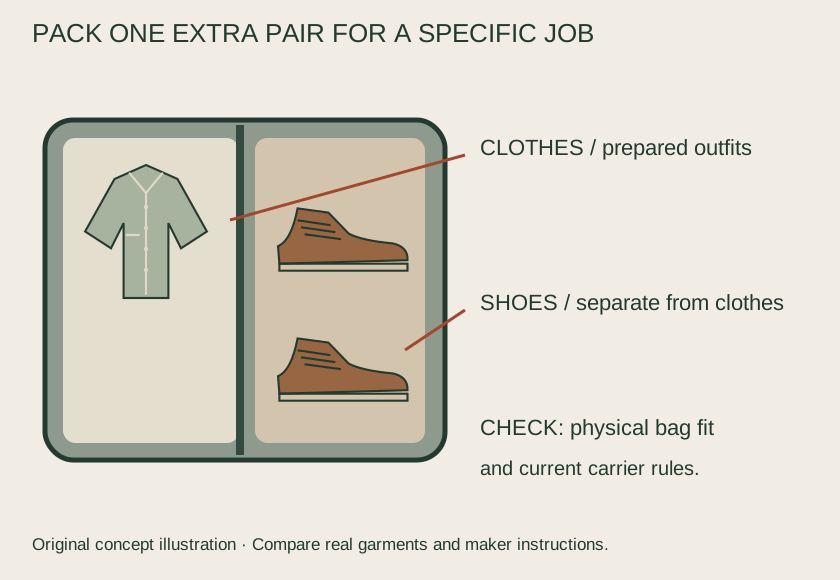
Name the reason for the packed pair: a formal dinner, ceremony, wet-weather alternative, or another clear need. If you cannot identify that role, try building the outfits around the travel pair before making room for more footwear.
Eagle Creek’s one-bag guidance emphasizes comfortable shoes and separating them from clothing with a suitable shoe organizer. Use that as a practical packing idea, not a promise that every traveler needs the same branded accessory.
If both pairs serve essentially the same purpose, compare which one you prefer with the complete outfits. You may be able to leave the duplicate at home without losing a useful option.
Build the most demanding outfit first
Lay out the clothes for the occasion with the clearest requirements. Include shoes, belt if used, socks, and a suitable layer so the outfit is complete rather than an optimistic list of main garments.
Try it on before packing if any combination is unfamiliar. You want to discover a trouser hem that catches on the shoes or a shirt that bunches under the jacket while there is still time to choose something else.
Use that outfit as the anchor for the rest of the weekend where practical. The pants may work with a more relaxed top, or the jacket may suit a second shirt without needing another complete formal setup.
Do not force reuse when it creates an inappropriate or uncomfortable result. A useful shared piece earns its place through real compatibility, not merely because it appears twice on your packing worksheet.
Choose tops around the planned wears
Assign a top to each occasion that needs one, then consider whether an additional clean option is sensible for your conditions. Warm weather, a long journey, and limited laundry access can change that decision.
Check how each top works with the same pants and shoes. A small selection becomes easier when the pieces connect without needing a special belt, layer, or shoe for every combination.
You can vary the mood with a shirt, knit, or suitable casual top while keeping the base stable. Choose the versions you are likely to wear rather than packing something solely because it looks versatile on paper.
Keep care instructions in mind. An item that needs a difficult finishing routine may be less useful on this trip than a piece you can maintain with the facilities actually available.
Test the physical packing arrangement
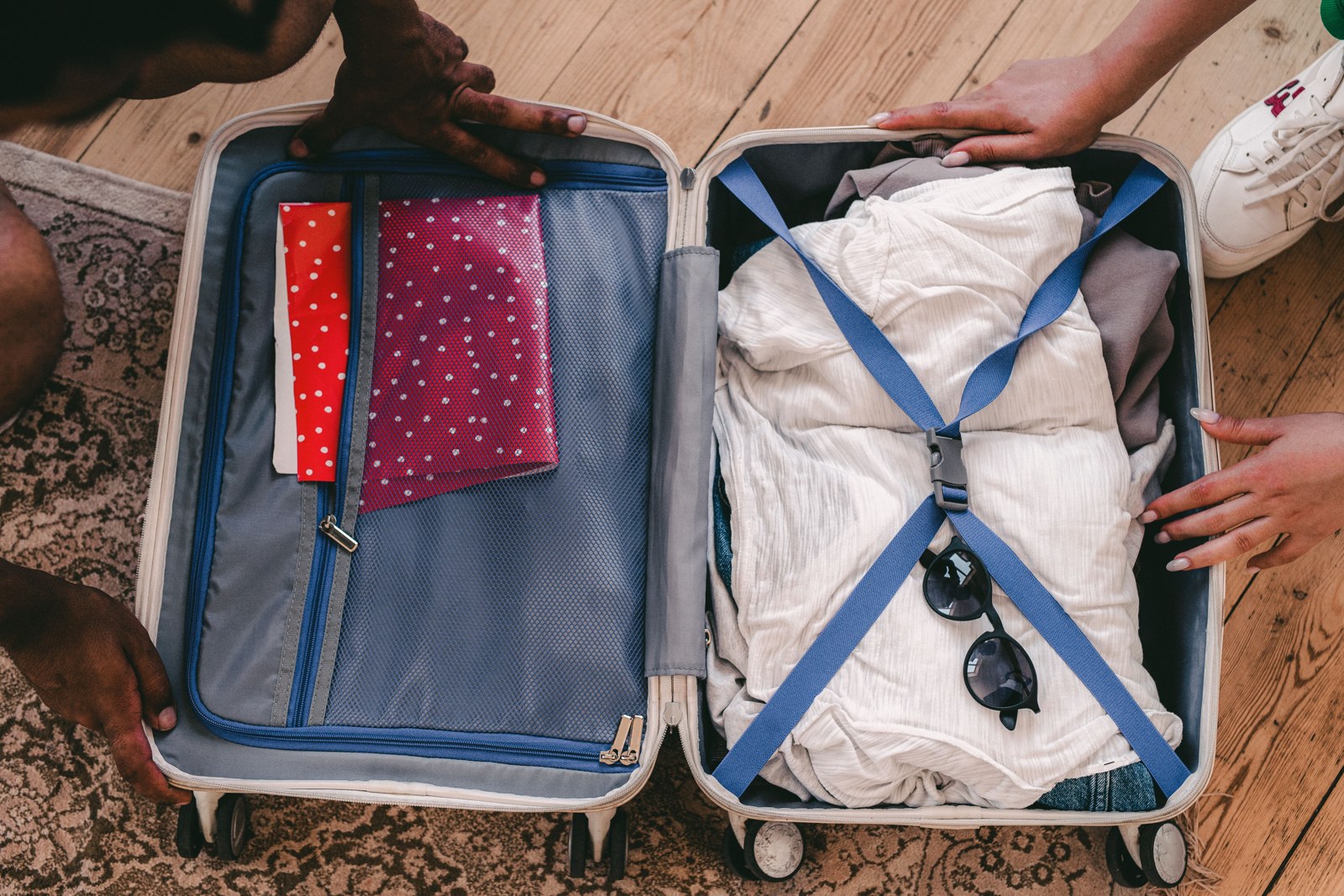
Put the shoes and clothes into the bag you intend to use before departure day. The volume of the actual items matters more than a theoretical list that assumes every shirt folds into the same size.
Use a suitable separate shoe bag or compartment so the footwear does not transfer dirt to clean clothing. Check the organizer’s dimensions against the shoes rather than buying one based only on a photograph.
Pack weight in a way that suits the bag’s design and your method of carrying it. Avoid making the bag so full that closing it requires force against a garment you wanted to keep presentable.
Leave room for the practical items the clothing list does not cover, such as toiletries and chargers. A wardrobe is only one part of your luggage, and it should not consume space those essentials still need.
Keep arrival needs accessible
Identify what you will need soon after reaching the destination. A change of shirt for dinner should not be buried beneath everything else if you have only a short time to get ready.
Place important small clothing items where you can find them reliably. Socks, a belt, or appropriate underwear can be easy to overlook when you concentrate on jackets and shoes.
If you are traveling by air, check the current carrier’s baggage rules for the ticket and route you booked. This guide does not provide a universal bag size or assume that every airline treats a garment bag the same way.
Keep essential travel documents and other critical items according to your own travel needs. Do not let a clothing arrangement make those items harder to access during the journey.
Plan the return as well as the departure
Give worn clothes a separate place in the bag for the trip home. A lightweight laundry pouch or another appropriate organizer can keep your ready-to-wear pieces distinct from items awaiting care.
Do not seal a damp garment into a crowded bag and forget it. Follow its care needs and arrange suitable handling before packing it for an extended period.
Think about whether the second shoe pair will be ready to travel after the event. If it may be wet or dirty, keep a practical separation method available rather than relying on its original packing condition.
A weekend list becomes more useful when it includes the state of things at the end. You are returning with used clothing, not recreating the perfectly folded departure photograph.
Remove the uncertain extras deliberately
Review each optional item and ask what situation it covers. If that situation is unlikely and another packed item already handles it acceptably, consider leaving the extra behind.
Keep an appropriate contingency for realistic needs rather than eliminating everything in pursuit of a smaller count. The aim is manageable luggage, not an avoidable problem when a shirt gets marked or the weather changes.
If you are packing several pieces because you have not settled the outfits, finish the outfit decision first. Uncertainty often occupies more room than the actual clothing requirement.
Try the bag once more after making changes. Make sure you can lift, carry, and open it comfortably and that the clothing still has a sensible place around the shoes and other essentials.
Save the list after real use
When you return, note which pieces you wore, which you skipped, and what you missed. Record the type of trip and conditions so the lesson remains tied to the actual weekend.
You may learn that the extra shoes were essential for the event or that they never left the bag. Either result helps you make the next decision with evidence from your own travel rather than a universal packing rule.
The useful list is one that supports the weekend without following you around as a heavy collection of unresolved choices. Clear outfits, a defined role for the extra shoes, and practical separation give you a strong place to start.
Sources & editorial notes
Primary pages checked October 22, 2026. Practical scenarios and style judgments are editorial explanations; exact garment and product instructions take priority.