As an Amazon Associate I earn from qualifying purchases.
Jogging pants should suit the way you move, what you carry, and the conditions in which you expect to use them. The jogger silhouette alone does not make a garment ideal for running. A substantial fleece pair, a lighter stretch pair, and a relaxed casual pair can serve different parts of an active wardrobe, even when every listing mentions workouts.
This guide includes men’s and women’s sizing directions and makes that distinction explicit. It does not translate one chart into another or assume a shared letter size means the same fit. We have not run in, washed, or performance-tested these pants. The recommendation notes identify clothing candidates and useful fit checks, without promises about pace, overheating prevention, chafing, odor control, or long service life.
Start with the session you actually plan
Describe a normal outing rather than an imagined perfect training day. Are you mainly jogging continuously, alternating walking and jogging, warming up before another activity, or buying casual pants that you occasionally exercise in? The intended role helps you decide how much emphasis to place on the waistband, hem, pockets, and appearance.
Think about whether the pants need to serve the whole outing. You may want one garment for a journey to an exercise session and a different arrangement for the session itself. A fleece styling direction can have a practical place without being the right choice for every warm-weather run. Choose for the actual routine instead of a broad list of sports in the sales description.
Also decide what you really need to carry. A phone and key create a different pocket problem from a wallet, headphones case, and several loose items. If a bag or another appropriate carrying method is already part of your routine, you may not need a large pocket count in the pants.
Compare the candidates by their garment direction
Fruit of the Loom EverSoft: a fleece option for the active wardrobe
The current Grey Heather, X-Large selection is one item, with 60% cotton and 40% polyester and machine-wash care. Its quick-cord elastic waist and banded bottoms identify a cuffed fleece direction, distinct from the open hems elsewhere in this comparison.
The EverSoft option is a men’s fleece-sweatpant direction to examine for the parts of your routine that suit that construction. Compare its actual waistband, hem, and pocket arrangement with a pair you already like. Fleece softness in a description is not a measured result or a reason to expect the pants to keep you cool through every run.
Useful role: an active casual or warm-up outfit when you prefer the selected cut and care routine. Check how the waistband sits during normal walking and sitting, and whether the lower leg works with your shoes.
Limits: we do not endorse permanent softness, odor protection, guaranteed dryness, or suitability for every jogging condition. Confirm the exact selected package, material, and garment label. Evaluate it as a particular sweatpant choice rather than relying on the EverSoft name to settle comfort for every wearer.
View the selected item on Amazon
Walifrey women’s joggers: use the corresponding women’s chart

The selected Black, women’s X-Large pair lists 92% polyester and 8% spandex, machine washing, a drawstring, two side pockets, and cuffed ankles. That identifies the cut to assess; ankle cuffs do not establish wind protection or reduced running resistance.
The Walifrey option is a women’s jogger direction with its own sizing expectations. It belongs in this general jogging-pant comparison for readers who want that cut and can use the matching chart. Do not buy from a men’s letter size or assume the same labeled size has equivalent waist, hip, rise, and length dimensions.
What to assess: the selected waist and hip guidance, hem arrangement, and any adjustable waistband. Decide whether you prefer this shape for the planned session or mainly as a casual active outfit. Check the actual pocket openings rather than assuming deep-looking pockets secure every item during movement.
Before ordering: verify the selected configuration, material, and complete care directions. No universal softness, irritation prevention, or all-session comfort is claimed. Choose it because its dimensions and role suit you, without disguising it as a men’s product.
View the selected item on Amazon
Real Essentials: a three-pack with relaxed, open hems
The current Set 6, Large, Standard selection is a three-pack of 100% polyester tricot with machine-wash care. The actual description specifies relaxed straight legs and open bottom hems. It should be compared as that construction, rather than described as cuffed fleece.
The Real Essentials option is a men’s multipack sweatpant direction to examine when you want several pairs for a manageable rotation. Verify the current selected quantity and configuration rather than assuming every family option contains the same garments or colors.
Useful comparison: check the waistband, lower-leg shape, pocket arrangement, and relevant dimensions. A pack is economical only when you expect to use the pairs for the role you chose. Decide whether the selected construction suits jogging itself, warm-up use, or casual downtime.
Limits: tricot wording does not establish a measured cooling effect or a particular level of comfort. Do not treat a seller’s basketball, running, or gym list as proof that the same garment is ideal for all activities. Assess fit within the return conditions before committing to a larger rotation.
View the selected item on Amazon
PARISDIARY: compare the zippered-pocket arrangement

The Large selection contains Black, Dark Gray, and Navy in a three-pack. The listing specifies 87% polyester and 13% spandex, machine washing, an elastic waist with an inner drawstring, and three zippered pockets. Pocket zippers do not imply a zip fly.
The PARISDIARY option is an athletic-sweatpant direction to examine when zippered storage is relevant to your routine. Check the actual number and position of closures on the selected garment and assess the intended contents. A zipper helps organize storage; it does not establish a bounce-free fit or theft-proof pocket.
Fit priority: compare the waistband and rise with ordinary movement, then inspect the lower-leg outline with your shoes. Confirm the selected package contents before calculating the price per pair. A multipack claim elsewhere in the family is not enough.
Purchase limits: we do not repeat shrink-proof, fade-proof, permanent comfort, or unlimited-movement promises. Read the exact material and care information. Choose the pair for a useful pocket arrangement and suitable proportions rather than treating stretch percentage as a performance ranking.
View the selected item on Amazon
G Gradual: a tapered athletic direction to assess
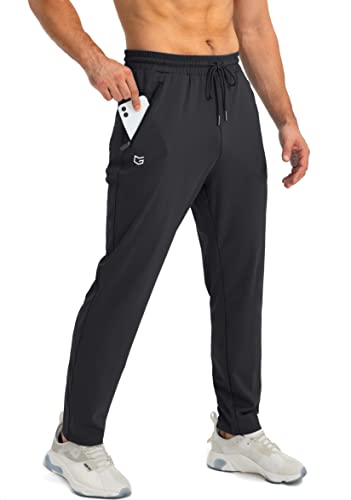
The current Black, Large pair lists 87% polyester and 13% spandex, machine washing, an adjustable drawstring waist, and three zippered pockets. Its tapered lower leg is open at the hem. It is not an elastic ankle-cuff construction.
The G Gradual option offers a tapered athletic styling direction. Compare its actual waist, rise, thigh, and hem dimensions with the shape you want for the outing. Four-way stretch language should not persuade you to accept a size that feels wrong in ordinary positions.
Reason to examine it: you prefer this outline and the selected pocket and waistband details suit the items you carry. During an allowed fitting, check whether the relevant openings accept your ordinary small items without forcing the fabric.
Limits: there is no measured range-of-motion, drying-time, chafing, or durability result here. Confirm the selected material and care instructions and decide whether the garment is mainly for jogging, another session, or casual wear. Its sport name does not make one cut a guaranteed solution for every body or weather condition.
View the selected item on Amazon
Read the chart before adjusting the drawstring
Use the chart for the exact men’s or women’s style and selected size category. Compare body measurements with body-chart values and garment dimensions with comparable garment measurements. A waist number, an elastic-range description, and a letter size do not necessarily describe the same thing.
Use a pair that works for a similar activity as a reference when comparable dimensions are available. Note its waist arrangement, front rise, thigh room, inseam, and hem opening. Record where each measurement begins and ends, and avoid stretching the reference pant merely to make it agree with a desired size.
A drawstring can arrange a waistband within the garment’s intended fit, but it does not correct the entire cut. If tightening the waist creates folds or the seat and thigh are still unsatisfactory, compare another size or silhouette. Likewise, a larger size can add unwanted length while failing to solve a specific rise problem.
Check the lower leg with ordinary movement
Wear the shoes you plan to use and fasten the pants normally during an allowed fitting. Stand, walk, and sit, then assess the hem after movement. A cuffed silhouette and an open hem need different checks; do not assume one construction always stays arranged correctly on every wearer.
If the cuff feels restrictive, note that specific issue instead of judging only the overall letter size. If the hem gathers more than you prefer, compare length and lower-leg shape. An advertised height range does not establish where the hem falls on your own legs.
The garment should suit the intended activity requirements. Do not treat a narrow ankle opening as a safety guarantee or claim that a cuff prevents every interference with footwear. Choose a fit you can use appropriately and follow applicable guidance for the place and activity where you jog.
Give your phone and keys a realistic carrying plan
Start with the minimum you need for the outing. Decide which items belong in trouser pockets and which are better carried through a method you already use. A large wallet and several loose objects can create a very different pocket arrangement from one key and a phone.
Within fitting conditions, assess whether the pocket opening accepts the intended item and whether the closure works without forcing it. Walk normally with a modest appropriate load, then notice pressure and movement. A quick fit assessment can identify your preference; it does not establish a tested bounce-control result during a whole run.
Keep small hard items arranged so they do not press uncomfortably against you, and do not overload the garment based on a spacious-pocket description. If carrying several items makes the pants awkward, change the carrying plan rather than assuming another pocket count will solve every issue.
Select fleece and lighter directions for a defined role
Read the selected material and construction description instead of treating every sweatpant as the same fabric. A fleece option and another athletic knit can feel different, but that does not provide a verified warmth or cooling comparison without relevant information. Choose the garment for the role and conditions you expect.
Do not assume moisture-wicking language prevents overheating or makes a substantial garment suitable for every hot day. Likewise, a lightweight name does not establish a temperature range for cold conditions. Follow applicable weather and activity guidance separately from the sales description.
If you need different clothing for warm-up time and the session itself, plan that change deliberately. A pair that works for the journey, cooldown routine, or casual errands can still be a useful purchase. Its value does not depend on pretending it meets every stage of every workout.
Inspect the contact points before buying a rotation
During a permitted fitting, notice where the waistband, seams, pocket openings, and hem touch your body. Check the ordinary seated and moving positions you expect to use. A fabric percentage or a soft description cannot tell you whether those contact points suit your personal preferences.
Compare the pants with the top and any layer you will wear. Check whether the waist feels crowded by the shirt arrangement and whether a jacket interferes with access to the pockets you intend to use. An attractive separate garment can still create an awkward complete outfit.
If something is unsatisfactory, describe the location clearly. A waistband that needs a different position, a cuff that feels too close, or a pocket that presses when seated gives you a useful next decision. Avoid converting a short fitting into a medical or long-duration comfort claim.
Use a first purchase to plan quantities sensibly
Count the sessions and ordinary wear occasions between realistic wash days. Include the reserve you actually need. A three-pair pack may fit one person’s routine while another would benefit from fewer garments with a more suitable cut. The largest quantity is not automatically the strongest value.
Verify the pack count, colors, and selected size in the cart. Calculate price per confirmed pair from the full checkout cost rather than a general family title. Do not assign a fixed lifespan to a polyester blend or multiply an unsupported durability estimate into a cost-per-year comparison.
Read the seller’s fitting and return conditions before washing, removing tags, or exercising in the pants. Assess what you can while the purchase remains reversible within those terms. If you decide to keep the pair, use your own subsequent experience to guide a repeat order without presenting it as a universal product test.
Make care part of the active wardrobe plan
Follow the complete garment label for washing, drying, ironing, and bleach. Do not transfer a fleece pant’s directions to a stretch athletic knit merely because both are called joggers. A stretch component does not establish resistance to shrinking, fading, or every heat setting.
Decide where worn garments will go and when they will be washed according to the label and your normal hygiene routine. An odor-control slogan is not permission to replace that routine with an unsupported number of wears. A manageable care process helps the garment fit your real week.
Record the exact style and selected configuration after finding a suitable pair. Note whether it works mainly for jogging, warm-up use, or casual wear. That small wardrobe record can make a future purchase more precise than remembering only the brand and a general athletic name.
Make the choice specific to three routines
For a short, ordinary jogging outing, identify the items you must carry and the waist and hem arrangement you prefer. Compare the pants with the shoes and top used for that session. Give those practical details priority over a general claim that the garment suits every sport.
For a warm-up or journey to another activity, consider the complete outfit and whether you expect to change. A fleece direction can have a useful role in the active wardrobe even if a different garment serves the session itself. Decide whether the pockets and waistband make the transition convenient, without claiming an unmeasured warmth or temperature benefit.
For casual wear after the session, compare the silhouette with your ordinary tee, jacket, and footwear. You may prefer a quieter outline or choose a more visibly athletic style deliberately. Check the actual expectations of the place you intend to visit. Versatile in a description does not settle every dress requirement.
These routines can overlap, but your preferred compromise should be clear. If the pair is mainly for downtime, choose it for that useful role rather than calling it the best running garment from a photograph. If it is mainly for jogging, assess that configuration first before adding several colors to the casual wardrobe.
Keep the reordering note useful
Record the style, selected size category, color, quantity, and the role for which the pair worked. Add a brief observation about the fit you actually assessed: waistband arrangement, pocket access, or hem position with particular shoes. Avoid turning those notes into a promise about every wearer.
For a later purchase, compare the current selection with that record. A similar family name can cover a different package or fit. Check the actual label and garment directions again when the order arrives, rather than assuming that the same logo establishes identical fabric, care, and proportions. A precise wardrobe record supports a useful repeat purchase without inventing a universal performance test.
Keep appearance and visibility as separate choices
For casual use after a session, try the pants with a simple tee and your usual shoes. Decide whether the waistband, taper, and pocket details give the outline you prefer. A garment does not become appropriate for every setting merely because a seller calls it versatile.
Visibility requirements for an outdoor activity need their own assessment. A bright color, stripe, or reflective-looking detail does not establish a particular visibility distance or guarantee safety. Follow relevant guidance for the route and conditions, rather than choosing solely from how an athletic outfit looks in daylight.
Buy the pants that meet your actual chart, carrying plan, and session role. Useful proportions, clear configuration, and manageable care are sound reasons to choose a pair. Promises of perfect comfort, permanent freshness, and ideal performance across every sport are not a substitute for those checks.