As an Amazon Associate I earn from qualifying purchases.
A good-looking jacket earns its place by working with the clothes you already wear. Its shoulder line, length, collar, and color should make an outfit feel intentional, while its fit allows the movement and layers your day requires. An attractive photograph is a starting point. It cannot tell you whether the jacket sits comfortably when zipped, fits over your sweater, or belongs in the weather you actually encounter.
The options here cover several casual directions: a light-rain shell, a zip-front fleece layer, faux-leather styling, and denim. They are not interchangeable weather gear or formalwear. We have not worn or performance-tested these jackets. Use the product notes to identify the style you want, then use the fit and wardrobe guidance to decide whether the exact selected garment deserves a place in your closet.
Give the jacket one clear role in your wardrobe
Think of the outfit you repeat most often. If it is a plain tee and dark jeans, you may want the jacket to provide shape and a different texture. If you usually wear a button-down and chinos, you may prefer an understated layer that does not compete with the shirt collar. If you walk to work in changeable weather, carrying a light shell may matter more than a dramatic silhouette.
Choose the role before choosing the material. A fleece hoodie can be a useful casual outer layer, but it does not create the same impression as a structured denim jacket. A faux-leather stand collar can give a simple outfit more definition, yet it does not automatically make the garment appropriate for a formal event. Check the setting’s actual dress expectations rather than treating every dark jacket as dressy.
Write down three outfits you could wear with the candidate immediately. Include your actual shoes, trousers, and usual top. If all three require buying additional clothes, the jacket may be a style experiment rather than an everyday purchase. That can still be worthwhile, but budget for the real role instead of calling it universally versatile.
Read the silhouette from the shoulders down
Look at the shoulder seam and how the upper sleeve joins the body. A jacket intended to sit close at the shoulder should not need a tight chest to look defined. An intentionally relaxed or dropped-shoulder cut will look different; that is a design choice, not automatically a sizing mistake. Compare the garment’s intended shape with the outline you want.
Then consider the front and hem. A straight hem, a ribbed bomber hem, and a longer shell each meet the trousers differently. A ribbed hem can draw the lower part of the jacket inward, while a straighter body can hang away from the waist. Decide whether you prefer that effect over a tucked shirt or an untucked tee. Do not judge the jacket only while it is open.
Collar shape changes the outfit around your face. A stand collar gives a different line from a denim point collar or a hood. Try the shirt or knitwear you expect to wear beneath it, checking whether the collars crowd one another. If you like wearing the jacket closed, examine the neckline in that position before choosing it for an open-front photograph.
The original jacket candidates, with their practical boundaries
Columbia Glennaker Lake II: an everyday light-rain layer

The Columbia Glennaker Lake II is worth considering when your wardrobe needs a compact casual shell. Columbia’s current style information describes a nylon shell, regular fit, packability into a hand pocket, and a hood that stows in the collar. The manufacturer positions it for light to moderate showers and identifies water-repellent performance. That is a more useful boundary than promising protection through any downpour.
The checked selection is Black/City Grey in Large, with a listed 100% nylon shell and machine-wash care. Its styling role is a practical layer over a tee, shirt, or suitable light knit. Match the selected color with the trousers you already wear, and check the room available with that intended layer underneath. Do not buy it as an insulated winter jacket merely because the listing uses the word protection.
Before choosing: verify the current selected size, color, and style details, along with the care label. Compare the hood and collar both deployed and stowed if you can. It is a candidate for everyday light-rain use, not a documented substitute for technical storm clothing, and no weather or durability test is claimed here.
View the selected item on Amazon
Jerzees NuBlend full-zip fleece: a relaxed casual layer
The NuBlend full-zip hooded fleece is the most casual direction in this group. Consider it for a relaxed outfit, travel downtime, or a layer you want to open and remove easily. Confirm that the selected garment is the full-zip configuration, not a pullover displayed elsewhere in the family. A zip-front hoodie serves a different wardrobe purpose from a tailored jacket.
The checked selection is Full Zip – Black in XX-Large, listed as 50% cotton and 50% polyester with machine-wash care. Use the dimensions for this full-zip style rather than transferring measurements from a pullover or another NuBlend garment. A garment-width chart is different from a body-chest chart; identify which measurement you are comparing before selecting a size. XX-Large is the linked selection, not a recommendation for every reader.
Good reason to examine it: you want a straightforward hooded layer with a front opening. Limitations: fleece construction does not establish rain protection, and pill-resistant wording does not promise that the surface never changes. Check how the hood sits beneath another coat, whether the hem works with your trouser rise, and whether the care instructions suit your laundry routine.
View the selected item on Amazon
WULFUL stand-collar faux-leather jacket: a defined casual outline
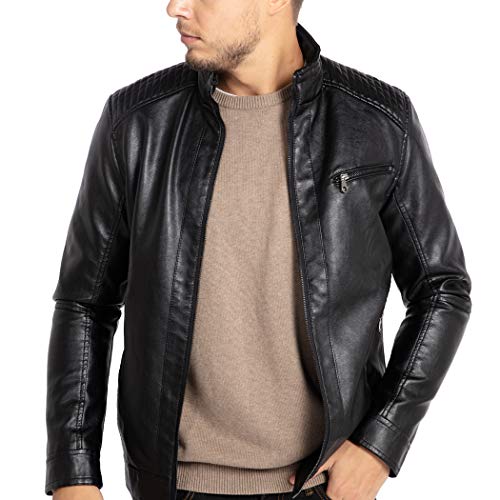
The WULFUL listing identifies a stand-collar, zip-front faux-PU-leather jacket, checked in Black1301, Large. The lining is listed as polyester and the care field specifies dry cleaning only; consider that cost before ordering. Consider it for a defined outline over a simple top. A plain tee and familiar trousers let you judge the shape without an elaborate styling setup.
The seller describes a close-fitting direction and advises using its own chest and shoulder chart. Do that comparison with the layer you intend to wear, rather than assuming your usual size from another brand will match. Its listing also identifies a decorative chest zipper that is not a real pocket; do not count it as useful storage.
Consider it for: a motorcycle-inspired fashion appearance in a casual outfit. Do not infer: riding protection, abrasion performance, rain resistance, or a winter temperature rating. Check the current outer material, lining, and complete care instructions before purchase. We do not treat its motorcycle wording as evidence that it is protective riding equipment or claim that faux leather requires less upkeep in every household.
View the selected item on Amazon
chuida faux-leather bomber: assess the exact cut before the slogan

The checked chuida selection is Yellow, Large: a faux-leather bomber-style jacket with a stand-collar direction. Compare its bright color with the black WULFUL option. Its material field lists PU, polyester, and fleece, while the lining descriptions conflict; ask for the actual garment label if the lining matters to your purchase. Evaluate its actual collar, ribbing, and cut for the planned outfit; its appeal is appearance rather than verified protection.
Use the seller’s measurements for this item and check whether they describe the garment or the wearer. Do not follow a generic instruction to buy one or two sizes larger without comparing chest, shoulder, sleeve, and length measurements. Also resolve conflicting material or lining descriptions before choosing it for a specific comfort requirement. Use the actual fabric label.
Best reason to shortlist it: you prefer its exact bomber proportions over the stand-collar alternative. Before ordering: confirm the selected configuration, care label, and return terms. Do not repeat eco-friendly, waterproof, snow protection, or riding-safety claims without applicable evidence. Keep it in the fashion comparison and choose separate documented equipment for demanding weather or riding needs.
View the selected item on Amazon
Levi’s Trucker: denim texture and a button-front shape

The checked Levi’s Trucker is Colusa/Stretch, Standard Large, with a listed 98% cotton and 2% elastane composition and machine-wash care. It offers a denim direction with a button front and point-collar silhouette. Consider it when you want denim texture over a simple top. Compare the wash with your existing jeans; try a deliberate contrast as well as similar blues.
Confirm the exact fabric and size category. Trucker-family options can differ, so do not transfer a stretch blend, lining, or composition from a different color. Levi’s fit guidance distinguishes intended fit and notes that roomier sizing may suit bulky layers. Treat that as a reason to try the intended outfit, not an automatic instruction for every buyer to size up.
Consider it when: you want a recognizable casual denim shape and a layer you can wear open or buttoned. Check first: shoulder movement, closed-front chest room, sleeve length, wash, and care label. It is not presented as rainwear or an insulated coat, and the brand’s reputation does not establish the lifespan of your selected garment.
View the selected item on Amazon
Compare measurements without mixing body and garment charts
Start with the chart linked to the actual product. A body-size chart may ask for your chest circumference, while a garment chart may provide the width of the jacket laid flat. Those are not numbers to compare directly. Ask the seller to clarify an unlabeled measurement instead of assuming width means circumference or adding a universal amount of room.
Use a jacket you like as a reference where comparable garment measurements are available. Lay it flat without stretching it and note how each dimension was measured. Shoulder, chest, sleeve, and body length are only useful comparisons when the measurement points agree. A sleeve measured from the center back is different from one measured from the shoulder seam.
Fit preferences need their own note. A light shirt underneath requires a different amount of room from a thick hoodie. Decide whether you want a close outline, ordinary layering space, or an intentionally oversized look. Compare that preference with the garment’s construction and the chart. A larger size can add unwanted sleeve and shoulder length without solving the particular fit issue you have.
Try the jacket in the positions you actually use
During an allowed fitting, wear the top and trousers that represent the intended outfit. Close the jacket, sit down, reach forward, and put your hands where the usable pockets are. Notice where the fabric pulls or bunches. You are checking your own fit, not conducting a durability or protection test.
Look at the front, side, and back rather than relying on one mirror angle. Check whether the hem rises in a way you dislike when seated and whether the sleeves interfere with ordinary hand movement. If you plan to wear a backpack, assess the garment with that load only within a normal, permitted fitting. Do not assume a photograph of an outdoor scene proves comfort with your everyday bag.
If the shoulders fit but the sleeve or body length does not, ask whether another size category or alteration is appropriate. Confirm feasibility and cost before buying. Structured seams, coated materials, zippers, and ribbed ends can make an alteration different from shortening a plain shirt. Avoid assuming every inexpensive jacket can be economically tailored into a different cut.
Build outfits around contrast, not a universal style rule
Choose a combination that separates the jacket from the rest of the outfit in a way you like. Texture can provide that difference: denim over a smooth tee, fleece with straightforward chinos, or a faux-leather surface over a simple knit. Color can provide it too. These are styling options to try, not rules about what every man should wear.
- Plain tee and dark trousers: compare a denim or stand-collar shape and let the jacket provide the visual detail.
- Button-down and casual chinos: check whether the jacket collar and hem work with the shirt, especially when both are closed.
- Relaxed travel outfit: consider how a zip-front fleece fits beneath your main outer layer and packs with the rest of your clothes.
- Walking in light showers: choose on documented rain-use limits and layering room, then assess the shell’s color with your usual outfit.
Pay attention to the amount of detail. Large pockets, a hood, bright hardware, and multiple collars can compete with a patterned shirt. Try a simpler top if you like the jacket but dislike the overall outfit. Conversely, a quiet jacket may be exactly what you need when your shirt or footwear is already the focal point.
Keep weather requirements separate from appearance
Write down how long you usually spend outdoors, whether you can carry another layer, and what conditions you need to handle. Then check the garment’s documented purpose. A light shell can have a practical role without being the right choice for prolonged severe weather. A fleece or denim jacket can look good while offering no verified rain specification.
Avoid selecting warmth from season names alone. Spring, autumn, and winter conditions vary, and an unquantified “warm lining” claim does not tell you how the jacket works for your activity. Check the construction and consider the layers you can comfortably fit beneath it. If you need a specific weather capability, obtain suitable documentation rather than converting style language into a technical rating.
Riding is a separate equipment decision. NHTSA’s motorcycle guidance discusses protective clothing as part of riding preparation. A fashion listing’s motorcycle or biker name does not establish protective performance. The faux-leather styles here are evaluated for appearance, without a claim of riding certification or crash protection.
Read care instructions while the purchase is still reversible
Check the label’s directions for the complete garment, including shell, lining, trims, and fastening details. Do not apply denim instructions to faux leather or assume a polyester lining makes the whole garment machine washable. If the online listing is unclear, ask for the current care information before committing to the purchase.
The FTC’s care-label guidance explains why instructions concern the complete garment, rather than just its individual components. For a buyer, that makes the delivered label a useful part of the decision. Follow its instructions and resolve discrepancies rather than improvising a treatment from the material name.
Consider whether the routine fits your household. A jacket that needs care you cannot conveniently arrange may be worn less often than expected. Include any professional cleaning or alteration costs in the comparison, using actual local quotations. Do not assign a fixed lifespan to a fabric or assume a higher price guarantees better long-term appearance.
Check the jacket against the rest of your closet
Before deciding, assemble two complete outfits from clothes you already own. One can be your ordinary weekday combination; the other should represent a different situation in which you expect to use the jacket. Include shoes and the bag you normally carry. If the jacket works only with trousers or footwear you still need to buy, count those purchases before calling it an affordable wardrobe addition.
Photograph the outfits for your own comparison if that helps you assess the proportions. Use similar lighting and posture, and compare an open front with a closed front. The purpose is to decide which version you prefer, not to create a flattering angle that hides a fit issue. Notice whether the collar competes with your shirt, whether the hem covers the part of the outfit you want visible, and whether the color feels deliberate beside your usual trousers.
Also think about where the jacket will live between outings. Confirm that your storage space accommodates the garment without an awkward fold, and follow its label for storage and care. A practical purchase fits the way you dress, wash, and store clothing. It does not require reorganizing your whole wardrobe around a picture from a product listing.
Make the purchase match the outfit you chose
Before checkout, review the exact style, color, size category, and fabric description together. Keep screenshots or order details if the seller’s product family contains several different jackets. Check the return terms for that seller and whether a fitting is permitted. Do not wash, alter, or remove required tags before deciding whether the garment meets those terms and your expectations.
When it arrives, compare the label and configuration with the order, then try the planned outfit. Keep the jacket if its proportions, movement, practical role, and care requirements all make sense. A strong choice is a garment you can readily wear with your own clothes, rather than one that depends on unsupported protection claims or a model’s styling to seem useful.