As an Amazon Associate I earn from qualifying purchases.
A useful hat for hot, humid weather needs to fit the activity, your head, and the way you manage it between outings. A ventilated crown, a packable brim, and a comfortable sweatband can be worth comparing, but none establishes that you will stay cool or dry. Sun coverage is a separate decision from airflow. A baseball cap, a mesh-back trucker, and an open-crown visor provide different arrangements, even when each is marketed for summer.
The five candidates below have distinct constructions, with their actual linked descriptions checked. This is researched buying guidance rather than hands-on testing of cooling, drying speed, UV performance, fit, or flotation. Choose the construction and coverage you need, then verify the specific variation and fit before relying on a promotional feature.
Start with the outing and where the hat will go
Write down the most common use rather than the most demanding occasion you can imagine. A cap for a short walk and errands, a packable travel hat, and a hat you wear during an outdoor activity may need different shapes and ownership routines. Consider whether you will carry the hat in a bag, remove it repeatedly, or wear it with glasses.
Think about the whole day. A hat that looks convenient while walking may be awkward to pack afterward; a structured crown may suit the appearance you want but need more space in a bag. If the hat must meet an activity’s equipment or dress requirements, establish those first. Ordinary leisure headwear is not automatically suitable for every sport or workplace.
For hot-weather shopping, separate preferences from promises. You can prefer a lighter-feeling construction, more exposed crown area, or a particular brim shape without asserting a tested cooling benefit. A worthwhile comparison explains those differences and their limits instead of ranking hats by a temperature effect nobody has established.
Five candidates with different practical roles
ANKOR performance cap: perforated polyester construction
The ANKOR link identifies a six-panel performance baseball cap with 100% polyester, a snap closure, and hand-wash-only care. Its description includes laser-cut ventilation holes and a buoyant visor. The listing places UPF 50 in the title and describes a one-size-fits-most range; the current page did not establish a separately selected color or size, so confirm those details before ordering.
Consider it if you prefer this performance-cap construction and can assess the fit. Ventilation holes are a visible design feature, not proof of a defined cooling result. Likewise, the water- and sweat-resistance wording does not promise a dry head, and the flotation claim is not a guarantee that a dropped hat will be recovered. Check the actual head-size guidance and brim shape, and use the supplied care instructions instead of inferring that a water-resistant hat tolerates any cleaning method.
View the ANKOR performance-cap selection on Amazon
9M foldable baseball cap: a packing-focused choice
The 9M selection was checked as Hot Pink, with 100% polyester, a buckle adjustment, and machine-wash care stated in the listing. It describes UPF 50+, a foldable design, a head-circumference range of 54–62cm, and a brim length of 3⅝ inches. Those give you specific fields to compare, rather than a general promise that the cap fits everyone.

The packing role is its most useful distinction if you want a cap to carry between periods of wear. Check the supplied folding method and how the actual brim works with your bag. Compare the stated fit range with your measurement and confirm comfort during a try-on. The quick-dry and moisture-wicking wording should remain the seller’s description, without an invented drying time or a promise that it keeps you comfortable during every activity. A forward brim also needs a separate assessment of the areas it leaves exposed.
View the 9M Hot Pink foldable selection on Amazon
Yupoong five-panel trucker: mesh back and structured appearance
The Yupoong selection is Brown/White, Pack of 1, with a snapback, a high-profile structured crown, a flat visor, and mesh-back construction. The selected listing gives 65% polyester and 35% cotton and hand-wash-only care. This has a different shape and packing requirement from the foldable cap, so compare it for the look and construction you actually want.

A mesh back can be a reason to evaluate the cap, but does not establish full-crown sun protection or guaranteed comfort. Check the pressure around the band and where the structured front sits on your forehead. The manufacturer’s classic-trucker page notes that fabric composition is changing and mixed stock may be shipped. Confirm the received label instead of assuming every current cap uses the same blend. Do not assign a whole-hat UPF number from a general fabric or product-family statement.
View the Yupoong Brown/White single-cap selection on Amazon
MIRMARU cotton cap: a casual low-profile option
The MIRMARU link identifies a low-profile, six-panel stonewashed cap with 100% cotton, sewn eyelets, a buckle adjustment, and hand-wash-only care. The description specifies a white crown with contrasting brim variations. The current evidence did not expose a selected brim color, so check the exact appearance in the order instead of assuming a color from another family image.
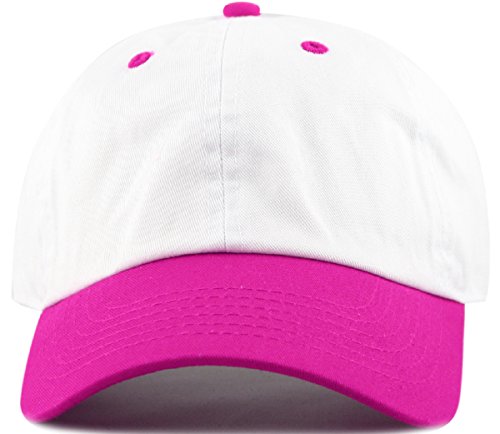
Consider it for a casual outfit if you like the low-profile, two-tone construction. Cotton and eyelets are material and design details, not proof of better cooling than a polyester cap. Compare the actual band, crown contact, and weight during a permitted try-on. A washed finish also does not mean that any washing routine is acceptable or that the fit will never change. Choose it because the real garment fits the role, rather than because a material name is presented as universally ideal for humidity.
View the MIRMARU two-tone cotton-cap selection on Amazon
JFH wide visor: open crown with a broad front brim
The JFH selection is a women’s visor in Hot Pink, described with a cotton/plush construction and hand-wash-only care. The listing gives a four-inch brim. Its other sizing fields mix crown and internal-diameter terminology, so request clear head-fit guidance rather than converting an ambiguous dimension into a circumference. The women’s label is not a fit guarantee or a restriction on personal style; assess the actual shape and sizing.
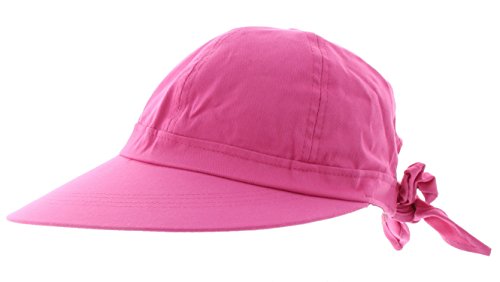
An open-crown visor is a candidate if that is the arrangement you prefer, including how it works with your hair. It leaves the top of the head exposed and does not provide all-around coverage. Compare the band and brim with your glasses and ordinary head movement. A wide front brim does not establish a UPF rating or eliminate the need for other sun-protection measures. Decline the visor if the fit information remains unclear or if your intended role needs crown coverage.
View the JFH Hot Pink visor selection on Amazon
Keep sun coverage separate from airflow
A brim can shade part of the face while leaving the ears, neck, or crown exposed. A mesh panel, perforation, or open crown needs to be considered in the complete coverage decision. Do not treat a hat’s summer positioning as a guarantee that it protects every area around the head.
CDC sun-safety guidance recommends an all-around brim for face, ear, and neck shade and discusses additional protection when using a baseball cap. It also treats hats alongside shade, clothing, and sunscreen. That supports choosing headwear as part of a wider plan, rather than a replacement for every other measure.
When a product states UPF, check the actual selected item and the scope of its documentation. A rating for material does not create coverage where the design is open, and it is not a measured cooling effect. If the documentation is unclear, obtain a manufacturer explanation. Choose the hat’s shape and your other measures with the exposed areas in mind.
Fit the band, crown, and brim together
Measure your head using the seller’s stated method and compare like units. A circumference, a hat-size number, and a diameter are different fields. Do not calculate an order size from a listing that has unclear terminology. One-size-fits-most is a description to check, not a promise that adjustment resolves every fit problem.
During a permitted try-on, assess the band without tightening it simply to prevent movement. Notice forehead pressure, contact above the ears, and whether the crown sits where you prefer. Look down and make ordinary head movements. If the brim changes the way you hold your head to see, assess another arrangement rather than assuming that is an unavoidable part of sun shade.
Try the hat with your usual glasses and hairstyle. Brim position, temple arms, and hair can change the way a band sits. An attractive hat tested alone may be less useful in the combination you actually wear. The fitting goal is a comfortable arrangement you can assess, not an imagined guarantee that the hat will remain in place during every activity.
Read material and sweat claims precisely
Polyester, cotton, and blends describe fibers, but they do not independently establish drying speed, comfort, or a tested humidity advantage. A cap’s crown structure, lining, sweatband, and openings also need inspection. Use composition as one part of the comparison, rather than assigning all the performance of a finished hat to a single material.
Sweat resistance, moisture wicking, and water resistance are different statements. Do not rewrite any of them as waterproof or dry-under-all-conditions. If that feature matters to your activity, ask what the maker actually documents for the selected cap. Avoid setting a personal comfort expectation from a general product slogan.
You can make useful purchase observations without inventing a laboratory result. Note whether the band feels comfortable, whether you like the lining against your forehead, and whether the construction suits your packing and care routine. Those are relevant fitting preferences. They do not establish that one cap performs better for every person in humid weather.
Choose a packing method you will actually use
A foldable design can suit a bag-based routine, provided you follow its actual instructions. Check how it folds and whether the packed shape works in the space you have. Do not fold a structured visor or crown just because another hat in the guide is described as packable.
For a structured cap, consider where it will sit when you remove it. If you regularly place your hat in a crowded bag, that may affect which construction you prefer. Decide whether maintaining the intended shape is practical for your routine rather than assuming a seller’s boxed-shipping statement establishes crush resistance during travel.
A visor has another packing shape again. Assess the actual band and brim, and do not assume that an open crown makes every visor easy to flatten. Ownership questions like these can help you reject an appealing candidate that does not work with your day.
Match the appearance to clothes you already wear
Compare profile and finish before focusing only on color. A flat visor and structured trucker front create a different outline from a low-profile baseball cap. A wide visor also shows the hair and crown differently. You can prefer any of these looks without claiming that one is universally flattering.
Try a few ordinary outfits. See how a strong color, a two-tone brim, or a subtle logo works with a shirt, glasses, and other accessories you already own. The selected Hot Pink options can be deliberate color choices, but they need not become defaults for every activity. Choose according to your own style and the actual variation.
If the product page contains many colors, inspect the selection again after making another change. Do not judge one variation from a different color’s customer photograph. A missing selected-color field is a reason to confirm the order, rather than an invitation to guess from the most attractive image.
Plan care before buying a frequently worn hat
Read the instructions for the actual cap. The foldable 9M listing states machine wash; the other linked options state hand wash. Those differences matter, but the full supplied method still needs attention. Do not infer water temperature, detergent, drying, or ironing instructions from a short category field alone.
Consider how often you expect to clean the hat and whether the routine is realistic for you. A hat that needs more attention than you can provide may be less useful than another suitable construction. Do not promise permanent odor resistance, a stain-free sweatband, or unchanged shape from the material description.
After use, inspect visible condition and follow the maker’s care and storage information. If a component or fit changes, resolve the concern through the appropriate product support rather than improvising a treatment for an unknown finish. Choose with repeat ownership in mind, not just the appearance of the first delivery.
Compare usable value rather than feature counts
Set a few essentials: adequate documented fit, an appropriate shape and coverage role, a construction you like, and manageable care. Put optional preferences separately. This makes it easier to decide whether a color, logo, packability feature, or brim style is worth paying for.
Check the exact package quantity and current seller. The Yupoong link here was checked as a single cap; a family that also offers bulk packs can produce misleading price comparisons if you do not inspect the selection. Compare the complete cost of the actual cap you will use, including delivery and the return arrangement you understand.
If you buy more than one hat, give each a role. One might suit packing and another the structured appearance you prefer. Two hats with the same unresolved fit or coverage problem are not automatically a more useful purchase. Establish a workable arrangement rather than maximizing the number of advertised features.
Use a short outing worksheet
For a day involving errands and a walk, write down when you will wear the hat, where you will put it when removed, and which glasses and clothes accompany it. For a travel day, start with the available bag space and the actual packing instructions. For a style-focused afternoon, compare the crown profile and selected finish with the outfit you already intend to wear. These scenarios do not require a separate performance rating; they reveal which practical details matter to you.
Then list one reason you might decline each candidate. The band could be uncomfortable, the packing shape inconvenient, the care method impractical, or the coverage role unsuitable. Keep the reason concrete. A candidate that looks impressive on a feature list may still have no useful place in the outing you planned. Choose the one whose actual arrangement works, rather than trying to find a hat that promises everything.
A practical delivery and try-on checklist
- Confirm the ordered model, color, quantity, and available size identifiers.
- Compare the label and supplied care information with the listing.
- Assess band pressure, crown position, brim visibility, and normal movement.
- Try the hat with your actual glasses and hairstyle.
- Check the coverage and limitations required for the intended outing.
- Keep documentation while deciding within the current seller’s return conditions.
Is a mesh-back cap automatically the best humid-weather hat?
No. Mesh is a construction detail to evaluate with fit, coverage, appearance, and activity. It does not establish a universal cooling result or protection of the exposed crown area. Choose the complete arrangement you can use.
Does UPF mean the hat covers my face, ears, and neck?
A stated protection rating does not change the geometry of a forward brim, holes, or open crown. Check the scope of the actual item’s documentation and plan for exposed areas separately. Fit and sun coverage need distinct decisions.
What should make me decline a candidate?
Unclear essential sizing, an uncomfortable fit, or a shape that does not serve the intended role. A float, quick-dry, or no-marks phrase cannot compensate for those problems. Choose on the actual specification and your assessed needs, keeping promotional claims within their documented limits.