Answering the demand for durable, desert-ready outerwear, this guide highlights five practical jackets and shirts that echo USMC desert combat wear. Each item is chosen for reliability, fabric durability, and suitability for different mission profiles. Ideal buyers include outdoor professionals, reenactors seeking authentic style, and service members or enthusiasts needing breathable, durable combat-style outerwear.
Overview of top picks
| Product | Best For |
|---|---|
| BLACKHAWK HPFU Slick Jacket | Desert-ready layering with belt-access compatibility |
| Propper Uniform Bdu Coat Ripstop | Heavy-duty field use with MIL-DTL-44048H spec |
| BACKBONE BDU Shirt | Versatile, heat-friendly utility top |
| Propper IHWCU OCP Coat | Hot-weather, moisture-wicking comfort |
| Propper F545455 BDU Coat | Durable field jacket with practical pockets |
BlackHawk HPFU Slick Jacket for Desert Ops

Best for: Desert-duty wear that can be worn as a final layer or as a belt-accessible option. The jacket blends 70% cotton with 30% nylon ripstop for durability and breathability, with a Multi Cam option featuring 50% nylon/50% cotton ripstop. The tuxedo-cut design keeps the front short for easy belt access, making it a versatile outer layer for action-ready outfits.
Caution: Fabric mix emphasizes durability, but cotton-rich materials may absorb moisture more than pure synthetics in high-humidity environments. Best used with moisture-wicking base layers in hot desert conditions.
Propper Uniform Bdu Coat Ripstop
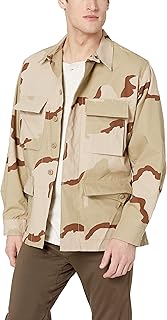
Best for: Field use requiring MIL-DTL-44048H specification and reinforced durability. Feature-set includes felled seams for strength and drain holes in bellowed pockets, supporting tough environments while maintaining functional storage.
Limitation: Color variations and pocket layouts can differ by batch; verify intended use pockets and loop configurations before purchase.
BACKBONE Men’s BDU Shirt, Tactical Top

Best for: Those seeking a versatile BDU-style shirt with modern fabric balance. It uses 55% cotton and 45% polyester, with color-dependent fabric construction (twill or ripstop). Features a classic button-front design with button-flap chest pockets and adjustable cuffs for flexible wear, making it suitable for layered field attire.
Limitation: Color and fabric mix can vary; some colors may have tighter cuffs, which affects roll-up versatility for warmer climates.
Propper IHWCU OCP Uniform Coat NIR Compliant

Best for: Hot-weather operations requiring NIR-compliant camouflage and lightweight breathability. The IHWCU coat features moisture-wicking performance with a bi-swing back for improved range of motion and overall comfort in warm, arid environments.
Caution: While it’s designed for heat, the coat’s heat-sensitive fabrics may still require sun protection and hydration planning for extreme desert days.
Propper F545455 – Men’s BDU Coat

Best for: Everyday field use where MIL-DTL-44048H compliance and rugged construction are priorities. This coat features felled seams for durability and drain holes in bellowed pockets for practical use in wet or dusty environments.
Limitation: Heavier than some lightweight coats; may be less ideal for very hot days when airflow is paramount.
Buying Guide
What material should I prioritize for desert environments?
Look for blends that balance durability and breathability. Cotton-nylon ripstop or polyester blends offer abrasion resistance with better moisture management than pure cotton. For hot weather, lighter fabrics and moisture-wicking linings help maintain comfort during long missions.
What features matter most for field jackets?
- Bellowed pockets and drainage vents for wet or dusty conditions
- Reinforced seams (e.g., felled seams) for longevity
- Adjustable cuffs and collars to tailor fit over base layers
- Camouflage or color options that suit arid environments
- Bi-swing back or other mobility features for range of motion
How should I choose between coats and shirts?
Use coats for outer protection and pockets, especially in rugged terrains. Shirts provide ventilation and layering options. In hot desert settings, consider moisture-wicking OCP/NIR-compliant coats for reduced heat burden, while in cooler nights, a durable jacket like the HPFU Slick or BDU coat can serve as the primary outer layer.
Are there any compatibility concerns with desert camouflage?
Some products offer Multi Cam or OCP patterns. The choice depends on local theater requirements and operational protocol. Ensure the pattern aligns with your mission environment and compatible gear holster placement if you intend to wear waist-mounted items or accessories.
How to care for these jackets?
Follow the manufacturer care instructions. Generally, air-drying is preferable to preserve fabric integrity, with occasional gentle washing. Avoid high-heat settings and iron only as needed for creases, using low heat to preserve fabric fibers.
What is the best overall desert combat option?
The best overall option depends on needs: for heavy-duty durability in hot deserts, the Propper Uniform Bdu Coat Ripstop or the Propper IHWCU Coat offer MIL specs and moisture management. For belt-accessible layering, the BlackHawk HPFU Slick Jacket stands out. For versatile daily wear, the BACKBONE BDU Shirt can be a strong base layer. For a balance of durability and practical pockets, the Propper F545455 BDU Coat is a reliable choice.
FAQ
- What makes a desert combat jacket USMC-style?
- Which jacket is best for humid desert climates?
- Are these coats compliant with military specifications?
- Should I consider color options beyond desert tan?
- How important are drainage holes in pockets?
- Can I wear these with belt-mounted gear?
A jacket featuring rugged construction, desert camouflage or neutral tones, and practical pockets designed for field use mirrors USMC desert-ops styling and functionality.
The Propper IHWCU OCP Coat is designed for hot weather, moisture management, and quick-dry performance.
Some models explicitly reference MIL-DTL-44048H specifications, indicating durability standards suitable for field use.
Desert-appropriate colors help with concealment; check your environment and any unit regulations before choosing color variants.
Drain holes help prevent moisture buildup and facilitate quick drying in wet conditions, which can be important in arid-to-semi-arid transitions or when crossing damp terrain.
Most designs consider belt access and attachment compatibility, especially jackets like the HPFU Slick that are noted for front access design.