As an Amazon Associate I earn from qualifying purchases.
Asphalt running shoes should match the route, the runner, and the job the shoes will do. A daily neighborhood loop, a pavement-to-park route, and a faster road session can lead to different preferences. Cushioning is relevant, but a shoe is not proven suitable merely because it feels soft when you press its midsole. Nor does a shoe’s weight or brand name establish that it will make you faster or prevent an injury.
This guide focuses on the original road-relevant candidates and practical comparisons you can make before committing to a pair. Product specifications describe the checked model or selection; they are not results from our own mileage, traction, or durability tests. Older product names can cover several generations, and a standard width is not an extra-wide selection. Confirm the exact model, size, and width shown when you follow a link.
Describe your pavement route in useful terms
Write down where the shoes will be used most often. Include the surface and the length of your typical outing, whether the route has hills, and whether you sometimes leave the pavement. You do not need an elaborate training plan to make a better choice. A short description prevents you from paying for features aimed at a different activity.
For a mainly paved route, start with road-running suitability and fit. For a mixed route, identify whether the unpaved portion is a smooth park path or a more demanding trail. Shoes marketed for trails should not automatically be promoted as better asphalt shoes because they have an aggressive outsole. Conversely, a shoe expressly intended for road and light trail use may make sense for the right mixed route, with its limits kept clear.
Think about your current shoes as a reference rather than a rule. Note what you want to keep and what you want to change: enough toe room, less heel movement, a different underfoot feel, or a better match for how the shoes are used. Separate an uncomfortable fit from a desire for a new style. Buying another pair with the same unresolved fit problem rarely becomes a good decision because the cushioning has a different name.
- Route: Record whether the usual outing is pavement only or regularly includes an unpaved section.
- Fit: Keep separate notes for length, width, heel hold, and pressure at the instep.
- Design: Identify whether you want a familiar cushioned construction or a deliberate minimalist change.
- Selection: Confirm the model, size, width, and color attached to the actual order.
- Ownership: Check the care routine and return conditions before the first outdoor use.
Road-relevant options from the original article
Under Armour Charged Assert 9: compare a conventional running-shoe construction
The linked Charged Assert 9 selection was checked as Black/Black, size 10. It is a conventional running-shoe candidate with a mesh upper, leather overlays, an EVA sockliner, a Charged Cushioning midsole, and rubber coverage on the outsole. These construction details are described on Under Armour’s model page. They support its place in a road-shoe comparison without proving a particular runner’s comfort, speed, or shoe lifespan.
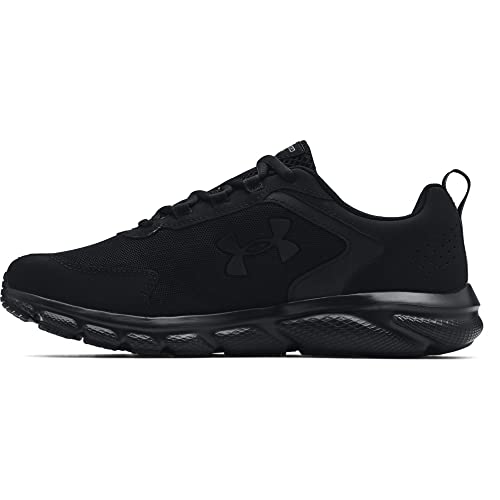
Use it as a candidate when you want a familiar laced running shoe rather than a minimalist design. Check whether the midfoot and heel feel secure while the toes retain useful room. An overlay can change the feel of the upper, but it is not a guarantee against injury. Compare the actual size and width selected with a shoe that fits you, then assess the complete pair under the seller’s trial and return rules.
View the original Charged Assert 9 selection on Amazon
ASICS GEL-VENTURE 10: a mixed-surface candidate with a defined purpose
The linked ASICS GEL-VENTURE 10 selection was checked as Black/Graphite Grey, size 12. ASICS describes the model as using AMPLIFOAM cushioning and rearfoot GEL technology, with an outsole pattern intended to function on road and trail surfaces. The official GEL-VENTURE 10 page supports a mixed-surface role. That is different from assuming every trail shoe belongs in an asphalt guide.
Consider it when your paved run regularly includes a suitable park or trail section and you want to compare one pair for both portions. If nearly all your running is on pavement, compare the outsole feel and fit with a road-focused option instead of assuming more tread is always useful. GEL wording does not establish reduced injury risk, and the product’s environmental process claims should not be converted into a general sustainability ranking. Choose around your actual route and the fit of the selected pair.
View the original GEL-VENTURE 10 selection on Amazon
Xero HFS II: a distinct minimalist road-shoe choice
The linked Xero HFS II selection was checked as Black/Asphalt, size 10.5. Xero describes the model as a road-friendly barefoot-style shoe with a flexible construction, a foot-shaped toe box, and a non-elevated heel. The official HFS II model page provides the model context. A non-elevated heel means the design differs from shoes with a raised heel-to-forefoot relationship; it does not demonstrate improved posture or health for everyone.

This is a meaningful candidate for someone deliberately seeking that minimalist design. It should not be treated as a smaller, cheaper version of a cushioned shoe. If your current footwear feels substantially different, acknowledge that change before buying. Avoid switching simply because a description calls the movement natural. Anyone managing pain or a diagnosed foot problem should discuss a major footwear change with a qualified clinician rather than interpreting a wide-looking toe box as treatment.
View the original HFS II selection on Amazon
Fit the foot you have in the socks you will use
Compare both feet and the actual width designation
Try a pair with the socks you normally run in. Compare both feet, because one size label describes the pair rather than proving identical comfort on each foot. Identify where pressure appears: the toes, forefoot sides, instep, heel, or ankle opening. That information is more useful than automatically ordering a longer shoe when the issue may be width or volume.
The AAOS footwear guidance recommends using the relevant sport socks, checking heel hold and toe room, and walking in the shoes during fitting. Use those points to structure your fit check. They do not establish that any specific model suits a particular medical condition.
Check the current brand chart and the width attached to the exact selection. A roomy-looking toe shape and a labeled wide width are not interchangeable descriptions. If you need a particular width, verify that designation rather than relying on an image or a review of another size. Keep the selected size and width with your order notes so you can check what arrives.
Look for comfort without solving every issue through tight laces
Lacing should help you adjust a shoe that basically fits. If the heel slips unless you pull the upper painfully tight, or if the toes feel squeezed even with ordinary lacing, investigate the shape and size before purchasing. A more expensive insole is not an automatic fix for a mismatched shoe. If you use prescribed orthotics, ask your clinician about compatibility and evaluate them with the actual pair.
Walk around indoors within the return conditions and observe ordinary movement. Check whether the heel rubs, whether toes contact the front, and whether the upper creates pressure across the foot. Do not assume a painful spot will disappear after a fixed break-in period. If the fit is unsuitable, resolving it before outdoor use may preserve more options than committing to a long run and hoping for improvement.
Compare cushioning by the experience you want to assess
Cushioning terminology can make several shoes sound alike, even when they feel different. Start with a useful description of your preference: more separation from the road, a firmer feel, less overall bulk, or a flexible minimalist construction. Then compare the actual candidates rather than trying to rank them solely by technology names.
There is no single amount of softness that proves the best choice for every runner. A shoe that feels comfortable while standing still may feel different when moving. A strongly cushioned look does not supply evidence of injury prevention, and a low-profile design does not supply evidence of better running mechanics. Treat those as decisions that need personal evaluation, with professional advice where a health condition is involved.
Keep a major design change separate from other changes when possible. If you are considering unfamiliar minimalist footwear, do not also assume that a longer or harder outing is the right first use. This guide does not prescribe an adaptation schedule. The purchasing point is to recognize when a shoe represents a substantial change and leave time to assess suitability rather than making that decision on the morning of an important run.
Outsole coverage and tread need route context
Inspect the sole as part of comparing the pair. Note where rubber covers the bottom and where other material is exposed. Consider how the pattern feels on your usual paved surfaces, but do not infer a guaranteed number of miles from a photograph. The amount of visible rubber does not by itself establish grip or durability.
Road conditions also vary. A clean dry path, a wet painted crossing, a metal cover, and a patch of loose debris are different situations. A running shoe is not a guarantee of secure footing on all of them. Do not use general non-slip wording as permission to ignore the surface. For buying purposes, match the intended use and consider whether your regular route introduces conditions the shoe was not designed to address.
A trail-focused shoe can be useful on a trail without being a sensible default for repeated pavement use. Compare stated surface suitability instead of treating an aggressive outsole as an automatic advantage. ASICS’ stated road-and-trail use supports an explicitly mixed-route discussion. A road-focused routine deserves a road-relevant choice, even when another shoe has appealing features for a different activity.
Treat the upper as part of fit and daily use
Mesh, overlays, and lining descriptions tell you something about construction. They do not establish how cool your feet will feel on a particular day or guarantee that socks will stay dry. Consider the conditions you usually run in and the way you care for the shoes between outings. If you tend to run in rain, distinguish a water-resistant or waterproof claim from an ordinary mesh upper rather than assuming either from appearance.
Check pressure where overlays or seams meet your foot. Compare how the tongue sits and whether the ankle opening works with your socks. These are practical observations you can make on the pair you receive. Do not copy a customer’s comfort judgment from another variant as if it describes your own experience.
For daily use, decide whether the same pair will also be worn for errands or work. That may change how you evaluate appearance and how much use the pair receives, but it does not turn a running shoe into task-specific protective footwear. Keep the running role clear so you can assess whether it continues to meet that need.
Make durability expectations observable
Do not budget around an unsupported mileage guarantee. Instead, keep a simple record of when you begin using the pair and the kinds of outings it sees. Periodically inspect outsole wear, upper damage, and changes you notice in fit or feel. A cosmetic mark and a meaningful change in the shoe’s condition are different things; look at the whole pair rather than deciding from one scuffed area.
If wear appears unusually uneven or discomfort persists, seek appropriate advice rather than assuming that replacing the brand name will resolve the issue. A shopping guide cannot diagnose why a shoe wears in a certain way. It can help you keep enough information to ask a more useful question about fit, use, and replacement.
Follow the maker’s care instructions. Avoid assuming that all running shoes can be machine washed or dried with heat. Check the model’s permitted cleaning method, and allow for the care routine in your purchasing decision. A pair that fits your route but is difficult to manage within your routine may still be an inconvenient choice.
Compare two candidates without inventing a score
A short comparison sheet can be more useful than a numerical ranking with no shared test behind it. Give each candidate the same fields: intended route, selected size and width, indoor fit observations, underfoot feel, model-specific care, and return conditions. Leave an unknown field blank until you have an answer. Do not turn an unanswered durability question into a five-star score because the outsole looks substantial.
If both candidates fit, describe the difference in terms that help your decision. One might suit the route you run most often; another might represent an unfamiliar design you want to evaluate separately. The aim is to explain a preference rather than declare a universal winner. If neither fits, reject both instead of letting the original shortlist dictate the purchase.
Keep changes in your own use in the comparison. A pair chosen for a short paved loop may not address a new trail outing or an event with a different purpose. Reassess the job before buying a second pair simply because the first model worked for something else. A useful shoe collection has clear roles rather than several pairs bought on the same broad promise.
Make an indoor decision before an outdoor commitment
Read the trial conditions before testing the shoes. If outdoor wear changes return eligibility, make as much of the fit assessment as permitted indoors first. Check both shoes, inspect the size labels, and compare the pair with the order. Ask about a discrepancy while you still have the packaging and a clear description of the problem. That approach makes the purchase reviewable without implying that an indoor try-on proves long-run performance.
Spend on a suitable pair rather than a list of impressive claims
Compare the price of the exact size and width you need, not an advertised starting price for another variation. Check the seller, return conditions, and whether the item is a current or older model. An older generation can remain a reasonable purchase, but its specifications and condition should be evaluated on their own merits rather than borrowed from the newest version.
Before buying, write a short decision note: the intended route, what fit problem or preference the shoe addresses, and the detail you still need to confirm. If the note depends mostly on unverified speed, injury, or sustainability promises, reconsider the basis of the choice. A clear purpose makes a purchase easier to judge after the package arrives.
Give every specification a decision role
A useful shortlist does not require every candidate to have the same construction. The Charged Assert 9 provides one conventional reference, the GEL-VENTURE 10 has a documented mixed-surface role, and the HFS II represents a deliberate minimalist choice. Compare the role you need before comparing small specification differences. If you do not want a minimalist design or do not use mixed surfaces, you can narrow the list without pretending that the excluded style is a bad shoe.
Keep reasons for rejecting a candidate as well as reasons for choosing one. A wrong width, an uncomfortable heel, an unsuitable route role, or unclear model information is enough to pause a purchase. You do not need an invented laboratory result to explain a practical decision. A smaller, well-understood shortlist can be easier to use than a longer list that combines unrelated activities under one broad promise.
Is a trail shoe automatically more durable on asphalt?
No such conclusion follows from the trail label. Intended surface, outsole construction, use, and the actual pair’s condition all matter. Choose a road-relevant candidate for a road-focused routine and a genuinely suitable mixed-surface option when the route calls for it.
Does a minimalist shoe need the same fit priorities?
Comfortable toe room, secure heel fit, and suitable dimensions still matter. The design is a separate decision. Do not use minimalism as proof that a shoe corrects a problem or suits everyone. Compare it deliberately with your current footwear and obtain clinical advice for individual health concerns.
What should I verify when the order arrives?
Confirm model, generation where applicable, color, size, width, and pair condition against the order. Keep the box and order information while you assess indoor fit within the seller’s rules. The useful result is a pair that suits your route and your feet, with clear specifications and realistic expectations about what footwear can provide.