Best Cooling Shirts for Hot Weather to Stay Comfortable and Dry
As an Amazon Associate I earn from qualifying purchases.
Shopping for a cooling shirt is easier when you define the hot-weather problem you want it to address. A sweaty walk to the office, a shaded training session, and an afternoon outdoors call for different cuts and coverage. The useful purchase is a garment that suits that activity and your preferred feel. Cooling in a product name does not establish a measured drop in body temperature or protection from heat illness.
This guide separates ordinary clothing choices from broad performance promises. The checked options are short-sleeve exercise and casual shirts, including a short-sleeve rash guard. We have not tested their temperature effects, drying times, odor control, or ultraviolet performance. Use the checked product details to identify candidates, then compare the fit, outfit, coverage, and care requirements against the way you actually spend a summer day.
Describe the day before choosing the fabric
Start with the longest part of the outing, not the most attractive photograph in the listing. Are you mainly seated indoors, walking between buildings, moving steadily outdoors, or wearing a backpack? Will you be able to change before meeting other people? Is a uniform or another outer layer required? These questions tell you which clothing details deserve attention.
For a commute, appearance beneath a shirt or jacket may matter as much as the tee’s athletic styling. For exercise, the sleeve and shoulder movement may be your first priority. For an outdoor visit, coverage and a documented sun-protection label may matter more than how the garment looks under indoor lighting. Decide what comes first, and identify any compromise you are willing to make.
Write the requirement in ordinary language. For example: a short-sleeve tee that fits beneath my casual shirt, with care instructions I can follow after each workout. Another requirement might be: a long-sleeve outdoor shirt whose cuffs and neckline provide the coverage I want without restricting normal movement. That description is more useful than asking which shirt is the coolest for everyone.
Know what each performance word actually tells you
Moisture-wicking wording describes the intended handling of sweat within the fabric. Quick-dry wording describes a drying characteristic. Neither statement, by itself, tells you how long this selected shirt takes to dry in your climate or whether your complete outfit will feel comfortable. Do not turn the terms into a numerical comparison unless appropriate test information is available.
A cool-touch or ice-silk description can refer to the feel the seller wants to convey. It does not prove that the shirt remains cool through an entire outing. Likewise, a lightweight description without an exact, relevant fabric specification does not provide a reliable ranking against another shirt. Look for a clear material label and construction description, then assess the garment for the job you chose.
Keep odor claims separate from laundering and hygiene expectations. Do not plan several days of wear solely because an online description says anti-odor. Your activity, personal preference, and the care instructions should determine the wardrobe rotation. There is no tested ranking of these shirts’ odor performance here, and none is presented as a treatment for a skin or sweating condition.
Candidate notes for different hot-weather routines
Hanes Sport Cool DRI: a straightforward exercise-tee direction
The checked Hanes Cool DRI is Graphite – 2 Pack in XX-Large, with a listed 100% polyester composition and machine-wash care. It is a short-sleeve performance-tee candidate. Evaluate it first as an exercise or casual layer, rather than assuming its name establishes a lasting cooling effect. The selected package and size must match what you intend to order; another Cool DRI page may describe a different quantity.
Useful comparison: check the crew neckline and sleeve opening with the movements you use during your normal activity. Also assess the fit beneath any shirt you plan to wear afterward. Hanes provides Cool DRI style information, but use the specifications for the matching garment instead of transferring its single-shirt packaging to another selection.
Purchase limits: we do not claim a competitive advantage, guaranteed dryness, or verified cooling duration. Check the delivered care and any applicable sun-protection label before relying on a feature for a particular outing.
THE GYM PEOPLE: a running-shirt silhouette to evaluate
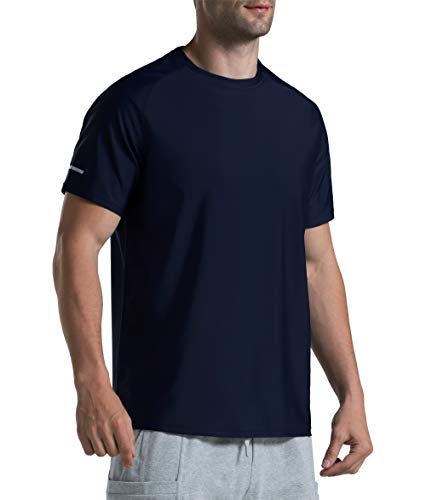
The checked THE GYM PEOPLE shirt is Blue in Large, listed as 88% polyamide and 12% spandex, with hand-wash-only care. It offers an athletic styling direction for a buyer who prefers that appearance. Compare its exact fabric label and sleeve construction with your normal running or exercise top. The phrase ice silk should not be read as a promise of prolonged cooling or assumed to mean natural silk.
What to check: whether the shoulder and arm openings remain comfortable during ordinary movement and whether the hem works with your shorts. If you carry a phone or small bag, assess the complete outfit rather than the shirt alone.
Limits: a reflective-looking detail does not prove visibility at a particular distance or guarantee road safety. Choose appropriate visibility measures for the activity separately. We do not claim a measured cooling effect or that this shirt prevents irritation during a long run.
Roadbox: a short-sleeve rash-guard direction
The checked Roadbox rash guard is short-sleeved, Dark Gray in 3X-Large, listed as 92% polyester and 8% spandex with machine-wash care. Assess its neck, sleeves, and hem together. It does not supply the arm coverage of a long-sleeve garment.
Useful reason to examine it: you specifically want the short-sleeve rash-guard appearance for an appropriate outing. Check the actual selected size and applicable UPF label. A sun-protection claim is separate from a cooling claim, and neither establishes your comfort in every condition.
Before purchase: confirm the documented uses and care. Do not assume the rash-guard name makes it appropriate for every water activity, or that a rating means uncovered skin is protected. We do not reproduce an unverified percentage of ultraviolet blocking as a guarantee.
Cadtuos: judge the fiber label and relaxed shape separately

The checked Cadtuos shirt is Light Grey in X-Large, listed as 67.5% viscose derived from bamboo, 27.5% polyester, and 5% spandex, with machine-wash care. Consider its casual athletic direction when you want that outline. Decide whether its selected cut works for your outfit before treating the fiber description as a reason to buy. The feel of a shirt on your body cannot be established from a material name alone.
Check closely: the actual fiber percentages, dimensions, and care directions for the delivered garment. A relaxed outline can be useful for casual dressing, but it still needs to suit your shoulder, chest, and hem preferences.
Limits: we do not endorse instant cooling, inherent odor control, sustainability, or skin benefits merely because a listing mentions bamboo. Those claims need their own evidence. Evaluate it as a garment with stated materials, rather than as a natural cooling treatment.
Compare the shirt with the layers you will actually wear
A tee worn by itself and the same tee beneath a button-down are different outfits. During a permitted fitting, assess both versions if you intend to use both. Check the collar opening, sleeve bulk, and hem arrangement. A shirt that looks right alone might bunch beneath another garment; a convenient base layer might not be the outer-shirt silhouette you want.
Include the bag you normally carry when assessing an everyday outfit. Notice whether straps pull the neckline, whether the hem moves in a way you dislike, and where seams sit beneath the straps. This is an ordinary fit check, not a test of friction resistance or heat performance. Do not infer all-day comfort from a quick fitting.
If your activity requires protective clothing or a uniform, follow the applicable requirements. A fashion or workout shirt does not replace specified protection. Avoid adding a loose layer that conflicts with the workplace or activity rules merely because loose clothing is often discussed in general hot-weather advice.
Make the fit comparison specific to movement
Use a reference shirt that already works for the intended activity. Compare its chest width, body length, and sleeve construction with the relevant garment chart. Record where measurements begin and end. A chart based on body circumference is different from one showing the shirt’s laid-flat width; resolve that distinction before choosing a size.
Then try the movements you actually use within the fitting and return conditions. Raise your arms, reach forward, sit, and walk normally. Check whether the neckline shifts uncomfortably or the hem exposes more than you prefer. The point is to identify a cut that works for your body, not to prove that a marketing label such as athletic or relaxed suits every wearer.
Do not automatically choose a larger size to solve every restriction. It can add sleeve and body length without correcting the shoulder shape. Equally, selecting a smaller size for an athletic appearance may create tension you dislike. Choose the dimensions and silhouette you want, with enough room for the intended activity.
Treat sun coverage as its own decision
ARPANSA’s clothing guidance treats a UPF rating as information for selecting sun-protective clothing, alongside garment coverage and other sun-protection measures. A shirt only covers the areas it actually covers. Short sleeves, a low neckline, or a hem that rides up leave different areas exposed.
Check the applicable rating and the garment’s directions, rather than borrowing a value from another shirt in the product family. We have not independently verified the listed ratings of these selections. Do not assume a quick-dry or cooling name establishes any ultraviolet rating at all, and do not use a claimed UPF value as permission to ignore other sun-protection measures.
Give hot-weather plans more attention than the shirt slogan
The CDC’s extreme-heat guidance includes loose, lightweight, light-colored clothing as part of a broader plan that also addresses staying cool, hydration, and limiting exposure. A cooling shirt cannot replace that plan or establish that an activity is safe in extreme heat.
For shopping purposes, that means choosing the garment after considering the outing and conditions. Follow current local heat advice and activity requirements. Do not extend an outing because a new shirt has an ice or cooling name, and do not treat feeling comfortable initially as evidence of protection from heat illness. This guide compares clothing choices, not medical prevention or treatment equipment.
Read viscose and bamboo descriptions carefully
The FTC’s bamboo-textile guidance distinguishes rayon made from bamboo from directly processed bamboo fiber and cautions against unsupported associated claims. For a buyer, the useful step is to read the actual fiber label rather than assuming a bamboo word establishes natural antimicrobial properties or an environmental benefit.
Keep the material decision practical. Decide whether you like the garment’s cut, can follow its care instructions, and have suitable occasions to wear it. An unfamiliar fiber description is a reason to check the specification, not to promise a cooling mechanism or choose the shirt as a treatment for skin discomfort.
Plan the rotation and care before buying several
Decide when you will wash the shirt and whether you need a spare for the next outing. Someone who changes immediately after exercise may need a different rotation from someone buying a casual top for occasional walks. Buy the quantity that fits your routine, rather than assuming an odor claim allows repeated wear without your normal care.
Read the complete garment label before washing, drying, ironing, or using a stain treatment. Do not transfer instructions between a viscose blend, a polyester performance tee, and another shirt simply because all are marketed for summer. Follow applicable directions for the garment and the care product, and resolve any conflicting instructions before treating several shirts together.
When buying a multipack, verify the size and quantity in the cart. Check the seller’s return terms before washing or removing tags. Assess fit while the purchase is still reversible within those terms, and record the exact style if you later want to reorder.
Build a small comparison card instead of chasing claims
For each shortlisted shirt, write down the exact style and selected size, the sleeve length, the fiber label, and the care instructions you have confirmed. Add the outfit you intend to wear it with. Leave any undocumented performance measurement blank rather than giving the garment an invented score. A simple card makes a clear comparison possible even when sales descriptions use different technology names.
Next, identify the trade-off you can accept. You might choose fuller sleeve coverage despite preferring the look of a short-sleeve tee, or choose a casual outline because this purchase is mainly for social outings. Another buyer might accept a visibly athletic shirt because it is mainly for exercise. None of those choices proves that one garment is universally better. They show which features matter for the planned use.
Keep essential requirements separate from optional extras. If the neckline or dimensions are wrong, a cooling slogan cannot fix the outfit. If sun coverage is essential, a pleasing texture cannot substitute for the required garment information. If you dislike the care routine, a discount on several shirts may simply create more garments you rarely reach for.
Think about the transitions between activities
A summer day may include a walk, a train ride, an air-conditioned room, and a casual meal. Decide whether one shirt needs to work through those transitions or whether changing is realistic. A fresh spare and a place to change can be more useful for your routine than expecting a single garment to meet every appearance and comfort preference.
If you will carry another layer, test how it fits over the tee without forcing the collar or sleeves into an awkward position. Choose a combination you can put on and remove conveniently. If you will carry a spare shirt, check whether its storage and care fit the bag and facilities you have available. These are wardrobe-planning decisions, not claims about a fabric’s measured drying rate.
Buy for that complete routine. You may discover that you need one outdoor shirt and a different everyday tee, rather than multiple copies of a product with the broadest advertised uses. Starting with the real transitions makes the purchase easier to assess after it arrives.
Keep the visible outfit simple enough to assess
Try the shirt with the shorts or trousers you reach for most often, rather than the clothing a model wears in the listing. Compare the hem against the waistband and pockets, and look at the neckline beneath any casual overshirt. If the tee looks more athletic than you want for a social outing, that is a reason to choose a different role for it, not to claim a fault in the fabric.
A plain shirt can let your shoes or an overshirt provide the detail. A bright color or visible reflective accent may instead become the focal point. Choose an arrangement you like with your existing clothes. Count any additional garments you would need before calling the shirt an economical wardrobe purchase.
Keep the fitting practical. View the outfit standing and seated, then decide whether the hem and sleeves still give the proportions you prefer. Avoid buying several shirts to match a single flattering product photograph. A summer rotation works better when each piece has a clear place in the outfits you already use.
Choose the best compromise for your own summer routine
- Everyday commute: compare the collar, hem, and fit beneath your usual shirt, then check whether the garment suits the appearance you need on arrival.
- Exercise session: prioritize ordinary movement and a manageable post-activity care routine; do not rank unmeasured cooling claims.
- Outdoor outing: examine coverage and applicable sun-protection information separately from the cooling slogan.
- Casual weekend: choose the neckline, sleeve shape, and proportions you prefer with your existing shorts or trousers.
- Repeat purchase: confirm that the actual selection matches the style, size, and quantity that worked for you before.
A useful summer shirt meets a specific wardrobe need with clear limits. Choose the one whose configuration, cut, coverage, and care you understand. Keep broad temperature, dryness, and safety promises out of the comparison unless suitable evidence supports them.