Best Business Casual Shirts for Men: Stylish, Comfortable, and Versatile Picks
As an Amazon Associate I earn from qualifying purchases.
A business casual shirt earns its place in a wardrobe when it works for the day you actually have: the commute, a desk, an unplanned conversation with a client, and whatever follows work. A golf polo can be appropriate in one office and too relaxed in another. A short sleeve button-front shirt can look intentional with the right trousers, yet still fall outside a workplace that expects long sleeves. Start with that distinction before comparing fabric claims or buying a multipack.
The five original options below remain relevant to workplaces that permit these styles. They are shopping candidates, not shirts we have worn or laboratory tested. Specific colors, sizes, and fiber percentages refer to the linked selections checked for this guide. Another size or color may have a different product identifier or description. Recheck the selection and garment label before ordering; a familiar product title alone does not establish the contents of every variation.
Choose for the workday before choosing a brand
Consider the least casual part of your usual week. If you meet visitors, wear a jacket, or work somewhere with a written clothing policy, use that situation as your baseline. An outfit that looks fine on a remote video call may not satisfy an in-person meeting. Ask what colleagues in comparable roles wear, rather than treating the phrase business casual as a universal permission for any collared shirt.
For a workplace that welcomes polos, focus on a collar that sits neatly, a hem that suits your preferred tuck, and colors that coordinate with existing trousers. For a workplace that expects woven shirts, the two short sleeve button-front options deserve a closer look, but short sleeves still need approval. None of these five is a substitute for a required long sleeve dress shirt simply because its listing mentions business or weddings.
- Mostly desk work: Check comfort while seated, the shoulder line, and how the collar looks after wearing a jacket.
- Walking between buildings or rooms: Consider layers and movement, then verify the shirt remains appropriate indoors.
- Occasional client appointments: Keep an outfit ready that meets the appointment’s actual expectations.
- Work followed by sport: A performance polo may reduce outfit changes, provided its athletic styling fits your workplace.
The original shirt options, with practical limits
BALENNZ four-pack polos: a rotation of neutral colors
The linked BALENNZ selection is a four-pack in black, dark grey, light grey, and navy, checked in XX-Large. Its listed composition is 90% polyester and 10% spandex, with machine washing indicated. It is a short sleeve polo option for an office that accepts athletic collared shirts. The four neutral colors give you several combinations to assess against trousers you already own, rather than four unrelated statement pieces.
This pack makes most sense when you expect to wear every included color. Before ordering, lay out your usual trousers and identify a complete outfit for each polo. A large pack is less useful if half of it stays in a drawer or if the same size leaves every shirt too close through the torso. Use the brand’s current measurements instead of transferring your size from another polo. Moisture management language in the listing does not establish how dry you will feel during a particular commute.
J.VER short sleeve shirt: a button-front alternative
The J.VER link was checked as black, Medium, 95% cotton and 5% spandex. This is a short sleeve button-front shirt, not a long sleeve shirt with adjustable wrist cuffs. Its spread collar and regular-fit description make it a candidate when you want a woven-shirt appearance and your workplace permits short sleeves. A cotton-rich blend is a composition detail, not proof that the finished shirt will suit everyone’s temperature preferences.

The listing markets a stain-shield treatment, but that should not be treated as waterproof clothing or permanent protection. Its care information is inconsistent: the summary includes machine washing and hand-wash-only wording, while the detailed description permits washing and warns against bleach. Confirm the sewn-in care label and ask the seller about any conflict before laundering. Choose it for fit and appearance first. If the treatment is central to your purchase, clarify its care limitations rather than relying on spill protection during a workday.
COOFANDY short sleeve shirt: a more relaxed woven look
The checked COOFANDY selection is Light Green, X-Large, listed as 70% rayon and 30% linen, machine washable, with a slim fit and no stretch specified. This corrects the earlier cotton-linen description. The linked garment should not be purchased on the assumption that it contains cotton. Its short sleeves and relaxed styling are worth considering for a less formal office or a summer gathering with a similarly relaxed dress expectation.
The absence of stretch makes shoulder and chest room particularly useful comparison points. Check the maker’s garment measurements and leave enough room for your normal seated posture. Light green also needs a different wardrobe plan from navy or black: assess it beside your trousers and any layer you intend to wear. A listing’s summer positioning does not establish shrink resistance, opacity, or all-day cooling. Inspect the actual shirt under normal lighting before deciding whether it works alone or needs an unobtrusive underlayer.
TELALEO five-pack polos: compare the whole assortment
The TELALEO option was checked as a five-pack of short sleeve polos in Medium. The checked listing identifies 95% polyester and 5% spandex, machine washing, and a regular fit. The assortment shown includes black, light grey, green, light blue, and blue; verify the pack and size selected when the page opens. Its printed neck label may interest someone who dislikes a sewn-in label, although comfort remains something to assess on the actual garment.
A five-pack is useful only when the shared fit and the assortment suit your routine. Think about how many days you wear a polo and how often you wash clothes before treating five shirts as an advantage. The original description overstated sun and odor protection. This guide does not assign an independently verified UPF rating or promise odor control. For office use, collar shape, fit, and compatible colors are more dependable buying questions than broad performance wording.
ZITY grey polo: an individual shirt with visible utility details
The ZITY link was checked as a single Grey shirt in Large, with 95% polyester and 5% spandex and machine washing listed. It is not a multipack. A loop below the placket and a sleeve pocket distinguish its appearance from a plain office polo. Those details may be useful in an active role, but they also make the garment look more athletic or utilitarian.
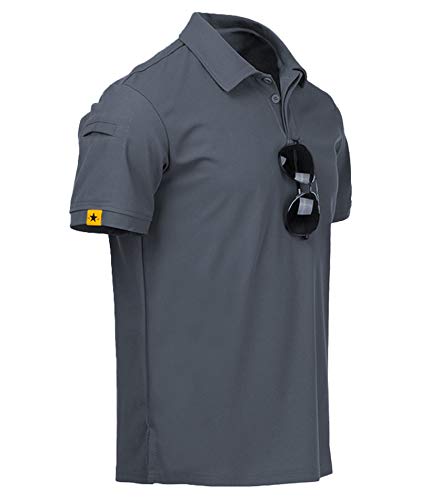
Consider whether those details belong in your workplace before focusing on the listing’s moisture-wicking language. A loop is not a reason to carry something that would pull the placket out of shape or interfere with your job. Compare the sleeve pocket’s position with how you wear a jacket or bag strap. For someone trying a polo style before committing to a pack, one shirt also limits the number of items exposed to an uncertain fit. That is a purchasing consideration, not a prediction of garment performance.
Build a fit checklist from clothes that already work
Separate your body measurements from a shirt’s measurements
A size label is a starting point. Take notes from a shirt that you like, then identify whether the new chart describes the wearer’s body or the finished garment. A laid-flat chest width is not the same number as a chest circumference. Likewise, a sleeve measurement beginning at the shoulder cannot be compared directly with one beginning at the center of the back.
Charles Tyrwhitt’s measuring guide illustrates neck measurement and a sleeve measurement running from the center back over the shoulder toward the wrist. It also shows how to measure a buttoned shirt laid flat. Use that as an explanation of measurement methods, then follow the actual seller’s chart for the shirt you are considering. Do not apply another brand’s numerical chart to these products.
Record the method beside each number. If a chart is unclear, ask whether its chest figure is a body size or a garment measurement. A precise answer is more useful than choosing a larger size without understanding why. Keep the answer with your order information so you can compare what arrives.
Look at shoulders, sleeves, and the seated torso together
Check whether the shoulder line appears intentional, whether short sleeves sit where you prefer, and whether the shirt pulls across the chest when you reach normally. Excess fabric may bother you under a jacket; too little room may create tension at buttons or across a polo’s torso. Stretch does not correct an unsuitable shoulder width or hem length.
Try the shirt with the trousers and belt you use at work. Sit down, stand up, and make ordinary movements without tugging the garment into position every time. These are personal fit checks, not a test that establishes the quality of an entire product line. If a shirt works only while you stand perfectly still, it is unlikely to be a useful default work shirt.
Decide how the hem will meet your waistband
Choose whether the shirt will normally be tucked before buying. A shirt intended for an untucked outfit needs a length and hem shape that you like with your actual trousers. A shirt intended to stay tucked needs adequate coverage when you sit and reach. Product photography may use a model with different proportions, so compare listed length with an existing shirt instead of estimating from the image alone.
Check your waistband height as part of this decision. The same shirt can look and feel different with two pairs of trousers. A hem that seems excessive with a lower waistband may be useful for a tucked outfit with different trousers. For polos, confirm that tucking does not create more bulk than you want. For button-front shirts, inspect the lowest visible buttons and how the front settles when seated.
If you wear a jacket only occasionally, try both versions of the outfit. A shirt that looks tidy by itself may bunch at the back beneath a layer. Do not choose a shorter size solely to fix that problem without checking what happens to the shoulder and chest fit.
Read the fabric description without turning it into a promise
The products here have different blends. BALENNZ, TELALEO, and ZITY are polyester-spandex options; the J.VER short sleeve shirt is cotton-rich; the checked COOFANDY shirt combines rayon and linen. Those distinctions help you decide what to inspect, but fiber percentages alone do not reveal fabric thickness, softness, transparency, or how a particular person will feel in an air-conditioned office.
Check the actual garment’s label. The FTC’s textile labeling guidance describes fiber-content information on textile labels. It is a useful reason to verify composition rather than relying on an informal title such as cotton linen. If the received label differs materially from the selected listing, pause and resolve that discrepancy before washing or altering the item.
Use your own preferences to narrow the choices. If you dislike a smooth athletic fabric, a pack of performance polos may be a poor purchase even when the colors work. If you prefer stretch, do not assume a woven summer shirt includes it. Marketing terms such as breathable, quick-dry, and wrinkle-resistant should lead to questions about the finished garment, not expectations of guaranteed comfort or a crease-free day.
Make colors earn their place in your wardrobe
A practical color choice starts with combinations you can wear now. List your regular trousers, shoes, and outer layer, then identify which shirt colors complete those outfits. This avoids buying a color that requires several additional purchases. Screens and room lighting can affect how a color appears, so keep room for an in-person judgment when the package arrives.
For a multipack, count useful colors rather than total shirts. If you only plan to wear two colors from a five-pack, compare the purchase with buying fewer suitable shirts. For a single shirt, decide what role it fills: a replacement for a worn item, an option for hot weather, or a more relaxed day. A purchase with a clear role is easier to evaluate than another vaguely versatile shirt.
Inspect light colors with your intended underlayer in daylight and your usual indoor lighting. Check for visible outlines or distracting contrast, then decide what you find appropriate. This guide does not claim that any linked shirt is opaque. Do not judge transparency solely from a white product-page background.
Plan laundry around the finished garment
A machine-wash label does not answer every care question. Drying, ironing, bleaching, and any treatment-specific restrictions still matter. The FTC care-label guide explains that care instructions concern the finished garment and may include warnings. Read the sewn-in instructions before choosing a laundry routine, especially when a listing contains contradictory wording.
Before buying several shirts, think about how you actually care for work clothes. If you will not follow the required routine, a lower purchase price will not make the garment convenient. Decide where shirts will dry or be stored, whether you need pressing time before work, and how many clean shirts your weekly schedule requires. Treat stain treatments as features with limits, not substitutes for ordinary care.
Make the first fit decision while the shirt remains in its original condition and within the seller’s stated return rules. Confirm the current policy rather than assuming washing, removing tags, or tailoring leaves the same options available. Avoid changing every shirt in a multipack before you have established that the size and style suit you.
A useful week of outfits beats a drawer full of duplicates
Write down five representative workdays and assign an outfit to each before buying. Include a day when laundry is delayed and a day with a meeting, rather than planning only for ideal conditions. You may discover that three suitable shirts and an existing backup solve the problem more effectively than a larger pack. You may also discover that a pack really does match the number of polo days in your schedule.
For travel, consider the complete outfit and available care facilities. Check whether you can follow the garment label at your destination instead of assuming every shirt can be washed in a hotel sink and worn immediately. Pack the layer, trousers, and undergarment that make the shirt work. If an important meeting has stricter expectations, plan that outfit separately. A practical rotation provides choices without asking a relaxed shirt to fill a role it was never meant to fill.
Questions worth answering before checkout
Is a golf polo automatically business casual?
No. It is a reasonable candidate where the actual dress code permits polos. The collar alone does not settle the question. Athletic pockets, loops, fabric appearance, logos, and the rest of the outfit may matter. If the situation requires a woven long sleeve shirt, choose within that requirement rather than trying to reinterpret it.
Will a stretch blend let me buy a closer size?
Not necessarily. Start with the intended measurements and normal movement. Stretch is not additional sleeve length, and it does not move the shoulder seam into the correct place. If you are between sizes, compare the dimensions that matter to you and the seller’s advice; do not assume the smaller size is correct because spandex appears on the label.
What should I check when the shirts arrive?
Verify quantity, color selection, size, fiber label, and care label against the order. Then try the shirt with a complete work outfit. Inspect seams, buttons, collar placement, and any obvious mismatch before laundering. Keep order details until you have resolved questions. The useful outcome is a shirt you can comfortably and appropriately wear on an ordinary workday, with no reliance on exaggerated performance promises.