In this guide
- Identify what is actually on the shoe
- Build a clean workspace
- Begin with loose surface dirt
- Use the exact smooth-leather instructions
- Decide whether conditioning or polishing is needed
- Keep suede tools and products separate
- Let the shoes dry appropriately
- Inspect before putting the kit away
- Keep maintenance proportionate
Clean smooth leather shoes by identifying the finish first, using the maker’s recommended method, and keeping that routine separate from suede care. The word leather is too broad to tell you which cleaner, brush, or polish belongs on a particular pair.
Before reaching for a kit, look at the shoes and any care information supplied with them. A short pause is worthwhile when the alternative is applying a familiar product to a surface that needs a different treatment.
Identify what is actually on the shoe
Check the product description or maker’s care page for the exact model and material. Smooth leather, suede, nubuck, patent, and coated finishes can look related while requiring different care choices.
Do not identify a material only by whether it feels soft or looks expensive. If the description is unclear, send the maker a model number and a clear photograph before applying a product.
Also check whether the upper combines materials. A shoe with a smooth leather panel beside suede or fabric needs attention to each section rather than a single all-over treatment chosen for the largest area.
Your goal at this stage is a reliable material description. You can then choose a care process that fits the shoe, instead of hoping a broad claim on a bottle covers every possible finish.
Build a clean workspace
Work on a stable, protected surface with enough light to see the upper and edges. Keep the shoes away from clothing, upholstery, and objects that could be marked by a care product.
Separate clean cloths and brushes from tools already carrying polish of another color. A brush that looks tidy at a glance may still hold material you do not want on a light-colored shoe.
Read the cleaner or polish instructions before opening it. Check material compatibility, testing advice, ventilation, and any restrictions rather than relying on what you remember from using a different product.
Remove laces when doing so helps you access the tongue and eyelet area without contaminating them. Keep track of their arrangement if you want to restore the same lacing pattern afterward.
Begin with loose surface dirt
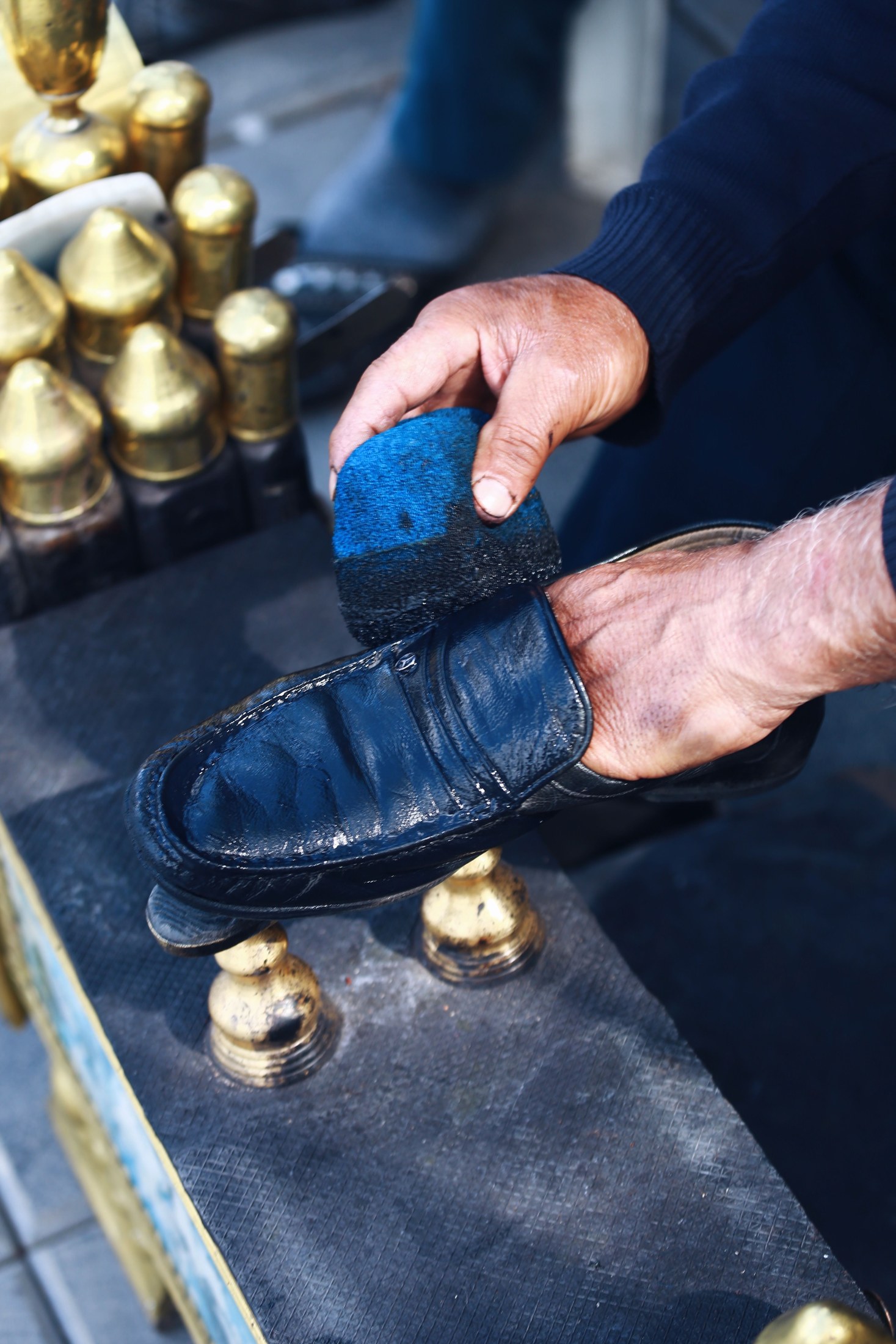
Inspect the shoes for dust, grit, and marks before applying anything wet or creamy. Use the maker’s recommended way of removing loose dirt so you are not working debris across the finish unnecessarily.
Cole Haan’s smooth-leather care guidance identifies a set of appropriate cleaning and conditioning tools for that material. Treat that as a model of a material-specific routine, not permission to use every product on every leather shoe.
Look closely around seams, the tongue, and the join between upper and sole. You can decide whether the problem is a light surface clean or something that needs more informed attention.
If a mark is oily, deeply stained, or associated with an unknown substance, pause rather than escalating through household cleaners. A cobbler or the manufacturer can help you decide what is suitable for the finish.
Use the exact smooth-leather instructions
Follow the shoe maker’s and product maker’s directions for the amount, application, and waiting time. Do not add more product just because you want a faster or more visible transformation.
Test in an inconspicuous place when the instructions call for it, and inspect the result before treating a prominent area. A change in color or sheen can be significant even when the surface remains physically intact.
Work carefully around contrasting stitching, fabric, and other materials. If you cannot keep the product where it belongs, ask for advice rather than treating the entire shoe as one uniform surface.
Use a clean part of the cloth as you continue. You want to see what you are removing or applying, rather than repeatedly moving residue from one section back onto another.
Decide whether conditioning or polishing is needed
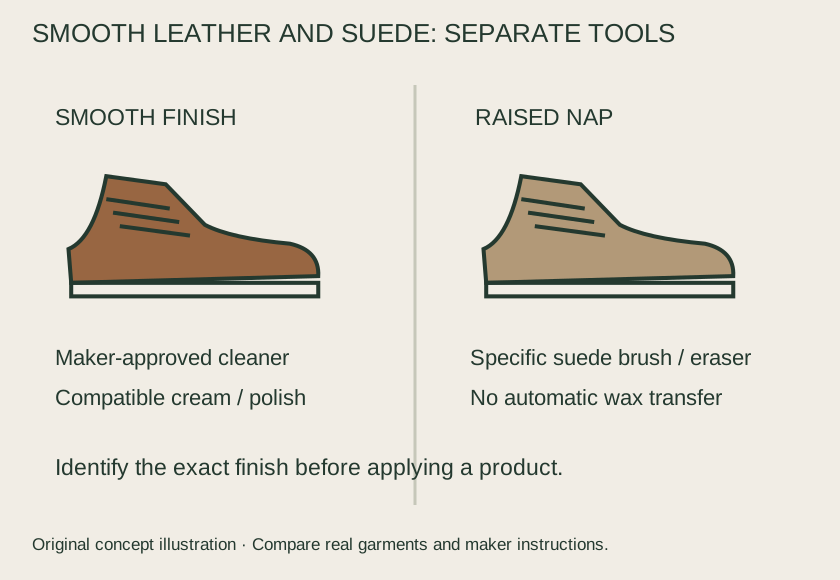
Cleaning, conditioning, and polishing are different tasks, even when a product combines some of them. Identify the result you need and choose an appropriate step instead of using every item in a kit automatically.
If the maker recommends a conditioner, follow its compatibility and application guidance for your finish. Do not assume that a heavier coating is better or that a product intended for another leather item is interchangeable.
If you use colored polish, confirm the shade and test guidance before applying it broadly. A neutral product can also affect appearance, so the absence of pigment does not remove the need to check suitability.
You may only need a modest presentable finish for everyday wear. A high-shine effect is a separate preference, and you do not need to pursue it to make a sensible care decision.
Keep suede tools and products separate
Suede has a raised surface that should not automatically receive the same cream or wax polish used on smooth leather. Read the exact maker’s suede guidance before choosing a brush or cleaner.
Sam Edelman’s product-care page recommends a suede eraser or soft-bristled brush for dry dirt and light marks, and directs wet or oily stains to a professional cleaner. That advice also illustrates why a general instruction to scrub suede with any stiff brush is unreliable.
Different makers may recommend different tools for their finishes. When guidance conflicts, use the instructions for your actual shoe and ask the maker about the specific uncertainty rather than averaging incompatible routines.
Store suede tools apart from polish brushes so they remain easy to identify. A simple label on a container can prevent an avoidable mix-up when you are getting ready in a hurry.
Let the shoes dry appropriately
Follow the product and shoe instructions before wearing or storing the pair. Do not assume that a surface that looks dry has completed every stage of the care process.
Avoid improvising with strong direct heat to speed things along. If the shoes are significantly wet, consult their maker’s drying guidance instead of treating a radiator, hair dryer, or heated appliance as a universal solution.
Keep the pair in a suitable place where it will not be knocked over or marked while you wait. You are more likely to handle the care patiently when another wearable pair is available.
If you use shoe trees, select ones that fit the shoes without forcing them out of shape and follow the shoe maker’s recommendations. A tree is a support tool, not a way to stretch a pair into an entirely different fit during routine storage.
Inspect before putting the kit away
Look at the shoes in ordinary light and check for residue around seams or edges. Use the product’s specified finishing step where needed rather than adding another unrelated cleaner to remove an unexpected result.
Make sure laces and any removable components are ready before replacing them. Check that the shoes feel suitable to wear and that the soles are free of care products that do not belong on the walking surface.
Clean or store the tools according to their instructions, and keep containers closed. Note which brush or cloth was used with which color so the next session begins with a clear setup.
If the result disappoints you, record what you used and contact the maker or a competent repair professional. That information is more useful than an unexplained series of additional treatments.
Keep maintenance proportionate
Check your shoes regularly enough to notice a developing issue, but let their condition and maker’s guidance determine the work. You do not need to perform a complete multi-step ritual every time you wear them.
A little organization makes the routine easier: identify the material, choose compatible tools, address the actual problem, and allow the required finishing time. Keep smooth leather and suede as separate decisions throughout.
The result should be a pair you can wear comfortably and presentably. Appropriate care is about supporting the shoes you own, not making every material behave like a polished smooth-leather dress shoe.
Sources & editorial notes
Primary pages checked October 22, 2026. Practical scenarios and style judgments are editorial explanations; exact garment and product instructions take priority.